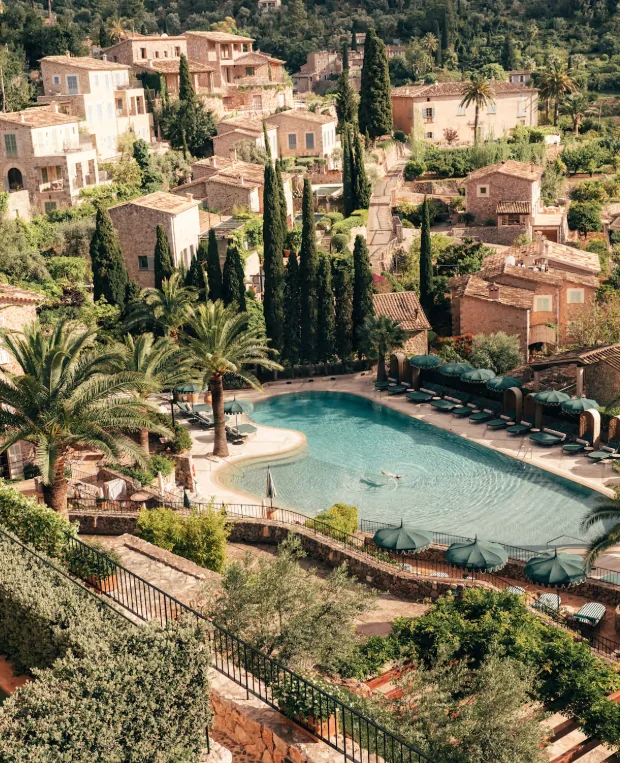
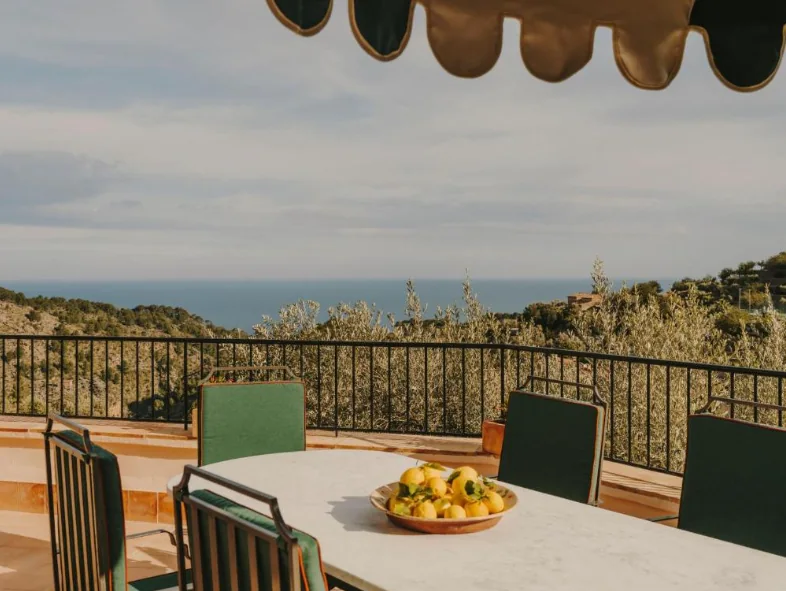
On Mallorca's coast, direct beachfront is often considered a hotel's strongest asset. La Residencia in Deià takes a different approach. The hotel sits in a mountain village on the west coast, on the edge of the Serra de Tramuntana, a UNESCO World Heritage Site since 2011. The sea is visible from many terraces, but the hotel has no beach of its own.
The core of the estate is formed by two historic manor houses. It has operated as a hotel since 1984. According to Belmond, it now has 67 rooms and suites including one villa, along with three restaurants, a spa and indoor and outdoor pools (source: Belmond).
The thesis of this article: an existing hotel can make its place, its building fabric and its history the actual product. This only works if owners and operators deliberately maintain these qualities over decades.
The place is part of the offer
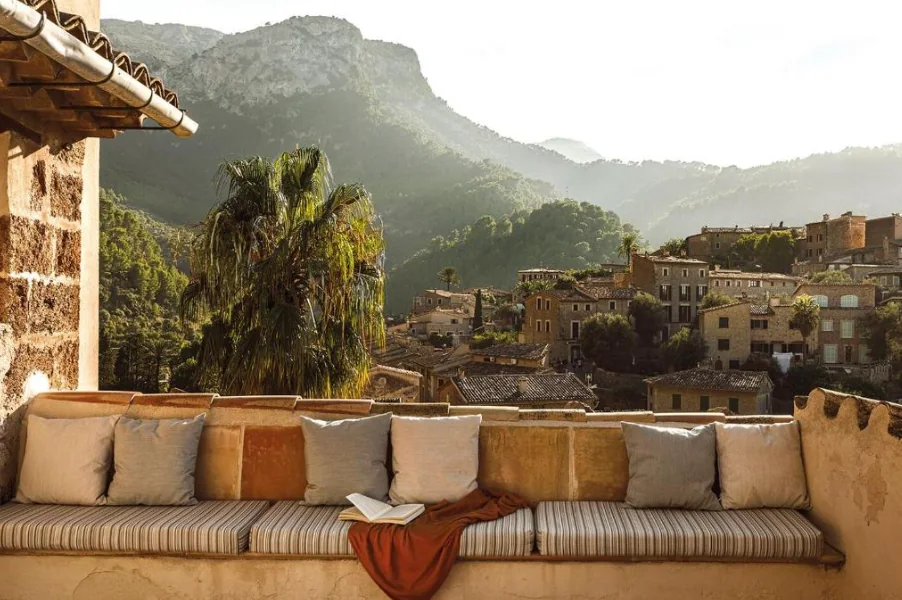
Deià is a small stone village on a steep slope between the mountains and the sea. Since the 20th century it has attracted writers, painters and musicians. The poet Robert Graves lived here for around fifty years.
La Residencia does not set itself apart from the village. The hotel lies right at the edge of the village, its buildings follow the terrain, and many terraces look out over the houses of Deià. Guests are therefore not just booking a room, but a stay in a particular place.
For owners, this holds an important lesson: a location without a beach is not automatically weaker. What matters is whether the surroundings offer a reason to travel of their own, and whether the hotel makes that reason visible.
Historic fabric as an advantage
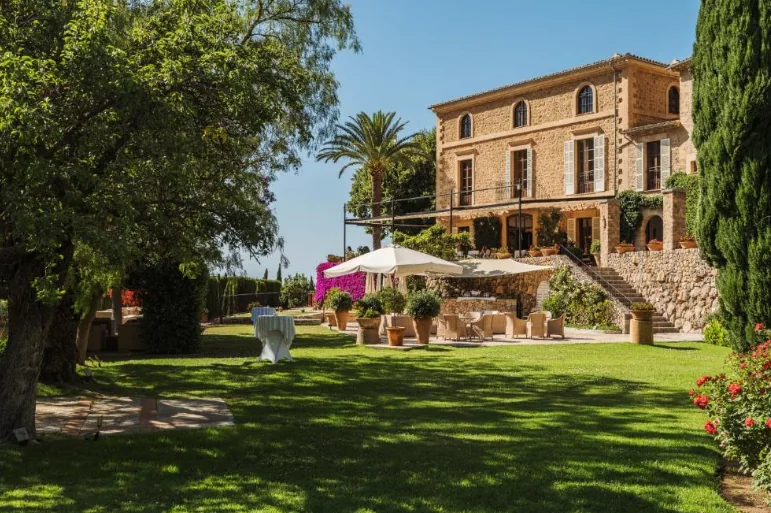
The two manor houses at the heart of the estate date from the 16th and 17th centuries. In the 18th century, the Son Canals estate belonged to Cistercian monks, who used a spring to irrigate the olive groves and orchards. After Church property was expropriated, it passed into private hands in 1821 (source: Wikipedia).
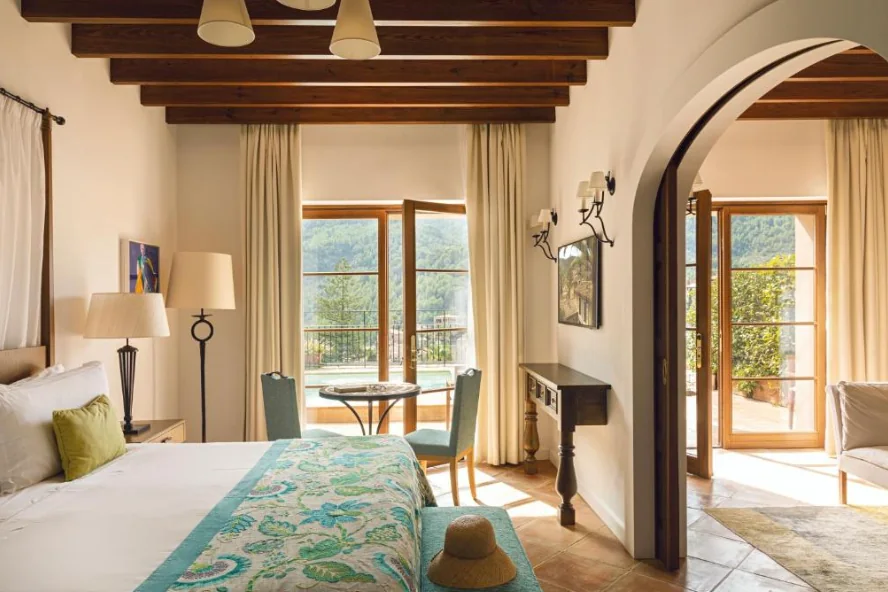
This history still shapes the hotel today: stone walls, timber beams, terracotta floors, stairways and terraces. Features like these can hardly be recreated convincingly in a new building.
At the same time, heritage comes at a price. Historic buildings incur higher maintenance costs, floor plans are less efficient, and alterations are often subject to restrictions. For investors, the question is whether the character of the building supports higher room rates and stable demand. A historic house alone is not yet a business model.
Using art and history credibly
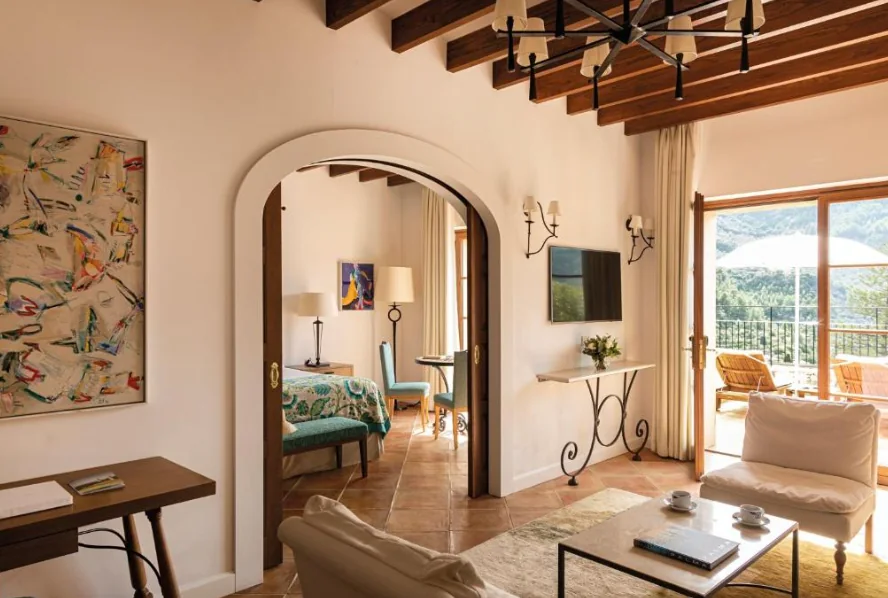
Art is part of Deià's identity. La Residencia builds on this: according to the hotel, its collection has been curated by the Sheridan family since the opening in 1984. Restaurante Miró displays 33 original works by Joan Miró. The Sa Tafona building houses a gallery and a studio where an artist in residence works.
On the estate, the olive groves are being restored and olive oil production has resumed (source: Wikipedia). The hotel thus links back to the estate's former use.
For other hotels, the lesson is this: art and history only convince when they belong to the place. Purchased decoration with no connection to the region creates no profile. A link to local culture, craftsmanship or the history of the building, on the other hand, can become a genuine reason to book.
Renew carefully instead of rebuilding
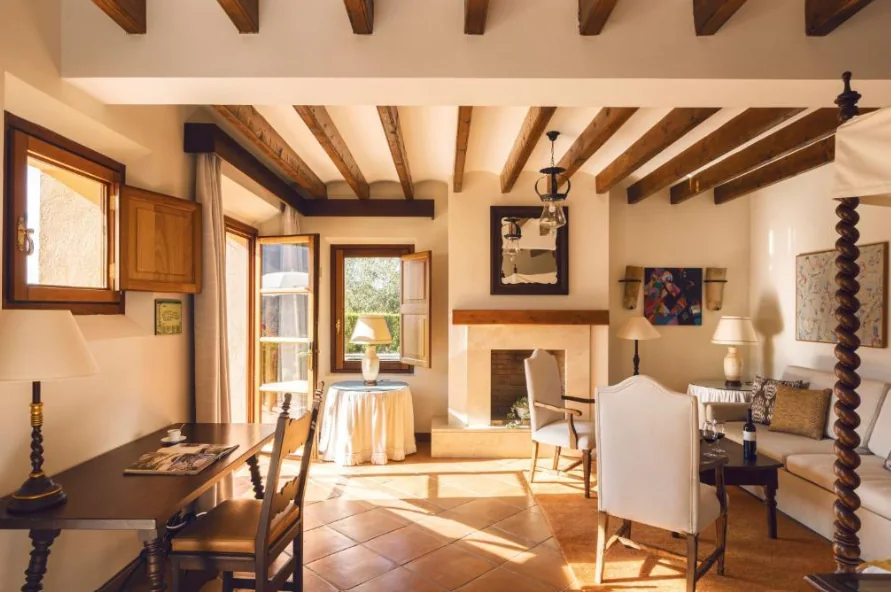
A hotel that has lived from its character for decades cannot be reinvented every ten years. La Residencia renews individual areas in a targeted way. In April 2025, the hotel unveiled the renovated Villa Robert Graves, a house for six guests in the heart of the village, around a five-minute walk from the hotel. It was designed by Studio Ashby under Sophie Ashby — according to the hotel, as a gentle renovation using furniture from the estate and the work of local craftspeople (source: Journal des Palaces).
Previously, Suite 67 was redesigned by the designer Matthew Williamson. Both projects follow the same principle: individual units are upgraded and given a story of their own, without changing the character of the house.
For owners, this approach has a practical advantage. Investment can be spread over several years, operations continue, and each renewal provides a new occasion for coverage and bookings.
The brand strengthens the value of the property
The ownership history of La Residencia is instructive for investors. Axel Ball converted the estate into a hotel, which opened in 1984. In 1987, Richard Branson joined as a partner. In 2002, Orient-Express Hotels took over the property; the company renamed itself Belmond in 2014 (source: Wikipedia). Since April 2019, Belmond has been part of the luxury group LVMH (source: LVMH).
For an individual hotel, a strong brand means access to international distribution channels, repeat guests and partners. At the same time, requirements for quality, investment and reporting increase.
For owners of private hotels, this raises the question of the right structure. In Spain and Germany, many owners prefer a lease with a fixed, predictable rent. A brand can still increase the value of a property when it is brought in through a lease or franchise agreement. What matters is that brand and building fit together.
Planning season and earnings realistically
La Residencia is a seasonal hotel. According to the Michelin Guide, it is open from March to November (source: Michelin Guide). This is common on Mallorca, but it has direct consequences for profitability.
In around nine months, the hotel has to earn the costs of a full year. Staff, maintenance and financing continue through the winter months. Room rates in high season therefore carry a large share of the annual result.
For valuing a resort hotel, this means occupancy and average rate must be considered across the whole season, not just the peak months. In lease agreements, the rent should match the seasonal earning power. A rent that is only sustainable in good years protects neither owner nor operator.
This article is not based on publicly available data on La Residencia's occupancy, achieved room rates or profitability. The hotel serves here as an example of positioning through place and heritage.
What owners of existing hotels can take from it
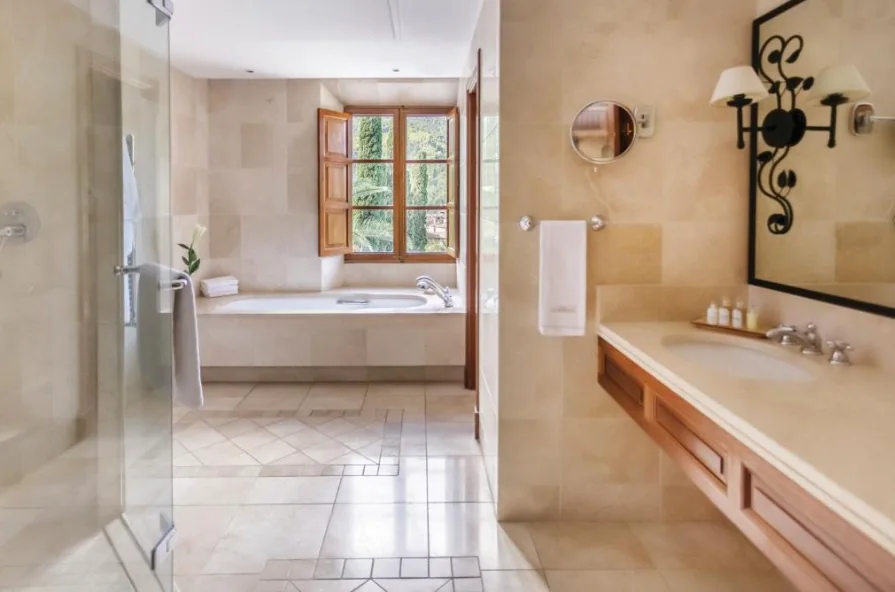
La Residencia shows that a hotel does not have to derive its value solely from a location by the sea. Place, building fabric, art and a strong brand give the house a profile that is difficult to copy.
For owners of existing hotels in Spain or Germany, this leads to concrete questions: What qualities does our building have that a new build cannot offer? What makes the location interesting for guests? Which areas can be renewed step by step without losing their character? And which operator or brand structure suits this profile?
Not every house will become a luxury hotel. But many existing hotels have qualities that are overlooked in day-to-day business. Those who recognise and deliberately maintain them strengthen not only the operation, but also the value of the property.
The decisive question is therefore: what does our house offer that could not exist anywhere else?
Independent professional assessment. NOWA HOTEL LICENSE has no business relationship with the hotel named, with Belmond or with LVMH. Information based on publicly available sources (incl. Belmond, the Michelin Guide, Journal des Palaces, LVMH and Wikipedia). Image material provided by the client; all brand and image rights remain with their respective owners and must be cleared before publication.