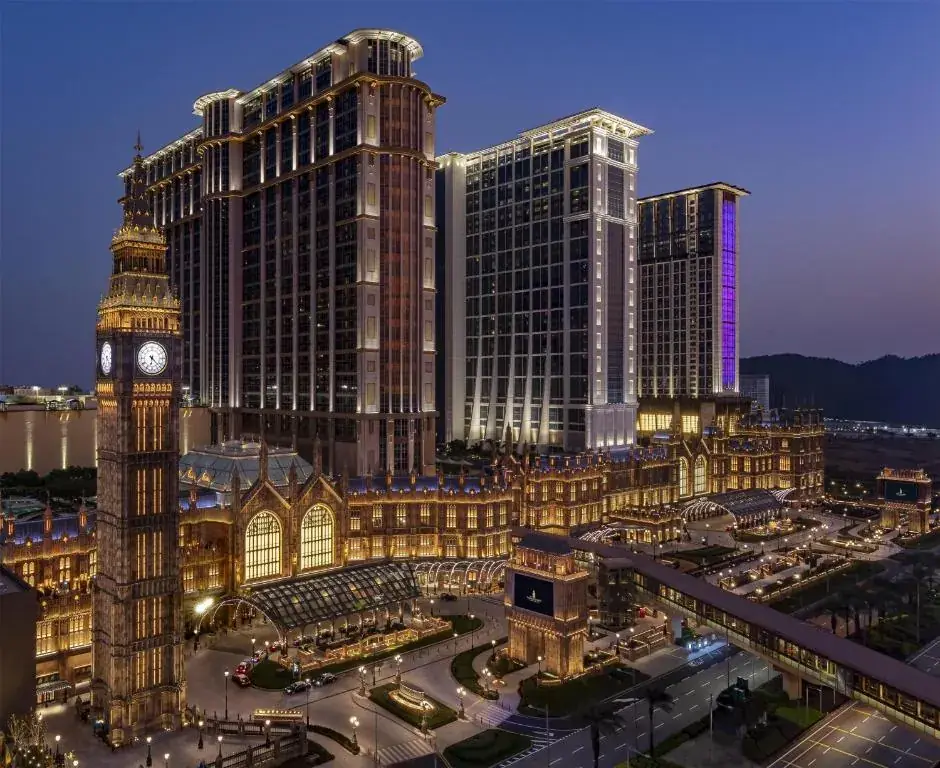
The hotel sits in the middle of The Londoner Macao, a large-scale integrated resort. As a result Conrad has its own high-quality hotel product — while benefiting directly from the restaurants, luxury retail, entertainment and further offerings of the whole resort. Hilton explicitly highlights this direct access. And in that, in our view, lies the real strength of the concept.
The hotel as part of a larger system
The Londoner Macao is far more than a single hotel. The complex includes several hotel brands and concepts — alongside Conrad, among others The St. Regis Macao as well as various Londoner hotels — plus dining, retail and entertainment. Conrad thereby becomes part of a much larger hospitality ecosystem: the guest enjoys the calm and service quality of a luxury hotel while also drawing on an extensive offering beyond the hotel's own areas.
That is a fundamental difference from a classic standalone hotel. There the operator has to create many services in-house or accept that guests leave the building. At an integrated resort, by contrast, a kind of shared infrastructure emerges in which several uses reinforce one another.
Not every space has to belong to the hotel
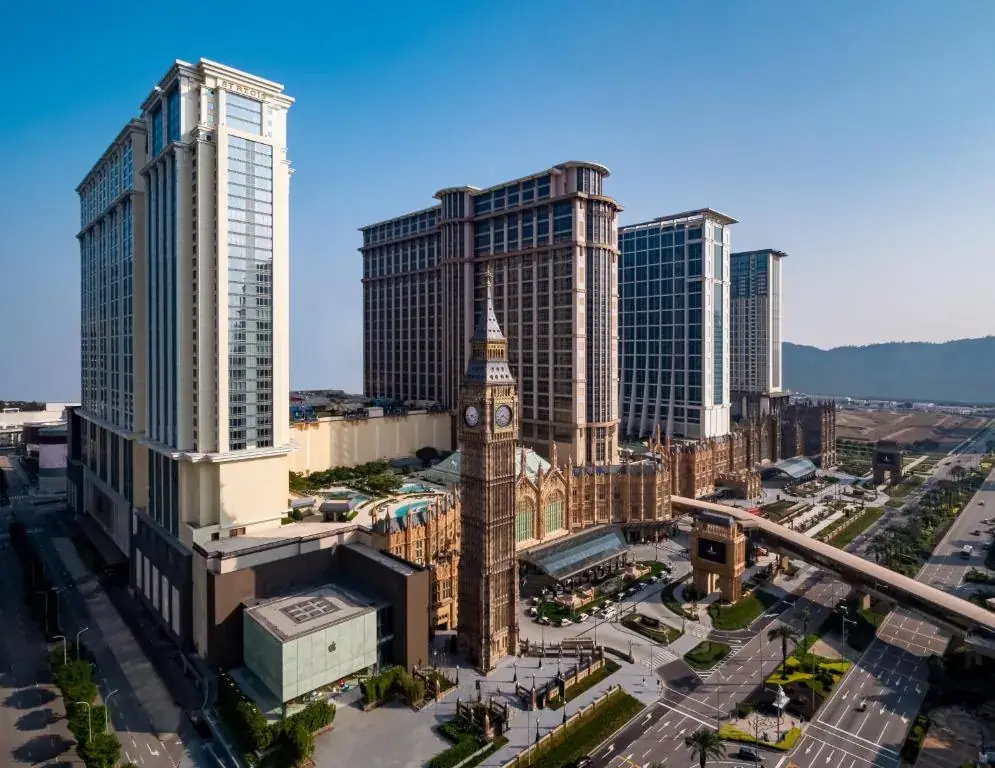
For owners and developers in particular this idea is interesting. A hotel does not necessarily have to run ten restaurants, large retail floors or extensive entertainment itself. What matters instead is: which offerings are in the immediate surroundings — and how well can they be connected to the hotel?
At Conrad Macao this connection is especially close. The hotel itself offers, among other things, restaurants, pool areas, a health club and a spa; at the same time there is direct access to further restaurants and high-end shops within the Londoner complex. For the guest this creates a very large overall offering — and for the hotel the opportunity to focus more strongly on its own core service.
Luxury through choice
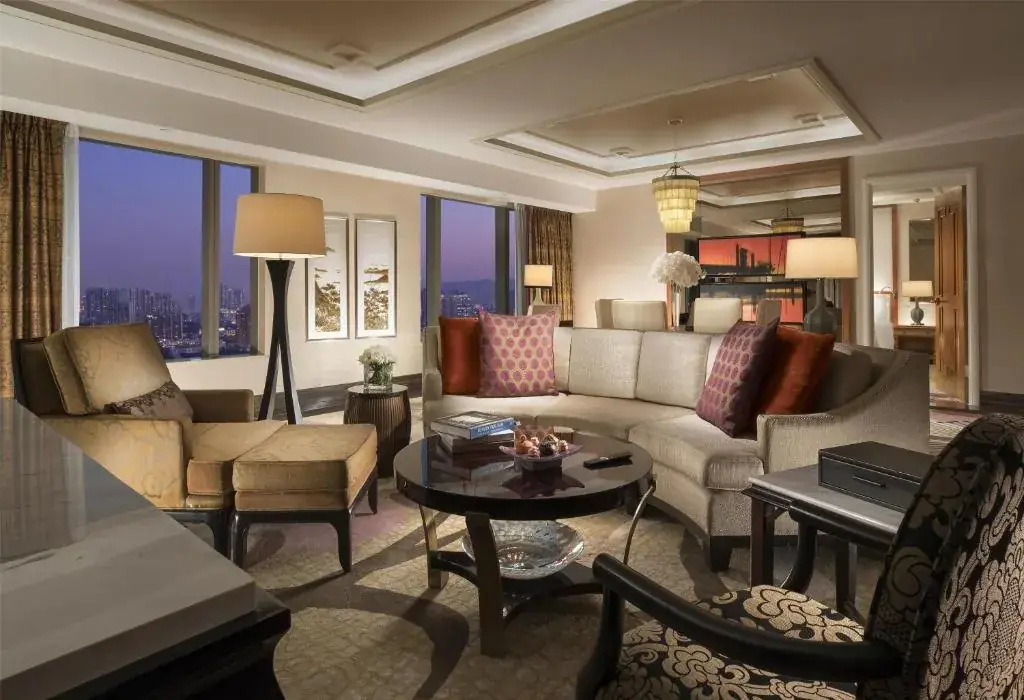
Luxury is often associated with exclusivity. But luxury can also mean having choice. The guest can decide whether to stay in the hotel, visit another restaurant within the resort, go shopping or use further offerings of the complex — and on longer stays in particular this variety contributes considerably to the quality of the stay.
A single hotel restaurant can be excellent; several different dining concepts within a few minutes, however, create a wholly different quality. Conrad thus benefits from offerings that need not belong entirely to the hotel itself.
The surroundings become part of the hotel product
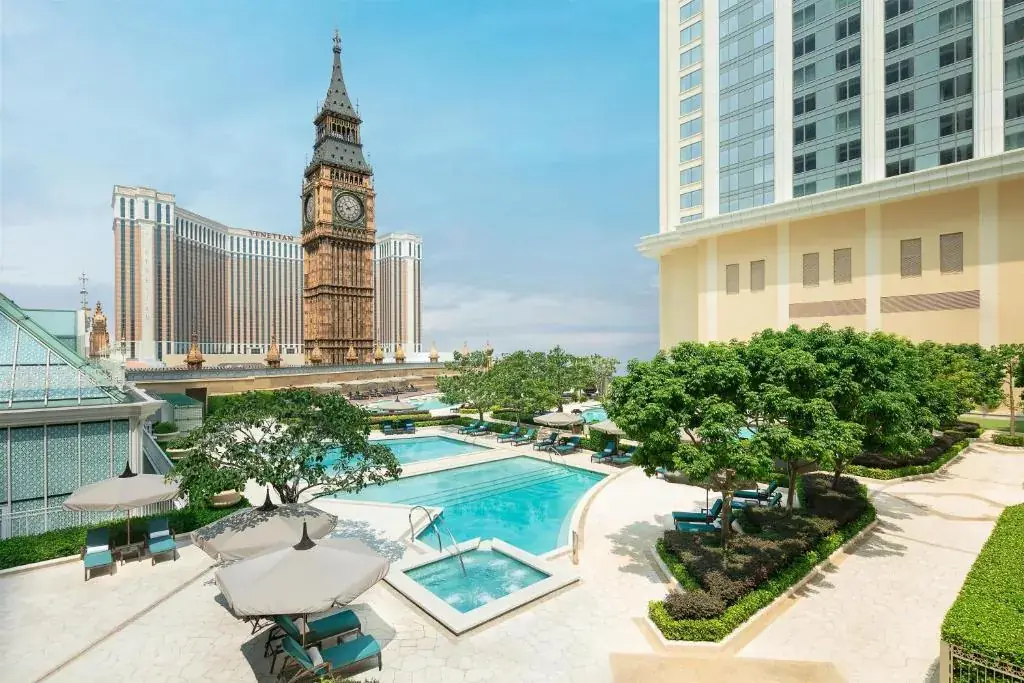
One of the most interesting insights from this concept is therefore this: the boundaries of a hotel do not necessarily end at the front door. A good environment can become part of the product — and that transfers to much smaller projects too.
A city hotel can benefit from excellent dining on the ground floor of a mixed-use building; a business hotel can be directly connected to a conference centre or coworking space; a resort can integrate external sports, wellness or leisure offerings; a hotel in a historic district can make local restaurants, culture and retail an essential part of its positioning. Not every use has to be operated by the hotel itself — what matters is the quality of the connection.
Different brands, one shared destination
Particularly interesting at The Londoner Macao is the combination of different hotel brands within one destination. Conrad does not have to be the right brand for every guest — and precisely there lies a strength: different hotels can serve different audiences and price positions while benefiting from the same overarching destination.
A guest might deliberately choose Conrad's service and brand promise, yet use the wider resort during their stay. Several brands can thus coexist without having to offer the same product. For larger hotel developments this is an important idea: not every audience has to be served within a single hotel — sometimes it is more efficient to connect several clearly positioned hotel products.
The Londoner as a destination in its own right
The overarching complex is conceptually remarkable too. The Londoner Macao emerged from the comprehensive repositioning of the former Sands Cotai Central and was redeveloped as a British-inspired destination; Sands China describes it as its largest integrated resort on the Cotai Strip. British architectural and design elements, restaurants, shopping, entertainment and several hotel concepts create a deliberately staged world of experience.
Conrad itself does not have to adopt this story entirely — it keeps its own identity within the destination. That is precisely what makes the model interesting: strong integration does not necessarily mean losing your own brand.
What European hotel projects can learn from it
The scale of Macau can hardly be transferred to a classic hotel project in Germany, Spain or Morocco — but the underlying principle works almost anywhere. When developing a hotel, the question should therefore not only be what needs to be built inside the hotel, but equally: what already exists around us that we can use intelligently?
Perhaps a hotel needs no large spa of its own if a high-quality wellness provider is right next door; perhaps no huge conference centre if an events venue is directly attached; perhaps not five restaurants of its own if it is part of a strong dining quarter. This can lower investment costs while at the same time enlarging the offering for the guest.
Mixed-use as an opportunity
For new developments in particular, combining different types of use is becoming more important. Hotel, residential, office, dining, retail and leisure need not be considered separately — combined well, they supply one another with demand: business travellers use the dining, restaurant guests discover the hotel, events generate room nights, retail creates footfall, and hotel guests generate revenue in the surrounding uses.
The result, ideally, is no longer a single building, but a destination.
Our perspective
Conrad Macao impresses less through a single spectacular element — compared with Studio City, for instance — and that is precisely why the concept is interesting to us. It shows a different form of intelligent hotel development: not building everything yourself, not operating everything yourself, but becoming part of a strong environment.
For owners and developers this can hold a considerable advantage. A strong hotel is not created solely from rooms, lobby, spa and restaurant — sometimes the surroundings decide how attractive a hotel product really becomes. And sometimes the best hotel strategy is not to offer ever more within your own building, but to position the right property in the right place within the right ecosystem.
Independent professional commentary. NOWA HOTEL LICENSE has no business relationship with the hotel mentioned, with the Hilton group or with Sands China. Information and imagery from publicly available sources; all brand and image rights remain with their respective owners.