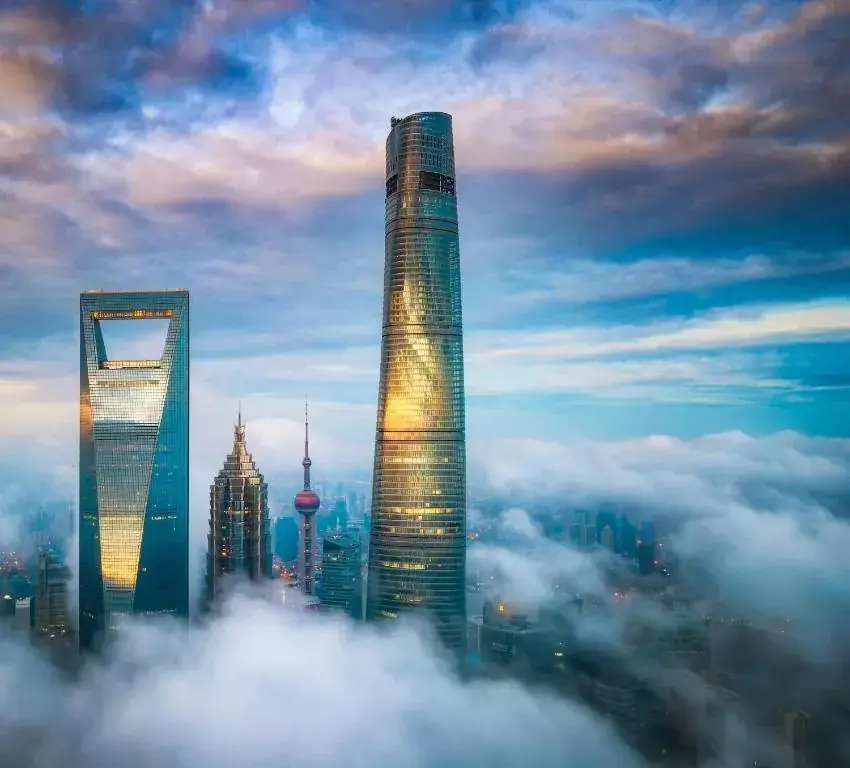
J Hotel Shanghai Tower occupies one of the world's tallest buildings. Its 165 rooms and suites (including 34 suites) sit between the 86th and 98th floors of the Shanghai Tower, with further hotel areas reaching up to the 120th floor. Operated by Jin Jiang as its flagship luxury brand, it positions itself explicitly as one of the highest luxury hotels in the world. The property thus raises a question that reaches far beyond Shanghai: what happens when the location within a building itself becomes the luxury product?
A hotel inside an icon
With its spiralling silhouette, the Shanghai Tower defines the city's skyline. The building reaches a height of 632 metres and was conceived as a vertical city: alongside office floors it contains retail, dining, observation areas and, finally, the J Hotel. The hotel therefore does not need its own iconic building — it becomes part of one.
This connection is decisive for the positioning. Staying at the J Hotel does not merely buy a high-quality hotel room; it also grants access to one of the most extraordinary perspectives on Shanghai. The property itself thus becomes part of the experience.
When a view is no longer just a view
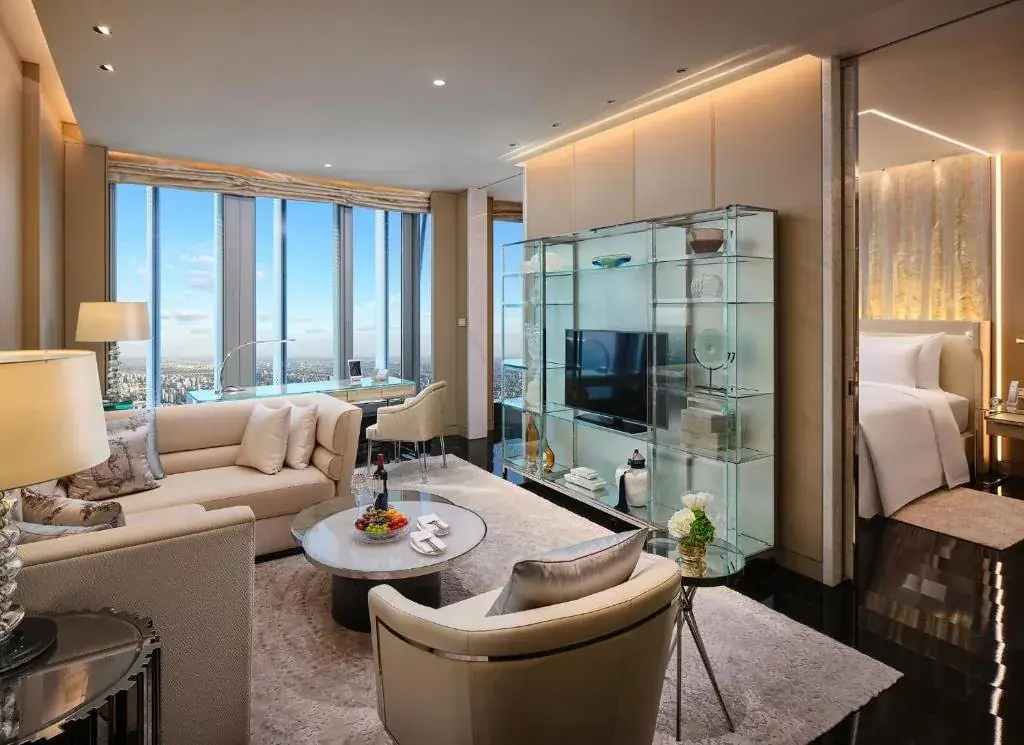
Many hotels advertise rooms with a view. At the J Hotel the concept goes further. The rooms and suites on floors 86 to 98 start at around 61 square metres; the largest suites reach up to 380 square metres. From this height the perception of a city changes: streets become lines, high-rises that look monumental from the ground suddenly lie below the observer, and the Huangpu River threads through a cityscape stretching to the horizon.
The view is therefore not merely an added selling point for an otherwise ordinary hotel room, but part of the hotel product. In that lies an important conceptual decision: an exceptional asset is not only used — the entire product is built around it.
Luxury across 120 floors
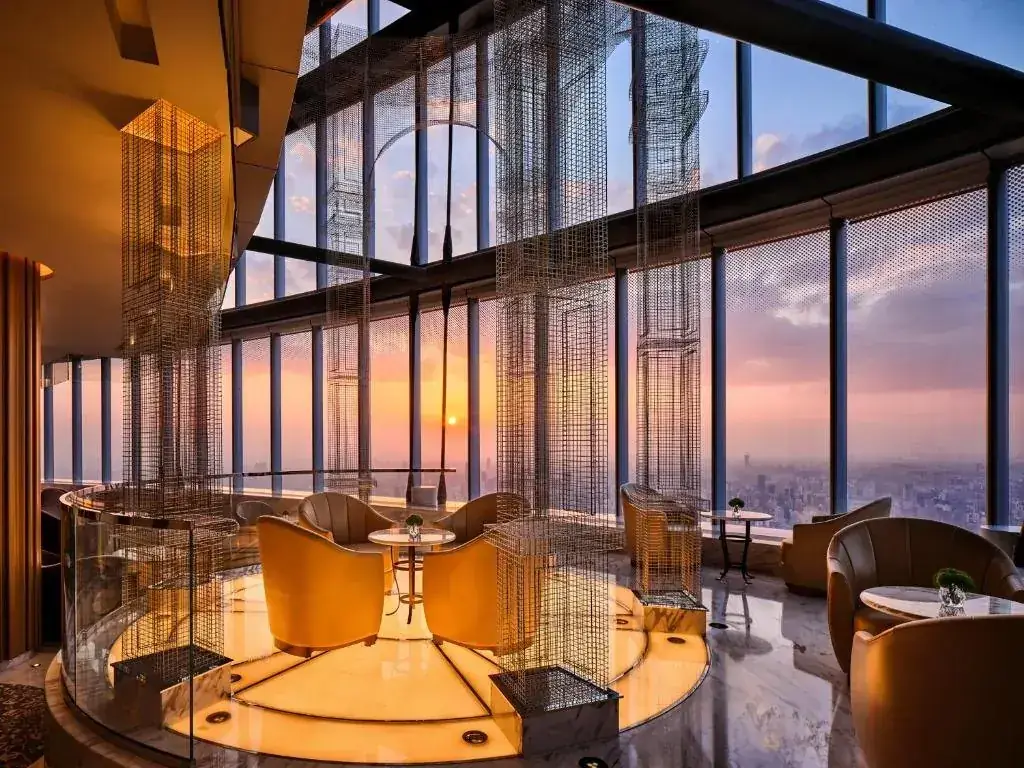
The principle continues beyond the rooms. Restaurants, bars and public areas were deliberately placed at different heights of the Shanghai Tower. This is especially clear at Heavenly Jin on the 120th floor: according to the hotel, it sits more than 550 metres above the ground, making it one of the highest restaurants within a building anywhere in the world.
Height is thus staged again and again — on waking, at breakfast, at dinner, in the glance out of the window. What at another hotel might be a single viewpoint runs here through the entire guest experience.
Modern architecture meets Chinese identity
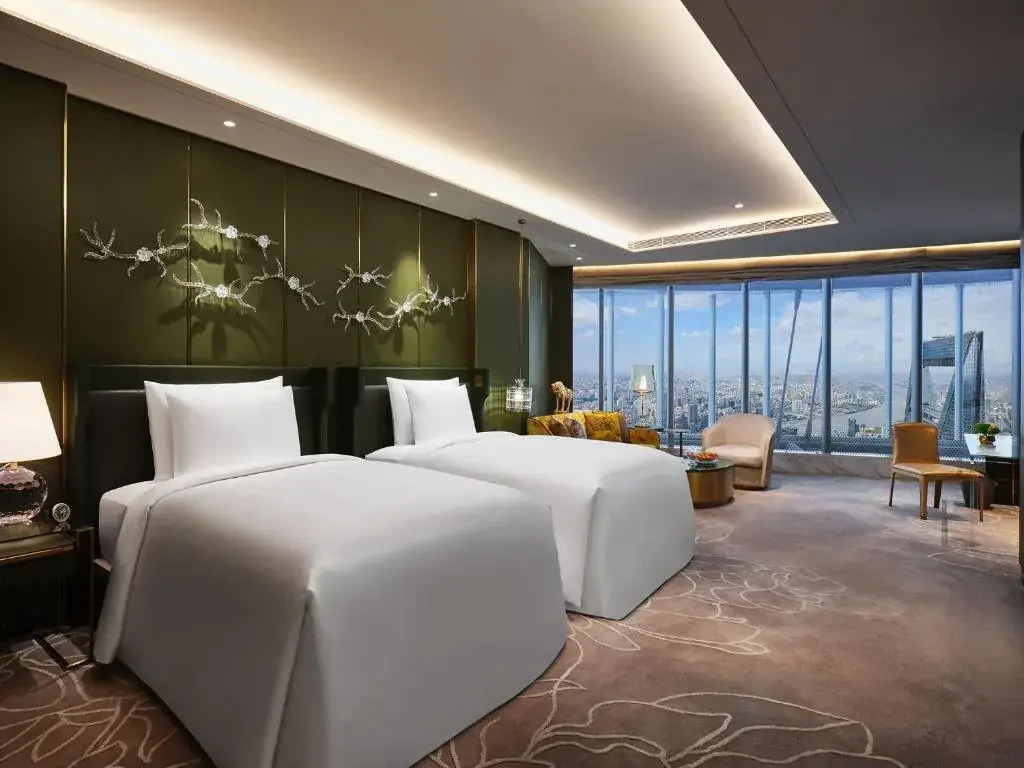
An exceptional location inside a skyscraper alone does not yet make a complete hotel concept. Precisely with a building that stands for modern Shanghai like few others, a further question arises: how do you keep an international luxury hotel from feeling interchangeable? The interior design therefore seeks to combine contemporary luxury with Chinese aesthetics — traditional craft and design elements meet materials such as metal, crystal, glass and mosaic.
Art, too, plays a central role; according to the hotel, more than 1,000 artworks are placed throughout its various areas. That is an interesting contrast: outside stands one of the most visible symbols of modern China, while inside the hotel seeks at the same time to establish a link to the country's cultural history.
When the building becomes part of the brand
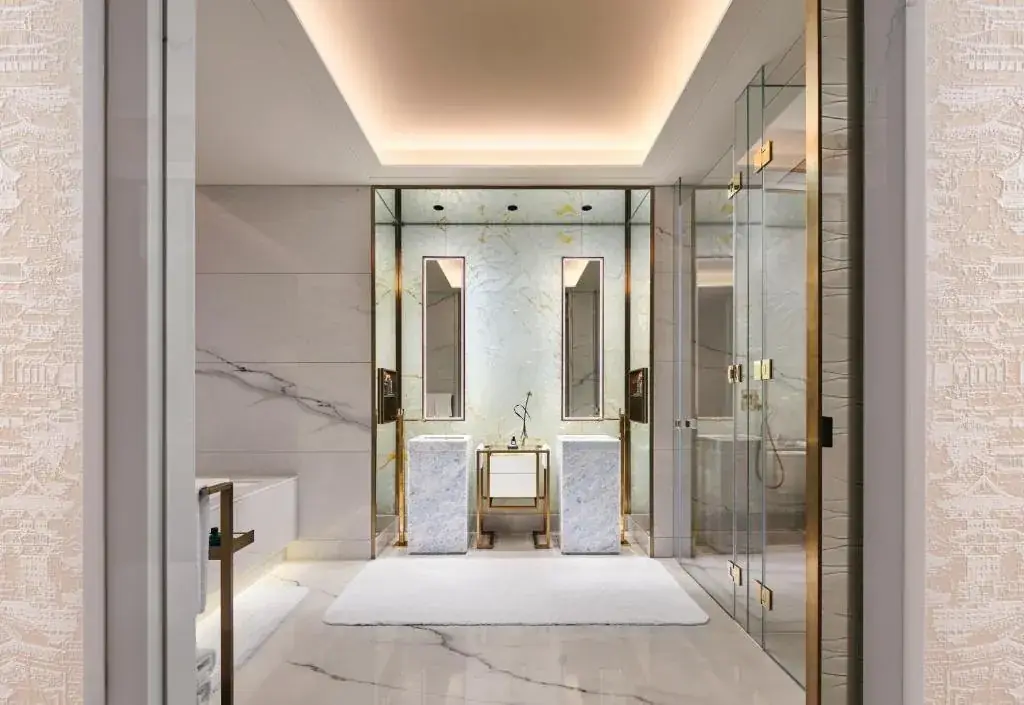
From a real-estate perspective, the J Hotel is particularly interesting because hotel and building can hardly be considered separately. A classic hotel can change its brand, renovate its interior, give restaurants new concepts and even combine or redesign rooms. The location on the 90th floor of the Shanghai Tower, by contrast, cannot be copied. Therein lies the value of an exceptional property feature: what cannot be reproduced can become a decisive part of the positioning.
This applies not only to skyscrapers. For other properties it may be a historic building, an exceptional sea view, a cliff, a private beach, a centuries-old courtyard or a particular location within a city. The decisive question is always the same: is this feature merely mentioned — or is a hotel concept actually developed from it?
A hotel as part of a vertical city
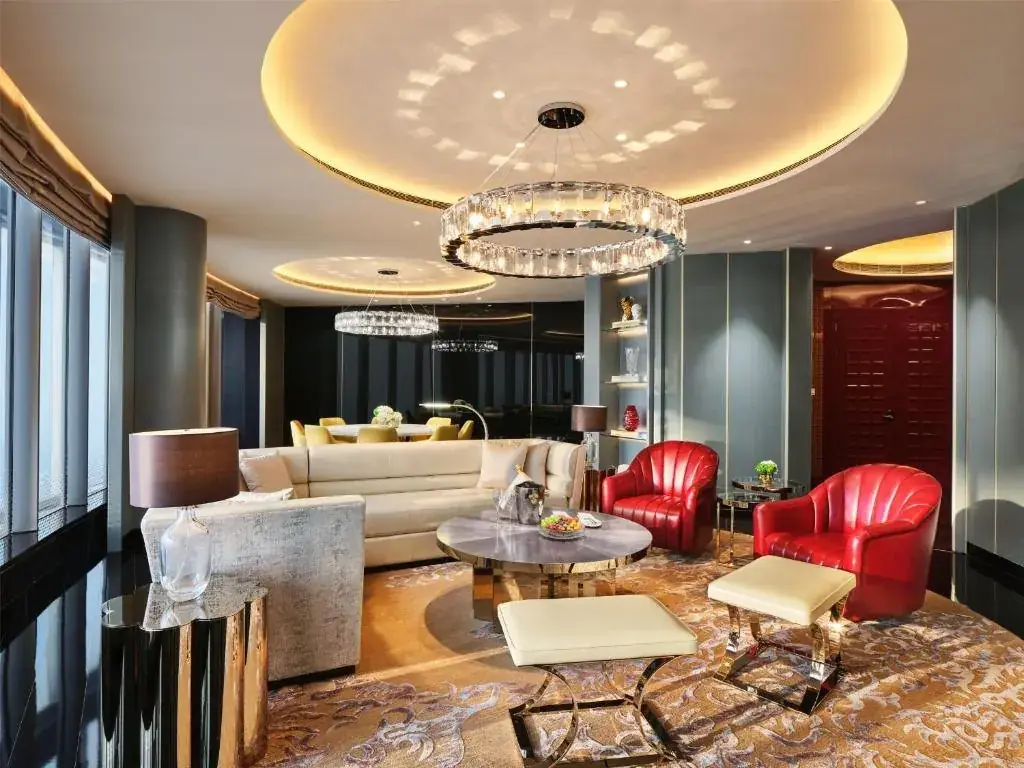
At the same time, the J Hotel shows what mixed-use real estate can offer hospitality. A hotel does not necessarily have to function as an isolated property. Within a large mixed-use project, different uses can benefit from one another: offices generate business travel, dining and retail create additional footfall, observation decks attract visitors, and the hotel adds a high-quality hospitality component to the building.
The hotel thus becomes part of a larger urban ecosystem. Especially in metropolises with extremely high land prices, this vertical combination of different uses can be an interesting alternative to the classic free-standing hotel.
Can height create economic value?
For investors and developers, the J Hotel ultimately leads to a particularly interesting question: how much is an exceptional location within a property worth? In a high-rise, not all floor space is equal. As height increases, the view, exclusivity and perception of a space can rise considerably — and a hotel can commercialise these qualities directly.
At the J Hotel this is carried through consistently. The product sells not just square metres, but a perspective that exists only in this place and at this height. A structural property thereby becomes a commercially usable unique selling point.
The NOWA perspective
For owners, developers and operators, J Hotel Shanghai Tower offers a simple but important lesson: not every hotel needs an iconic property — sometimes a hotel can become part of one. What matters then is not to treat the building's special qualities merely as a backdrop, but to make them part of the hotel product. At the J Hotel that quality is height: it shapes the rooms, the dining, the view — and thereby a substantial part of the positioning.
The principle behind it, however, transfers to entirely different properties. Every exceptional building possesses qualities that cannot be copied. The art of a good hotel concept lies in recognising precisely those qualities — and turning them into a reason why guests want to experience this particular hotel.
Independent professional commentary. NOWA HOTEL LICENSE has no business relationship with the hotel mentioned, with Jin Jiang International Holdings or with the Shanghai Tower. Information and imagery from publicly available sources; individual figures (including the number of artworks and the restaurant's height) as stated by the hotel. All brand and image rights remain with their respective owners.