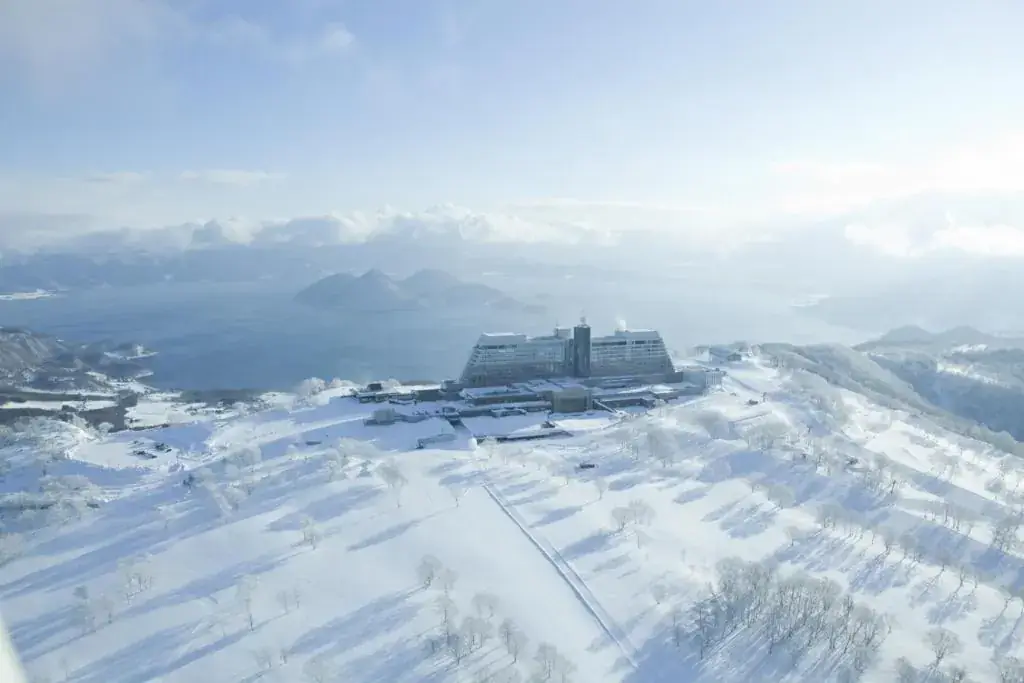
Set high above Lake Tōya, the resort combines dramatic nature, calm, generous architecture and classic luxury hospitality. The view over the lake and the surrounding volcanic landscape is not merely a backdrop — it is an essential part of the hotel product. The property now belongs to IHG's Vignette Collection and is among the best-known resort hotels in northern Japan.
When location itself becomes luxury
In many city hotels a good location mostly means short distances — station, downtown, airport or business district define the value of the site. At Windsor Toya the principle works in reverse: here luxury arises precisely from distance and seclusion.
The hotel sits elevated above the landscape and opens up sweeping views over Lake Tōya. Even the arrival becomes a deliberate transition: away from everyday life, towards a place defined almost entirely by nature and calm.
Conceptually this is remarkable. The guest is not paying only for room size, fittings or service — they are also paying for something no competitor at another site can copy exactly: the view. And in that lies one of the strongest forms of differentiation in hospitality.
Architecture that does not upstage the landscape
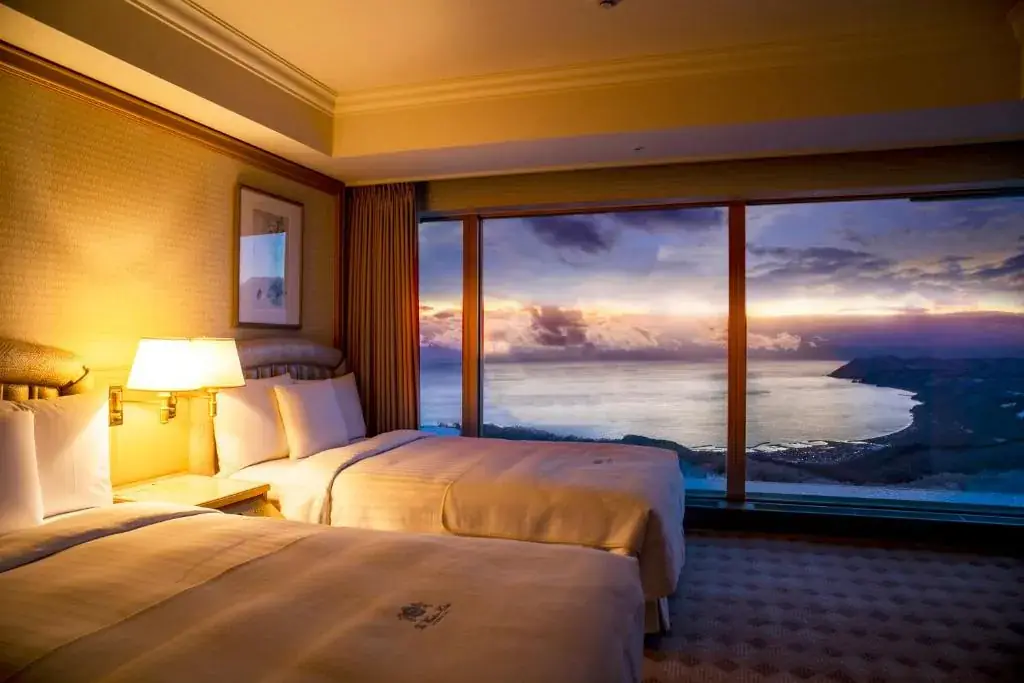
With an exceptional site there is always a risk that architecture becomes too dominant. At Windsor Toya the opposite is what stands out: how far the hotel subordinates itself to the landscape.
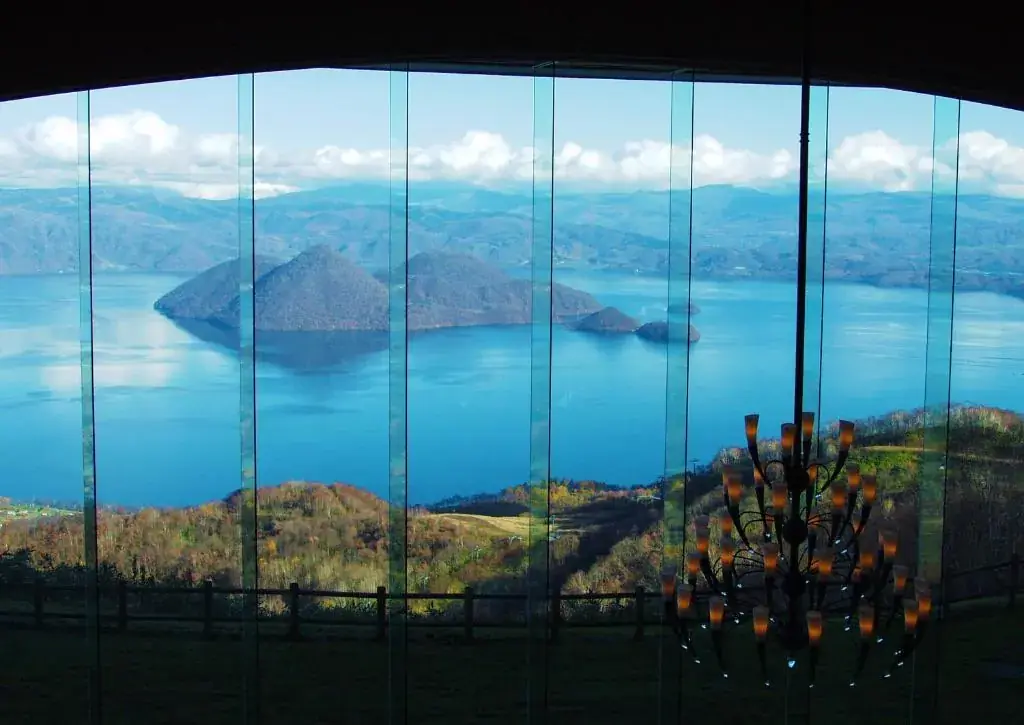
Large windows, expansive public areas and generous proportions draw the eye outward again and again. The areas facing Lake Tōya in particular use the natural surroundings as part of the interior — so the landscape effectively becomes a design element.
An expensive painting can be swapped out, a design wall renovated. A unique panorama, by contrast, remains part of the hotel. For resorts in particular, the question therefore belongs in the early concept phase: what is the strongest view — and how often can the guest experience it? Not only from the room, but from lobby, restaurant, spa, terrace and public areas.
A resort needs a reason for guests to stay
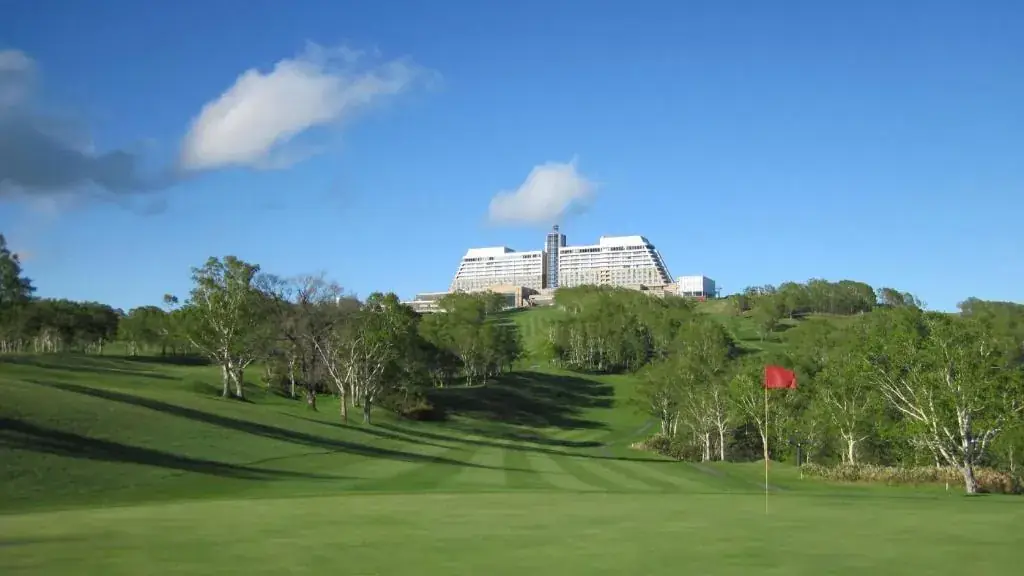
A spectacular location alone is not enough in the long run. The more secluded a hotel is, the more important the question of what guests can experience during their stay.
Windsor Toya therefore combines its natural setting with a comprehensive resort offering — including spa and wellness areas, pool and fitness, and seasonal leisure options. The property positions itself not as a mere place to sleep, but as a destination for a complete stay.
The underlying principle is especially relevant for developers: the less external infrastructure exists, the more the hotel itself must become the infrastructure. Downtown, a guest simply walks two streets for dinner; at a remote resort they expect dining, wellness, leisure and quality of stay to work within the house. Seclusion is therefore both an advantage and an obligation.
Dining as part of the destination
A particularly important part of the resort is its dining. The hotel currently lists nine restaurants and leans heavily on produce from Hokkaido — from Japanese cuisine to French dining, teppanyaki and further international concepts.
What is interesting is not just the number, but the strategic function. At a resort in this location, dining has to create enough variety so that a multi-day stay does not feel monotonous. At the same time, each restaurant can create its own atmosphere and its own reason to visit.
A good resort restaurant therefore fulfils three functions at once: it feeds the hotel guest, it extends the experience, and ideally it becomes a reason to visit the hotel in its own right. The Japanese restaurant Tōji Sanka, for example, deliberately uses the direct view of Lake Tōya as part of the dining experience. And so the circle closes: the landscape is not only sold from the room, but staged again and again through different parts of the hotel.
When a hotel hosts world politics
One exceptional episode underlines how special this location is: in July 2008 the hotel hosted the 34th G8 summit, the Hokkaido Tōyako Summit. The heads of state and government of the then-G8 met there from 7 to 9 July.
For a resort this is far more than a historical footnote. It shows that a remote location can offer privacy, security, prestige and international infrastructure at the same time. From a hospitality perspective, a quality that might first appear a disadvantage — distance — suddenly becomes an asset. Seclusion can create exclusivity, and exclusivity in turn can open up entirely new audiences.
Luxury does not always have to be loud
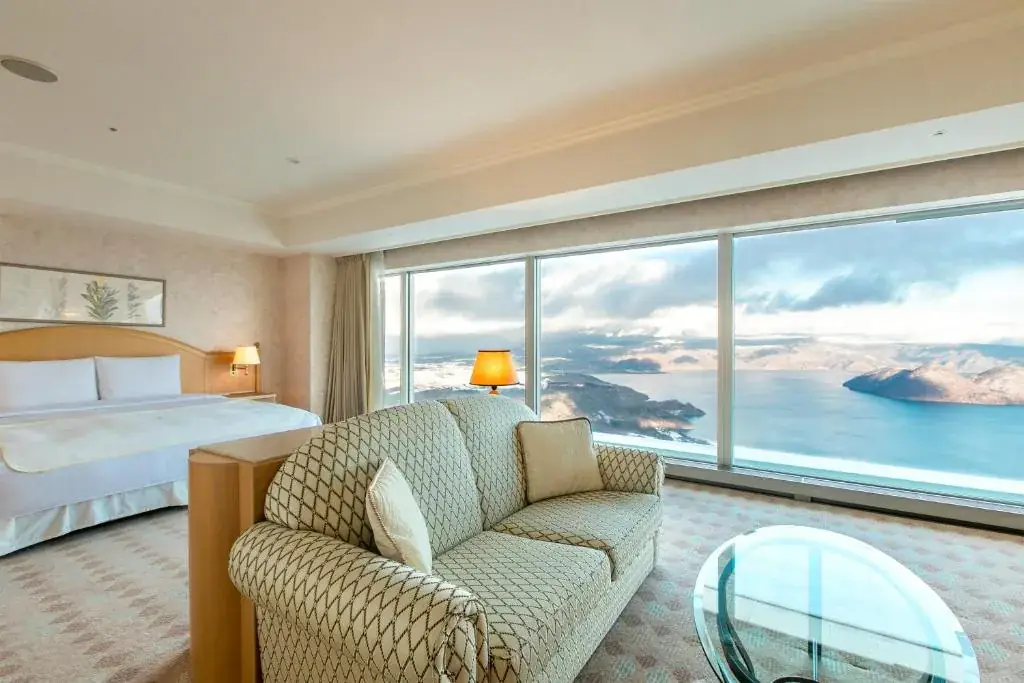
Windsor Toya also stands for a kind of luxury that differs markedly from many spectacular city or lifestyle hotels. It is less about constantly surprising the guest with new visual stimuli — the luxury arises instead from space, calm, nature, view, service and distance.
Precisely at a time when many hotels try to attract attention through ever more striking interiors, this approach is notable. Sometimes a hotel's strongest design concept is not what is added, but what is already there and is deliberately brought into focus.
What owners and developers can learn from it
Of course, not every hotel can sit on a mountain above a volcanic lake. But the principle transfers to almost any site. The decisive question is: what does this location have that another hotel cannot simply copy? It can be many things:
- a landscape
- a historic façade
- a distinctive courtyard
- an industrial past
- a river or an unusual city view
- a rooftop terrace
- a local story or the connection to a particular district
The best hotel concepts do not necessarily try to change their location — they amplify what is already unique.
Our perspective
For us, The Windsor Hotel Toya is interesting less for individual features than for the consistency with which location and landscape become the core of the entire hotel product: rooms, dining, public areas and resort facilities ultimately build on the same strength — the place.
And in that lies an insight relevant to almost any hotel project: not every exceptional hotel needs an exceptional building. Sometimes what it needs above all is the ability to recognise what is exceptional about its location.
Independent professional commentary. NOWA HOTEL LICENSE has no business relationship with the hotel mentioned or with the IHG group. Figures and imagery from publicly available sources; all brand and image rights remain with their respective owners.