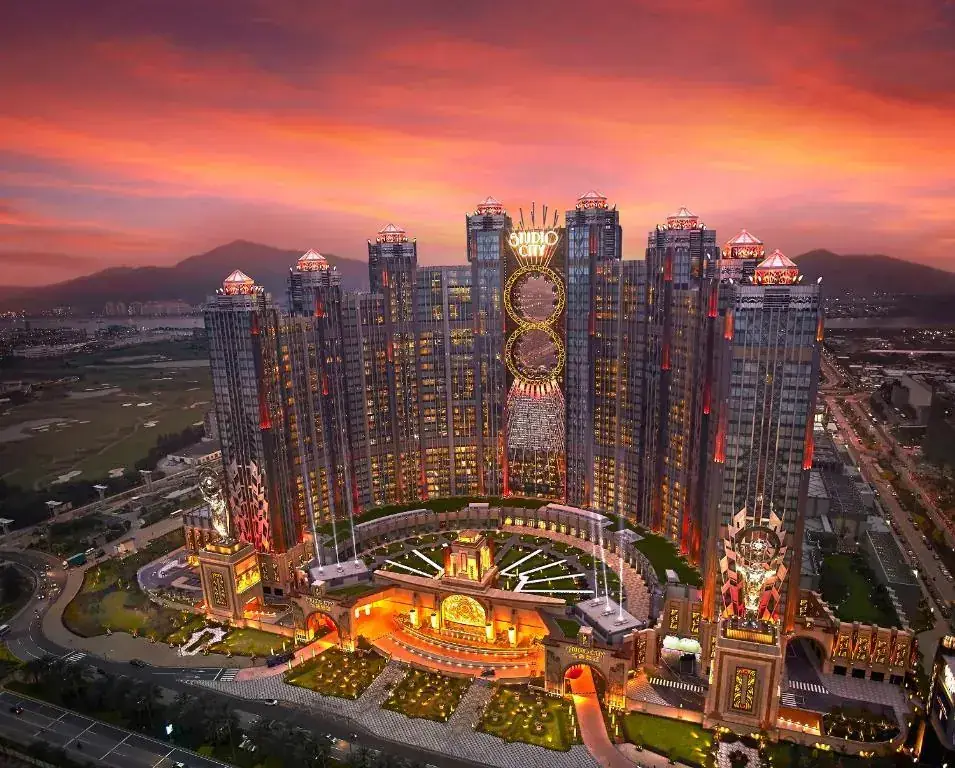
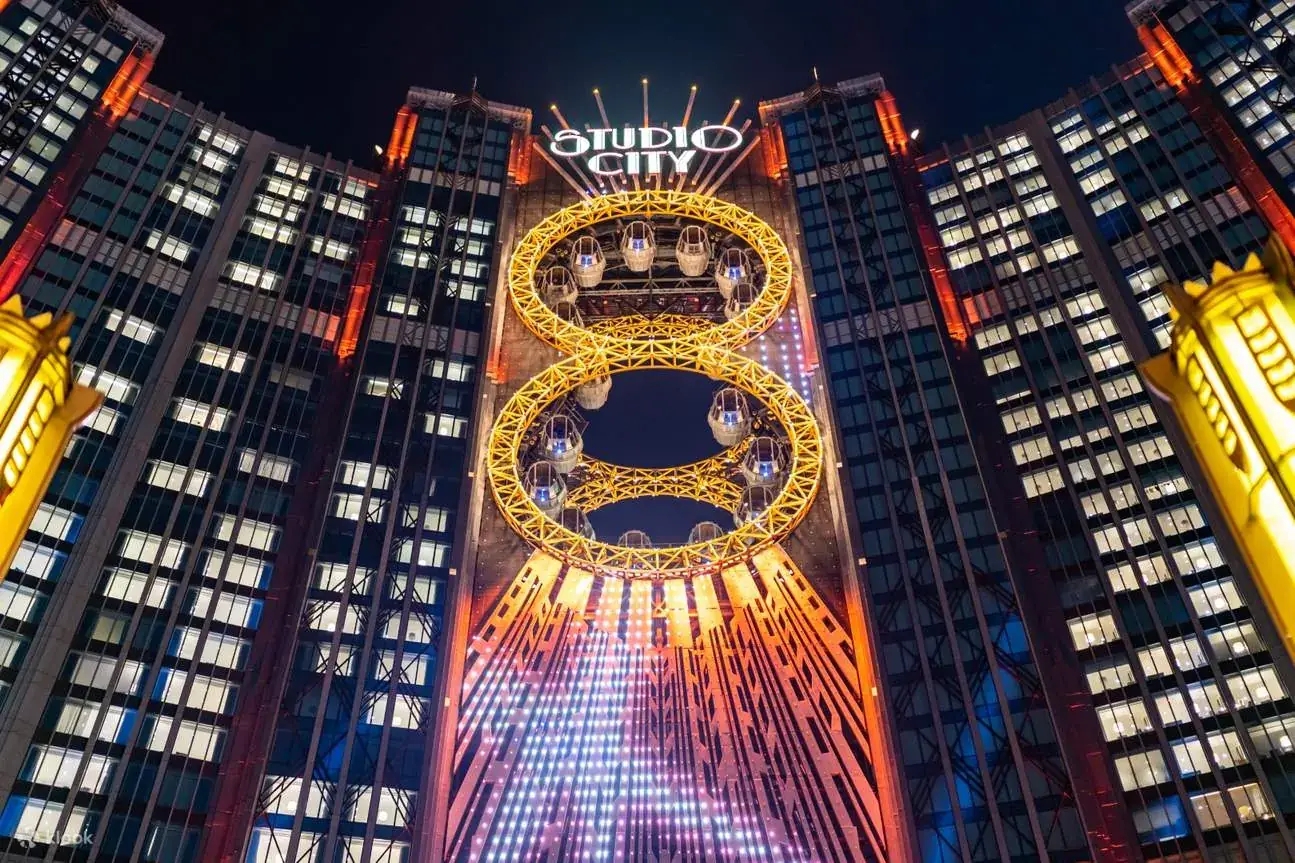
The resort brings hospitality, entertainment, dining, shopping and event space together into an experience that goes far beyond a classic hotel. Its defining feature is the Golden Reel — the world's first figure-eight Ferris wheel, built directly between the two hotel towers. And that is where the conceptual strength lies: the attraction was not built next to the hotel, but made part of it.
A building that tells a story from the outside
Many hotels invest enormous sums in interior design, restaurants or room concepts. Studio City starts a step earlier: the architecture itself takes on part of the marketing. The building is so distinctive that it is instantly recognisable in photographs — the Golden Reel joins the two towers and thereby becomes not only a leisure attraction but the visual signature of the entire resort.
From a development perspective this is especially interesting, because a strong hotel product should answer one question as early as possible, ideally at first glance: why should a guest remember this particular hotel? At Studio City the answer is obvious — identity is not created only by lobby, room or restaurant, but by the building itself.
When entertainment generates demand
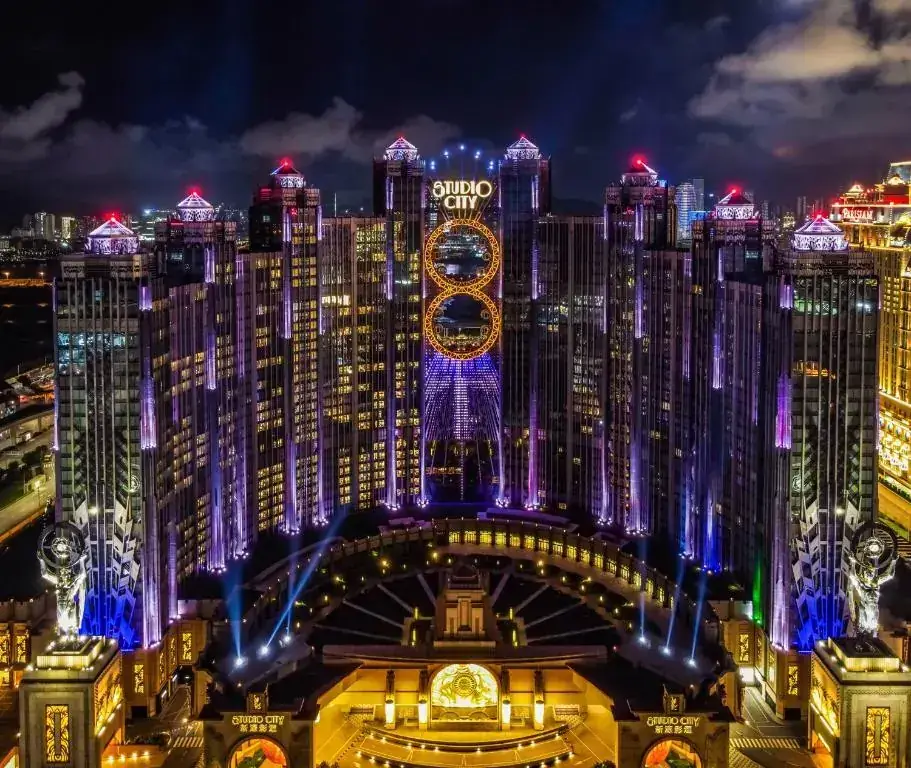
Studio City also shows that entertainment does not have to be a mere add-on but can itself be a demand driver. The Golden Reel is only one part of a larger entertainment concept that combines leisure with hospitality, dining, retail and events.
This reverses the classic logic of a hotel. Normally the guest comes for the room and then uses the other facilities; at an integrated resort it can work the other way around — the guest comes for an attraction, an event or an entertainment offering and only then chooses the hotel. The room is no longer necessarily the starting point of demand, but part of a larger economic system.
For large projects in particular this idea is relevant: restaurants, entertainment, meetings, events and leisure each attract their own audiences while supporting the hotel's occupancy.
The hotel as a destination
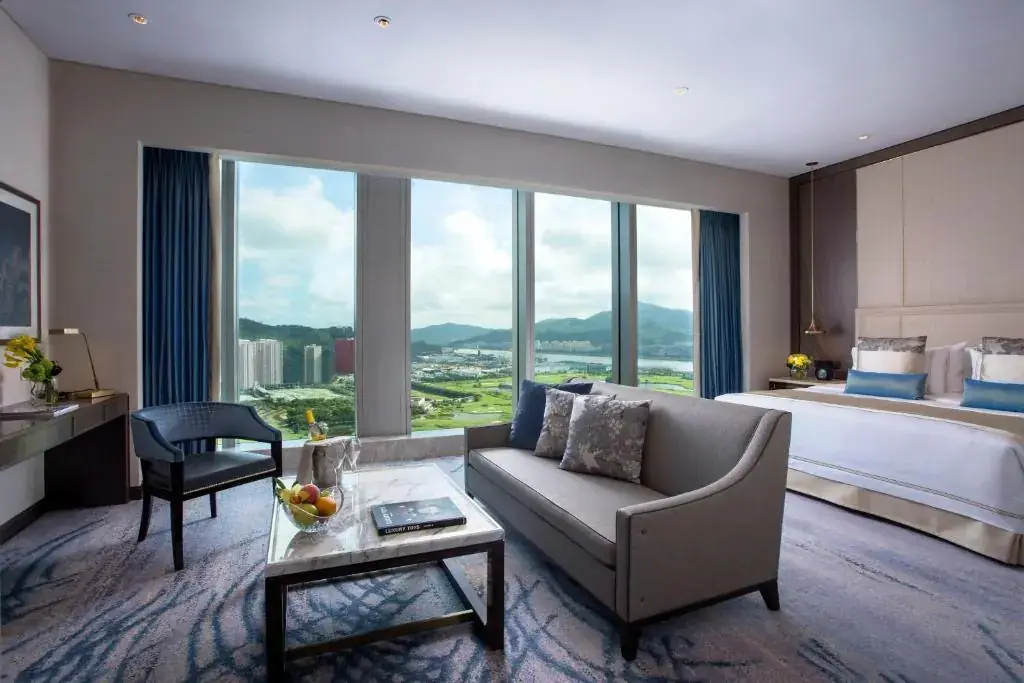
A classic city hotel benefits above all from its surroundings — restaurants, sights, shopping and entertainment are located outside. Studio City, by contrast, captures much of this demand within the resort: the guest does not have to leave the destination to find different experiences. The hotel becomes a small city of its own.
That is precisely what makes integrated resorts conceptually interesting. They combine staying, dining, shopping, entertainment, events and leisure — and the economic strength comes not from a single area but from their interconnection: a restaurant benefits from hotel guests, the hotel from events, entertainment brings additional visitors, retail extends the length of stay — and each area raises the appeal of the whole.
Architecture as a marketing instrument
Studio City shows impressively how important recognisability can be for a hotel. In many cities hotels compete with similar façades, similar rooms and similar offerings; brand then often becomes visible only through logo, service or interior. An exceptional architectural element accelerates that process considerably.
The Golden Reel makes Studio City recognisable even from a distance — it works in photographs, on social media, as a tourist attraction and as a symbol for the whole resort. In this way architecture also takes on a marketing function.
For developers this raises an interesting question: which architectural idea could give a hotel an identity that cannot simply be copied? It need not be a Ferris wheel — sometimes an unusual courtyard, a rooftop terrace, a historic structure, a distinctive façade or a spectacular lobby is enough. What matters is not the scale of the idea, but its recognisability.
Evolution rather than standing still
It is also notable that Studio City was not treated as a finished project. With its expansion the concept was developed further: Phase 2, designed by Zaha Hadid Architects, added hotel capacity as well as further entertainment, dining, water-park and event offerings.
This points to another aspect of modern hotel development: strong destinations keep evolving. A successful concept need not be static — new audiences, changing travel habits and additional uses can be reason to expand a resort step by step and generate fresh attention over the years.
What smaller hotels can learn from it
A hotel in Germany, Spain or Morocco does not need a Ferris wheel between two towers — and that is not the point. The real idea behind Studio City transfers far more simply: give the hotel one element guests will remember.
Many properties focus their renovations solely on new furniture, floors and bathrooms. That matters, but it does not yet create identity. A distinctive hotel usually needs an idea that goes beyond fit-out — an element that tells the story of the house. For example:
- an exceptional bar
- a distinctive breakfast room
- a spectacular rooftop terrace
- a particular art concept
- a historic story
- a unique spa area
- a connection to the local culture
The question is always the same: what would a guest photograph and later tell someone about this hotel? If the answer is merely „the room was nice“, that is often too little.
Entertainment does not have to be loud
At Studio City entertainment is large and spectacular, but the principle also works far more subtly. A boutique hotel can create entertainment through art, dining or music; a resort can turn nature into an experience; a business hotel can develop an exceptional lobby that is both meeting point and coworking space; a historic hotel can stage its own story.
The decisive point stays the same: the stay should offer more than just a night's sleep. The more closely these additional experiences are tied to the hotel's identity, the harder it becomes for competitors to copy the concept.
Our perspective
For us, Studio City Macau is impressive not only for its scale but for the consistency with which architecture, entertainment and hospitality were combined into a single product. The Golden Reel is the most visible symbol — but the real idea runs deeper: a hotel can itself become the reason for a trip.
Not every hotel needs spectacular architecture. But every hotel should ask which element can give it a clear identity. Because the strongest hotel concepts create something that matters more and more in a competitive market: memory. A guest need not retain every detail — sometimes a single exceptional element is enough. If it is strong enough, what remains in the end is not just a hotel room, but a destination.
Independent professional commentary. NOWA HOTEL LICENSE has no business relationship with the hotel mentioned or with Melco Resorts & Entertainment. Figures and imagery from publicly available sources; all brand and image rights remain with their respective owners.