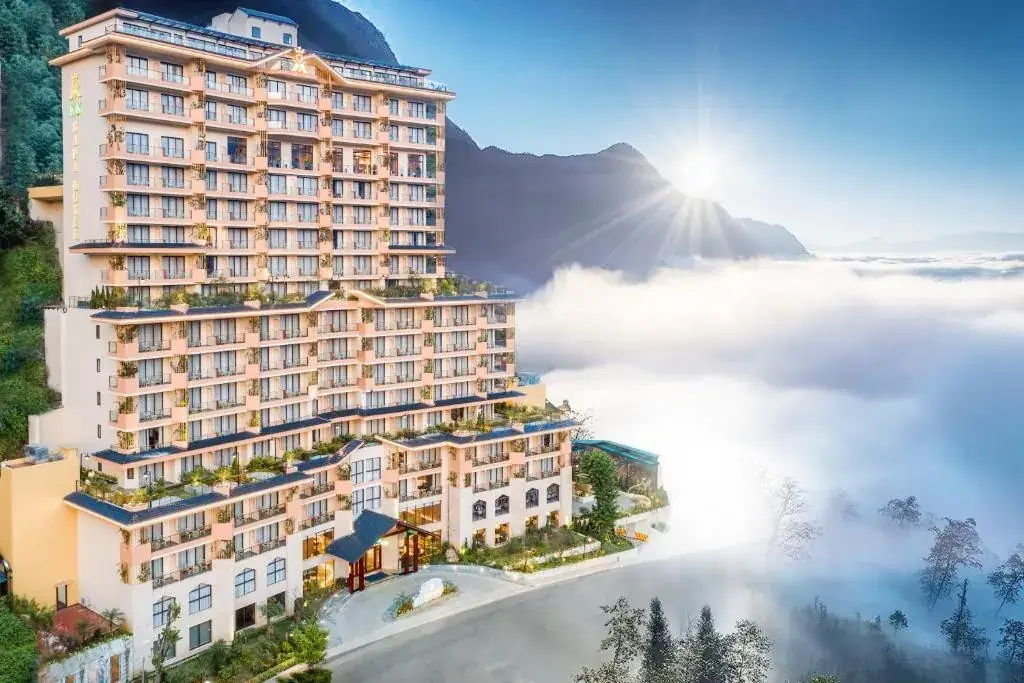
The property sits in the mountain region around Sa Pa, known for wide valleys, terraced rice fields and striking ridgelines. With staggered levels, numerous balconies and large windows, the hotel consistently uses this topography as part of its own product. And in that lies its real strength: the landscape is not merely looked at — it becomes part of the architecture.
A hotel that works with the slope
Hotels in mountainous locations often face a conflict of goals: on the one hand, as many rooms as possible should have a good view; on the other, the building must not feel like a massive intruder. At KK Sapa Hotel it is striking how far the architecture works with the hillside — the different levels create a staggered silhouette that fits visually into the surroundings while at the same time producing numerous façade surfaces, balconies and sightlines.
From a planning perspective this is notable. At a resort or mountain hotel the view is often one of the most valuable parts of the product; every additional room with a good view can become commercially relevant. Architecture therefore must not only look good, but make the natural advantages of the site usable as efficiently as possible.
The surroundings as part of the interior design
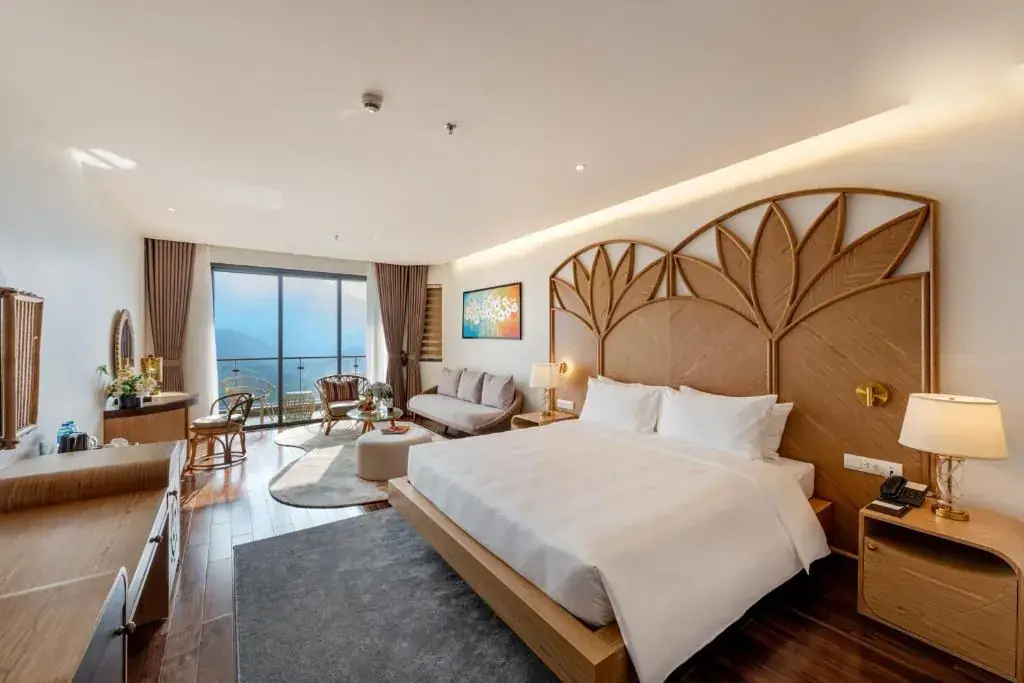
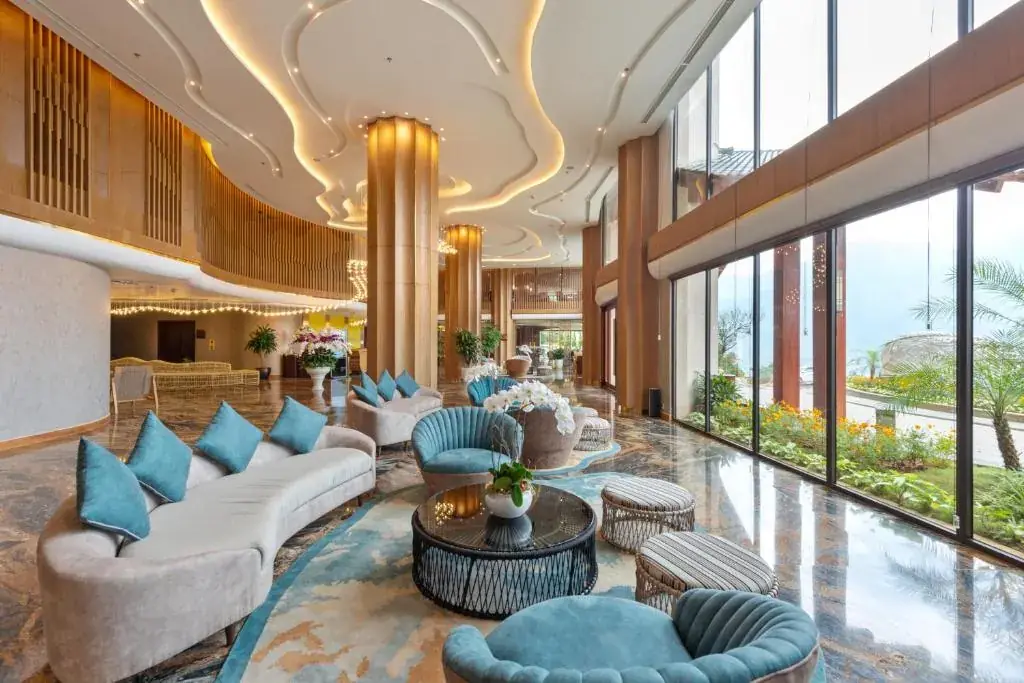
A hotel in a spectacular landscape does not necessarily need an over-loaded interior — quite the opposite. The stronger the view outward, the more important it can be that the interior does not compete with the landscape. Large windows and balconies therefore play a central role at KK Sapa Hotel: they create a direct connection between room and surroundings, so the guest experiences valley, mountains and shifting weather moods from within the room itself.
From this a compelling principle follows: the best decoration of a hotel room can sometimes be what lies beyond the window. For developers this means window positions, sightlines and floor plans should be part of the hotel concept very early on. It is not the interior alone that decides quality of stay — it often begins with the question of what the guest sees when they open the curtains in the morning.
Modern hospitality without losing regional identity
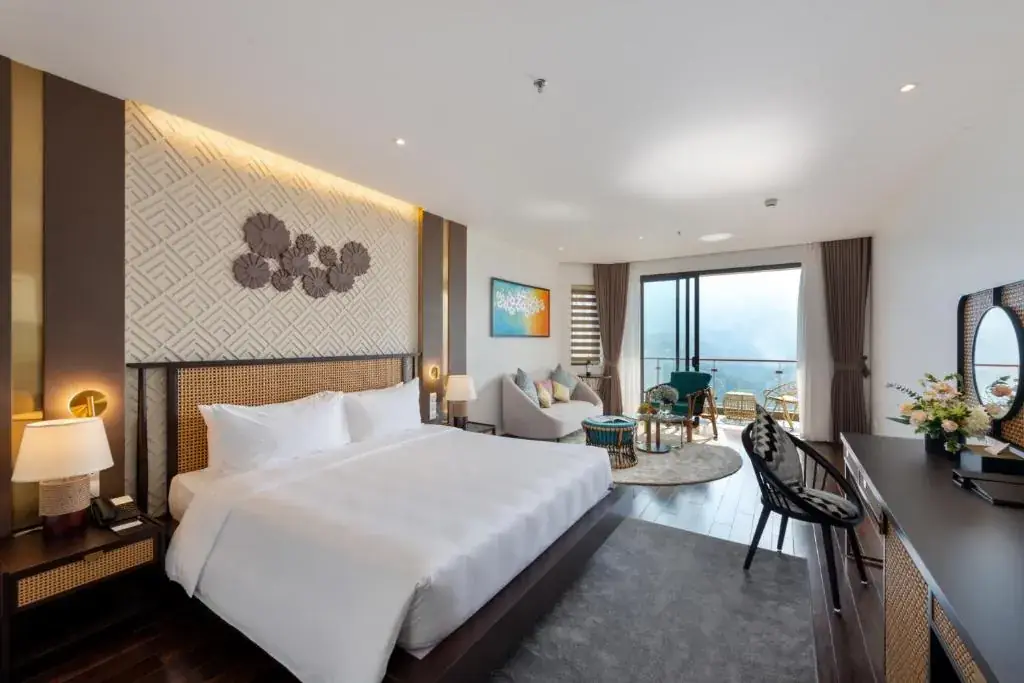
Sa Pa has a pronounced regional identity: landscape, local cultures and terraced fields shape the image of the region. A hotel can respond in two ways — it can copy this identity very obviously, or it can take it up more subtly. At KK Sapa Hotel the second approach is the interesting one: the property presents itself as a modern hotel and does not try to look like a historic mountain lodge, yet remains visibly connected to the place — not through excessive decoration, but through location, view, the feel of materials and architecture.
For modern hotel concepts this is an important idea: regionality does not have to be folkloric. A hotel can feel contemporary and still hold a clear connection to its location.
Why balconies can be more than extra space
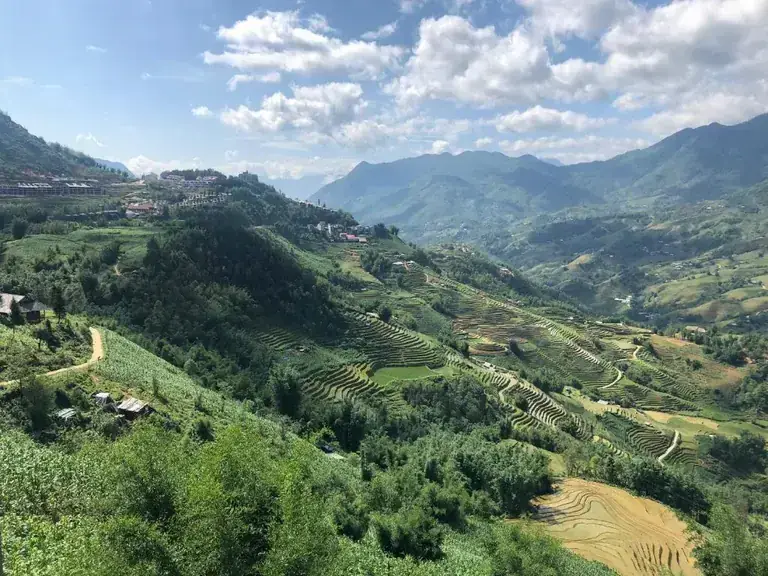
At many city hotels balconies play little commercial role. In a destination like Sa Pa it is different — here a balcony can be a decisive part of the product, because the guest gains not just extra square metres but a private vantage point. Precisely at hotels in nature destinations, this small change can considerably influence the perceived quality of a room.
This shows how differently hotel planning has to work depending on location: what would be inefficient downtown can become a key selling point in a mountain destination. Good hotel concepts therefore do not emerge from standardised floor plans, but from the site.
The difference between a view and an experience
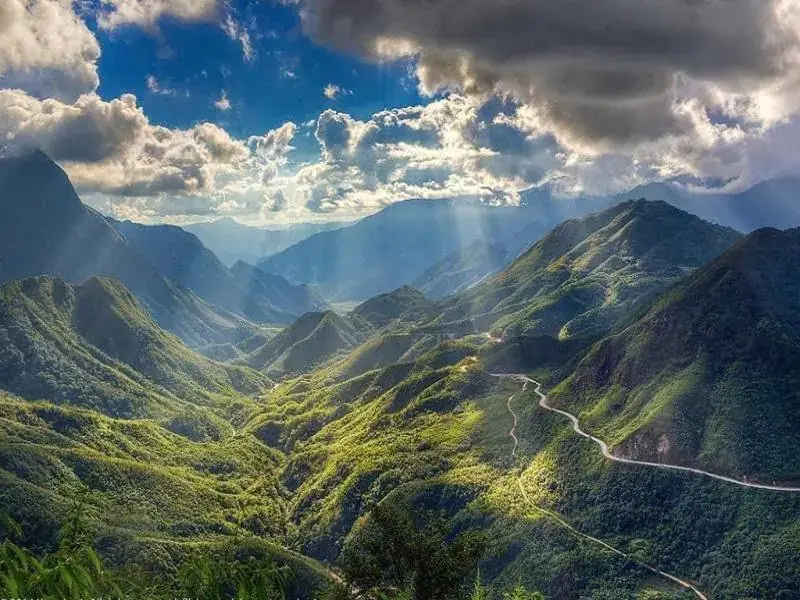
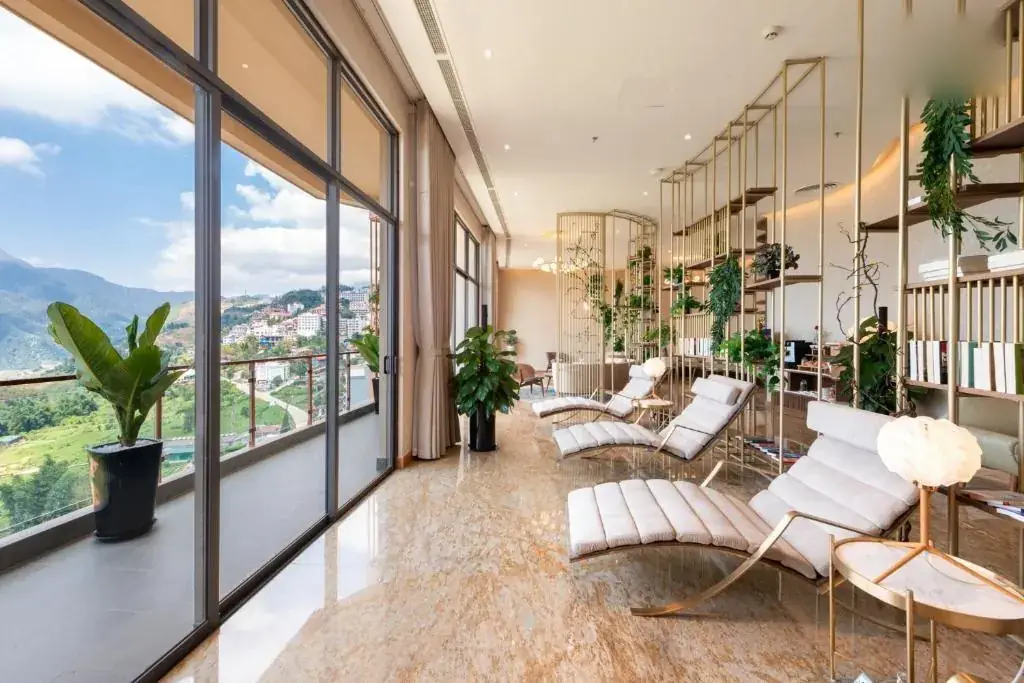
A beautiful view alone does not make a strong resort. The real question is: how often, and in what ways, does the guest experience this landscape during their stay? A good hotel should therefore not confine the view to the room — restaurants, public areas, terraces, wellness areas and lounges can all be deliberately positioned so the surroundings are perceived anew again and again.
This creates a through-line: the guest experiences not individual rooms, but the place. That is decisive for nature hotels, because guests often travel not for the building but for the destination. The hotel's task is therefore to make that destination as accessible and tangible as possible.
Weather as part of the hotel concept
Mountain regions have another special factor: the weather constantly changes perception. Fog, clouds, sun and rain can make the same landscape look completely different within a few hours — and at a hotel with large panoramic windows this change itself becomes part of the stay. It can hardly be created artificially.
A hotel can, however, reinforce this quality: through spaces where guests happily spend time even in poor weather, through wellness offerings, indoor pools, good dining and public areas that work even when the landscape disappears into fog. In nature destinations in particular the rule is: a good concept works not only in perfect weather.
What European hotel projects can learn from it
Of course, not every hotel has terraced rice fields and spectacular mountain ranges. The underlying principle nonetheless transfers to almost any site. The key question is: what natural or urban particularity does this plot have — and how can the hotel amplify it?
- at a mountain plot, the view
- at a coastal hotel, the sea
- at a city hotel, a historic building opposite
- at a hotel in Morocco, a courtyard, a rooftop terrace or the view over a medina
- at a rural hotel, vineyards or a particular landscape
The task is not always to invent something entirely new. Sometimes it is enough to stage what already exists with real consistency.
Our perspective
For us, KK Sapa Hotel is interesting above all because it makes a simple but very effective idea visible: architecture should not arise independently of its location. The best hotel projects use plot, topography and landscape not merely as a backdrop, but make them part of the concept.
At KK Sapa Hotel this creates a product closely tied to its location — the staggered architecture, the balconies and the large windows keep the landscape present almost everywhere. And in that lies an important insight for hotel developers: an exceptional hotel does not have to outdo its surroundings. Sometimes it is enough to stage them well.
Independent professional commentary. NOWA HOTEL LICENSE has no business relationship with the hotel mentioned. Some images show the landscape of the Sa Pa region, not the hotel. Information from publicly available sources; all brand and image rights remain with their respective owners.