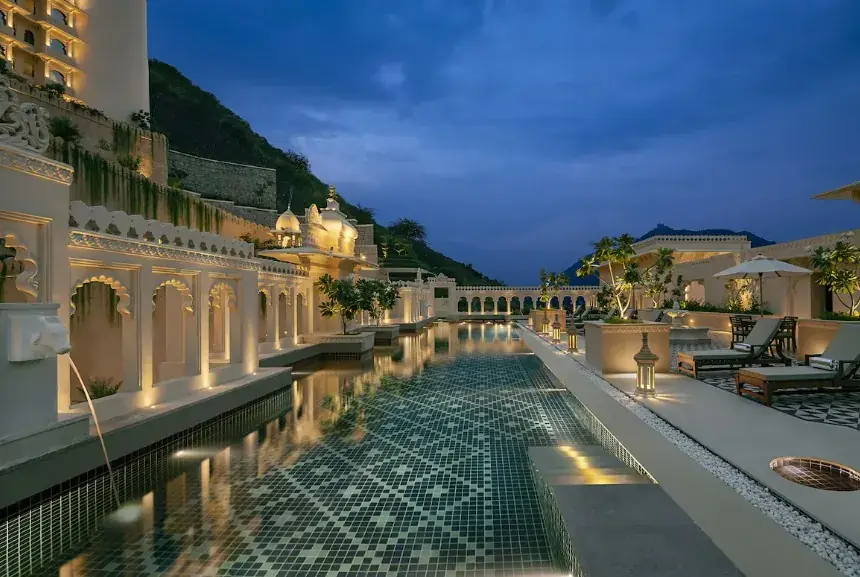
At first glance, Aurika Udaipur looks like a centuries-old maharaja's estate. In fact it is a modern luxury hotel — created with the idea of reinterpreting the history and architecture of its surroundings rather than merely quoting them as a backdrop. Udaipur is one of the most demanding stages a hotel can choose: historic palaces, lakes, the Aravalli mountains and a centuries-old building tradition shape the image of the region.
Anyone developing a new luxury hotel here therefore faces a particular question: should modern architecture deliberately create a contrast to history — or can a new build become part of that history itself? Aurika chose the second path. For owners and developers, that fundamental decision is more interesting than any single fixture or finish.
A new palace above the city
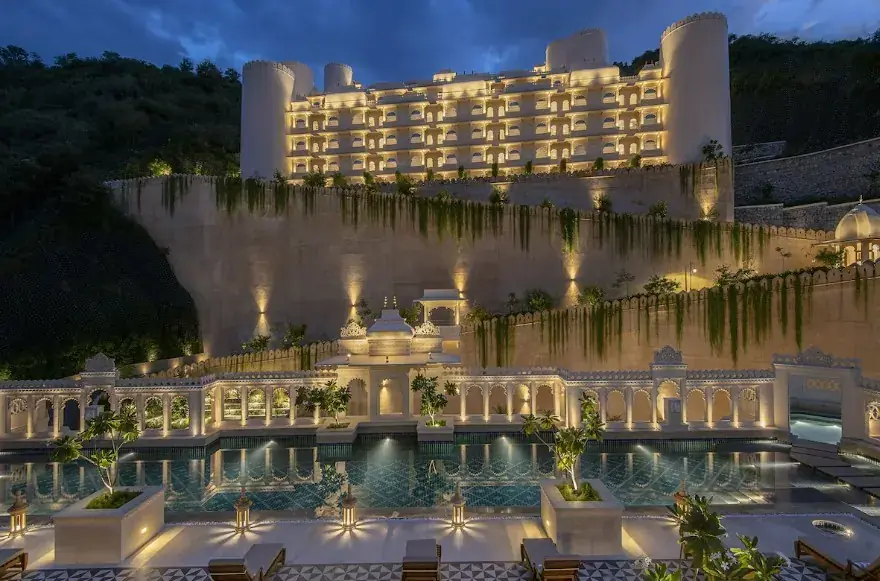
The resort sits on its own hilltop of around five hectares above Udaipur. Generous courtyards, terraces, gardens and buildings inspired by the traditional architecture of Rajasthan are spread across the site. The property has 139 rooms and suites — but size and amenities explain only part of its effect.
For the project, the architects Bobby Mukherrji Architects drew on characteristic elements of Udaipur's palace architecture: carved arches, large marble surfaces, frescoes, mirror work and elaborate stone-carving detail. What matters is how these models are handled. The elements were not simply copied but pared back and reinterpreted, so that the architecture feels sculptural rather than overloaded. The result is a hotel that creates a historic atmosphere without being a historic building.
When the location becomes the concept
Many international luxury hotels could, in theory, stand almost anywhere in the world. Materials, rooms, lobby and dining follow an international standard — inside the building, the actual location is sometimes barely perceptible. Aurika takes the opposite approach: the location becomes part of the product. The architecture references Rajasthan; terraces and balconies open the hotel to the landscape.
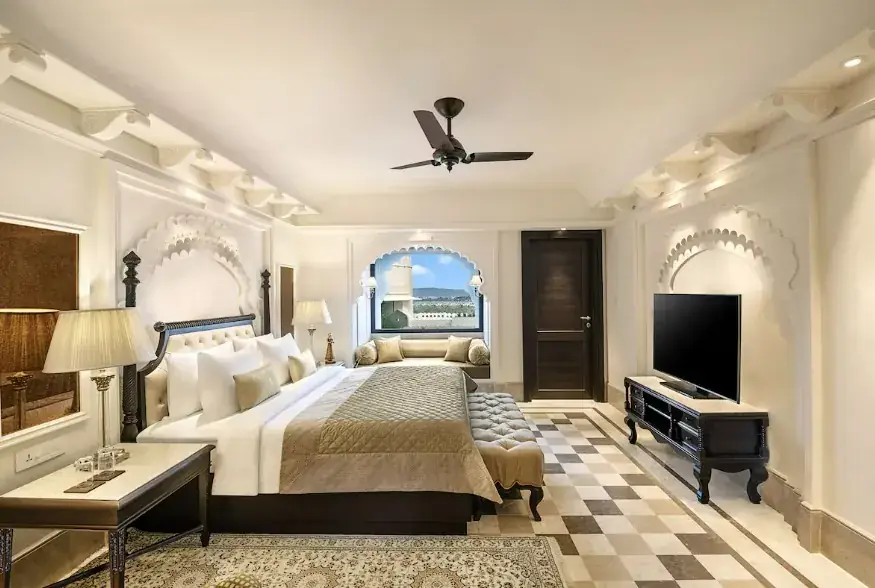
The 139 rooms and suites are deliberately kept in calm beige and cream tones and direct the gaze outward to the Aravalli landscape; some of the larger suites have their own plunge pools. This creates an interplay of architecture, interior and surroundings. The guest is not merely to stay in a luxurious hotel — they are to sense where they are.
Luxury needs an identity
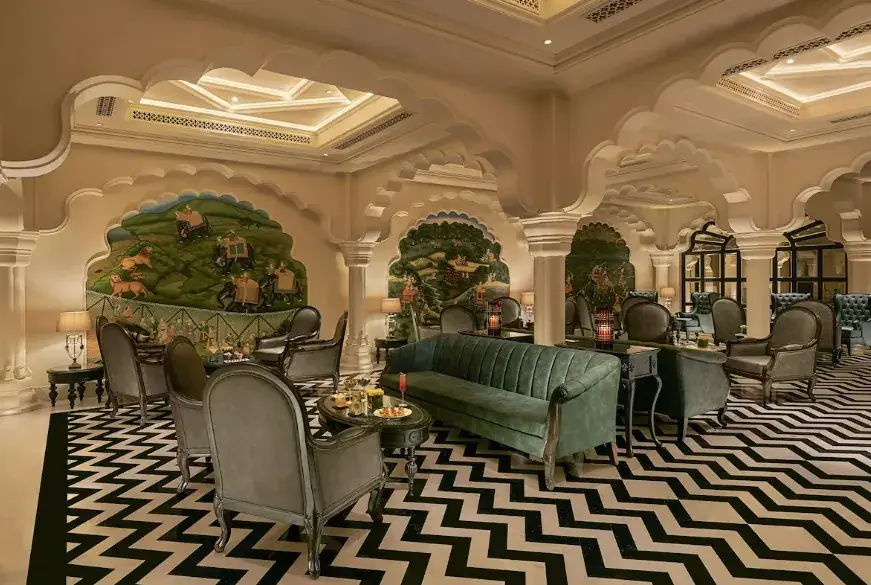
In this, Aurika offers an interesting alternative to a largely standardised understanding of luxury hospitality. Here, luxury arises not only from expensive materials or large rooms, but from atmosphere: from a courtyard, from the view off a terrace, from the staging of light in the evening, and from an architecture that establishes a connection to the history of the place.
It is precisely this recognisability that can be so important for hotels. High-quality beds, marble and generous bathrooms can be copied; a credible connection between building, history and location is far harder to reproduce. This is exactly where the commercial core of a strong hotel identity lies.
Landscape as part of the architecture
The grounds, too, were not treated merely as decorative extras. The landscaping draws on elements of historic Mughal gardens and combines them with plants suited to Rajasthan's dry climate; symmetrical paths, terraces and larger event lawns structure the site. In this way the architectural idea continues beyond the buildings. That is an important detail: a convincing hotel concept does not end at the room door — ideally, arrival, lobby, rooms, dining, grounds and even the paths through a resort tell the same story.
More than a leisure hotel
Behind the romantic staging lies a commercially considered concept. Alongside rooms and suites, Aurika offers dining — including the Mirasa restaurant and the Ariva bar — a spa, fitness area, pool and extensive event and conference space. According to the hotel, more than 2,050 square metres of meeting and banquet space are available, including a pillar-less ballroom (Ekaar) of around 510 square metres.
This means the property is not aimed solely at classic holiday guests. Destination weddings and larger events in particular are an essential part of the positioning — which explains why terraces, gardens, ballroom and public areas play such a large role in the overall concept. Architecture thus becomes more than a backdrop: it supports different uses and creates additional reasons to visit the hotel — and several revenue streams that do not depend on room occupancy alone.
A modern hotel with a historic soul
Perhaps the most interesting thing about Aurika is an apparent contradiction: the building wants to function in a modern way but feel historic. It offers the infrastructure of a contemporary luxury hotel while using an architectural language deeply tied to Rajasthan. It is precisely this balance that decides whether a historically inspired hotel feels authentic or artificial.
At Aurika, the deliberate choice was not to ornament every surface to the maximum. Traditional design elements are used, but balanced by calmer surfaces and contemporary interiors. The result is not a reconstruction of an old palace, but a modern interpretation of one.
The NOWA perspective
For owners, developers and operators, Aurika Udaipur holds a clear lesson: a hotel concept does not begin with the choice of furniture, but with the question of what identity a property should have. Location, architecture, target group, use and positioning should not be considered independently of one another. Aurika shows how local history can become part of the hotel product — and how different commercial uses can be developed from it at the same time.
Not every historic design element makes a hotel authentic, and not every new hotel has to look a hundred years old. What matters is whether a concept creates a credible connection between property and location. Perhaps the most important idea of Aurika Udaipur is therefore this: an exceptional hotel does not have to outdo its surroundings — it can make them part of its own story.
Independent professional commentary. NOWA HOTEL LICENSE has no business relationship with the hotel mentioned, with Aurika / Lemon Tree Hotels or with Bobby Mukherrji Architects. Information and imagery from publicly available sources; all brand and image rights remain with their respective owners.