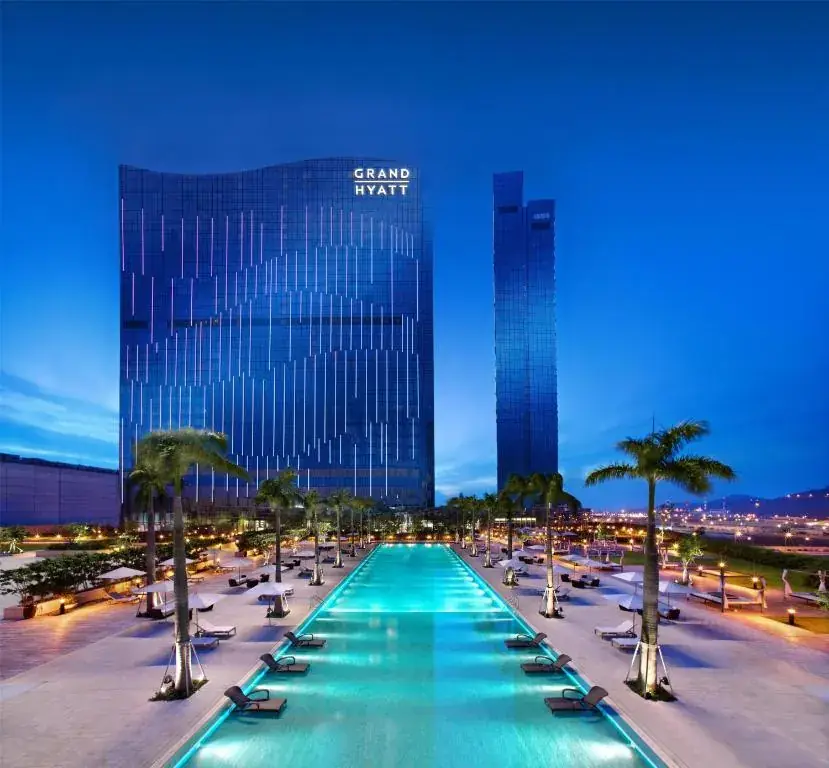
The hotel sits within City of Dreams in Cotai, part of a large-scale resort with entertainment, dining, shopping and further leisure offerings. And yet the Grand Hyatt manages to keep its own identity within this vast complex.
From our perspective at NOWA, that is exactly what makes it interesting: not the sheer size or the luxury positioning, but the way in which different parts of the hotel are brought together into one coherent concept.
Size, without feeling anonymous
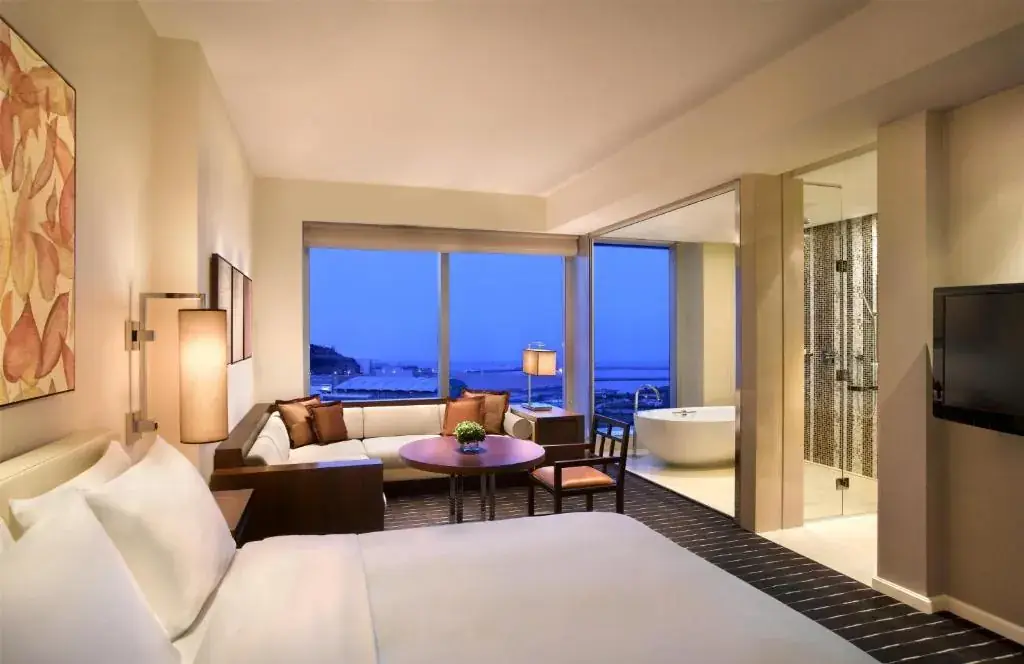
With 791 rooms and suites, Grand Hyatt Macau is among the larger luxury hotels in its class. Many standard rooms already offer around 52 m², a sense of space that in many European city hotels tends to appear only in higher room categories.
But size alone does not make an exceptional hotel. The real question is how a hotel of this scale avoids feeling impersonal.
Part of the answer lies in a clear structuring of the product. Distinct areas, club offerings, suites, lounges and separate guest zones create smaller, more individual worlds within the large hotel.
From this a useful principle follows: a large hotel does not have to feel large. Through intelligent zoning, differentiated room categories and clearly structured guest journeys, even a very large hotel can feel more personal and more refined.
The hotel as part of an ecosystem
One of the distinctive features of Grand Hyatt Macau is that the hotel experience does not end at the front door. As part of City of Dreams, the hotel is embedded in a much larger destination — restaurants, entertainment, retail and leisure extend the core hotel product.
Conceptually, this is particularly compelling. The hotel does not have to deliver every experience within its own walls. Instead it becomes part of an ecosystem in which different offerings reinforce one another.
For owners and developers this raises a useful question: what can be created around a hotel that increases the value and appeal of the hotel at the same time? In Macau it is entertainment. Elsewhere it could be dining, wellness, coworking, high-quality residential use, medical offerings, culture or retail.
Modern hotel concepts should therefore consider not only the building itself, but the environment the guest moves through.
Meetings & events as a business in their own right
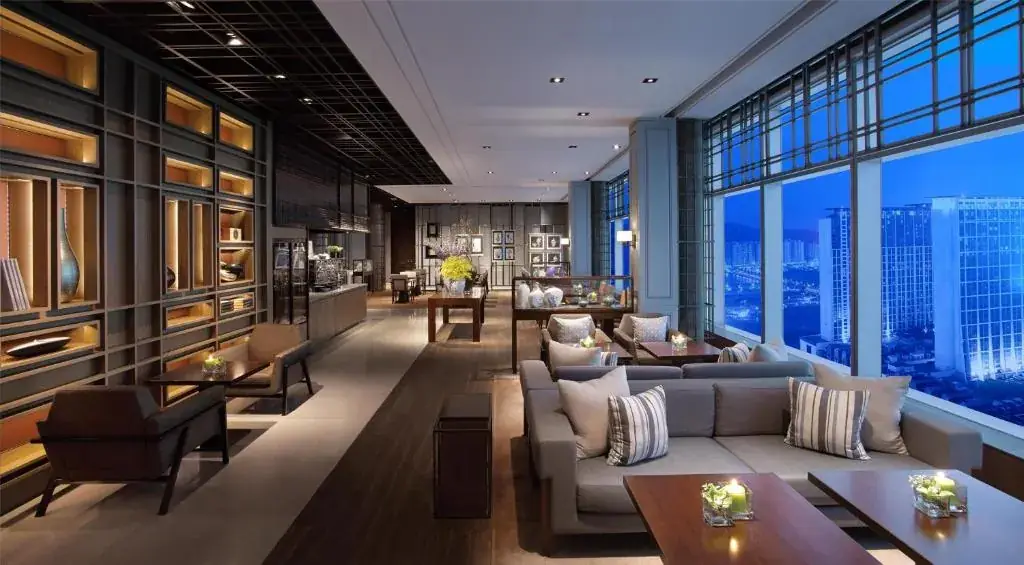
Another exceptional aspect of Grand Hyatt Macau is its strong position in the events and MICE business. The hotel offers nearly 8,000 m² of event space across a range of venues. The pillarless Grand Ballroom alone spans around 1,900 m² and can host very large functions.
This is not simply a few conference rooms added to the hotel. The event operation works like a business in its own right within the hotel. And in that lies an important insight for hotel concepts: ancillary space should not merely fill square metres — it should serve an economic purpose of its own.
- A conference area can generate additional demand.
- A rooftop can become a destination in its own right.
- A restaurant can build a brand independent of the hotel.
- A spa can also attract local guests.
The strongest hotel concepts get individual parts of the house to generate their own demand while strengthening the overall product.
Luxury through space
Luxury hospitality is often associated with expensive materials, elaborate décor and visible exclusivity. Grand Hyatt Macau shows a different kind of luxury: space.
Generous rooms, expansive public areas, high ceilings, long sightlines and striking proportions create a sense of quality that materials alone can hardly replace. The suites carry the same principle through — some categories reach sizes closer to private residences than to classic hotel rooms.
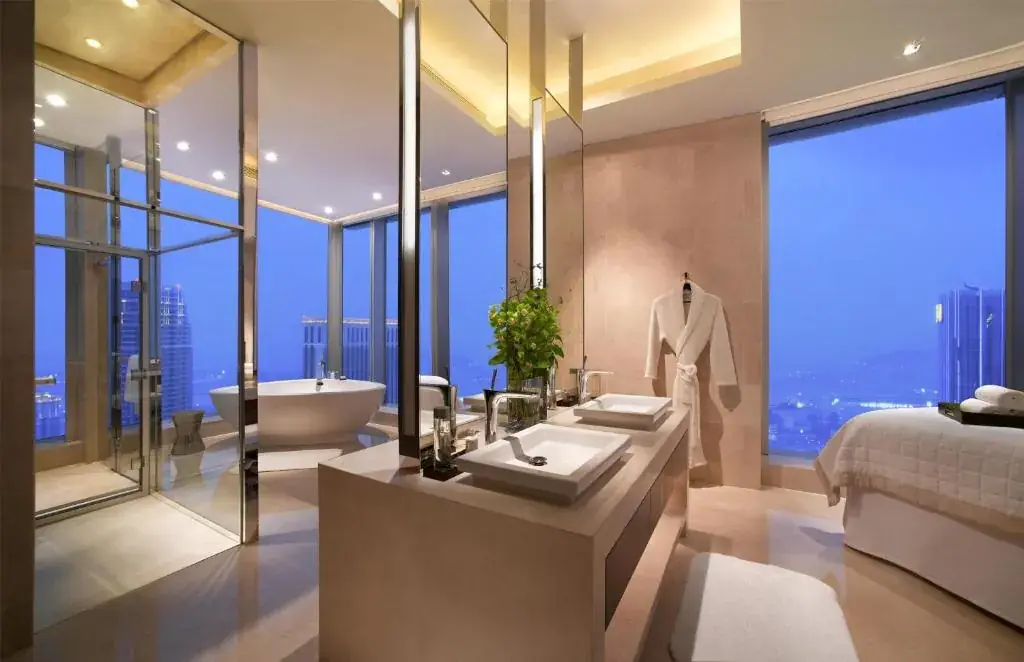
For new hotel developments in particular, this is worth noting. Luxury does not always mean adding as many design elements as possible. Sometimes luxury arises precisely from building on less and giving the guest more room.
What we find particularly interesting about this concept
Grand Hyatt Macau shows very clearly how a hotel can take on several roles at once: hotel, event venue, dining destination, business hub, retreat and part of an entertainment resort. It is precisely this combination that makes the concept exceptional.
For us, copying such a project one-to-one is beside the point. The more interesting question is which individual principles transfer to other markets — for example:
- clear zoning, even in large hotels
- generous spatial concepts as part of luxury positioning
- ancillary areas as revenue generators in their own right
- integrating a hotel into a wider mixed-use concept
- distinct experiential worlds within a single building
Not every hotel needs 791 rooms or thousands of square metres of event space. But almost every hotel can benefit from the same underlying idea: a strong hotel concept begins where a building becomes an experience.
Independent professional commentary. NOWA HOTEL LICENSE has no business relationship with the hotel mentioned or with the Hyatt group. Figures and imagery from publicly available sources; all brand and image rights remain with their respective owners.