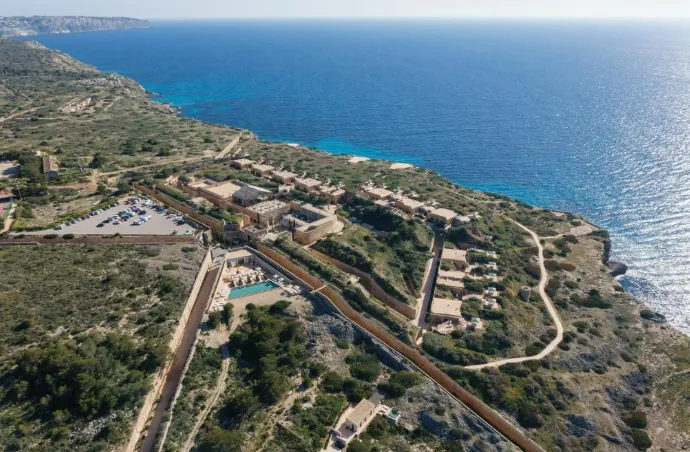
Above the turquoise waters of the Bay of Palma stands a complex that, at first glance, recalls a defensive citadel more than one of Spain's most exclusive hotels. And that is exactly what it originally was: Cap Enderrocat, a coastal fortress built in the late 19th century to defend the approach to Palma. For decades the military installation fell into disrepair, until the Mallorcan architect Antonio Obrador transformed it, through a long, heritage-sensitive conversion, into today's Cap Rocat — now a member of Small Luxury Hotels of the World and listed in the Michelin Guide.
For owners and investors, what makes this property interesting is less its exclusivity than the principle behind it: how does an existing, seemingly unsuitable building become a luxury product that cannot be copied?
From fortress to luxury hotel
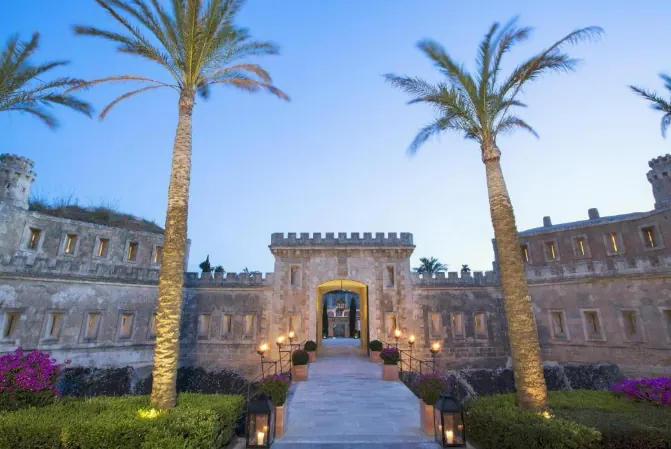
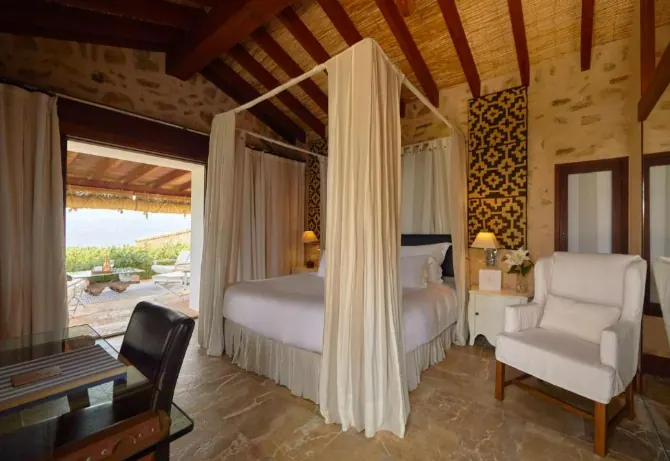
The decisive idea behind the conversion was not to hide the fortress but to keep it visible. Ramparts, tunnels, casemates and former powder magazines were not demolished but carefully repurposed into rooms, suites and public areas. Some of the rooms are literally carved into the fortress walls — with a solidity no new build could achieve.
The result is not a hotel that stands on a historic site, but a hotel that consists of the historic site itself. The guest does not sense a design reference, but real building fabric with more than a hundred years of history.
Adaptive reuse — the most demanding discipline
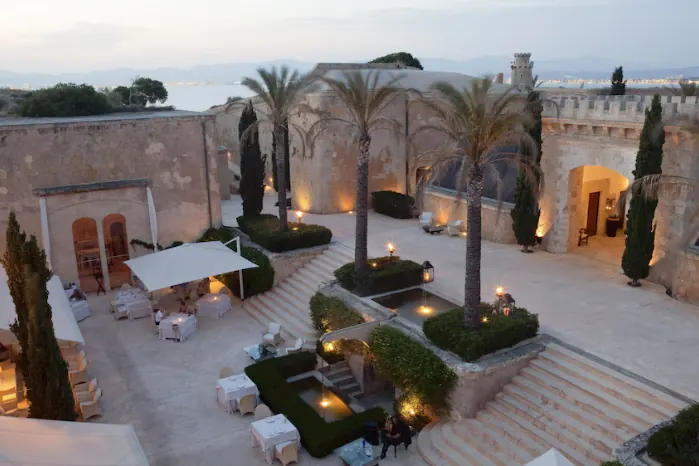
What defines Cap Rocat carries a sober name in property development: adaptive reuse — repurposing an existing building for an entirely new use. In hospitality it is regarded as the most demanding discipline: heritage protection, complex structures, elaborate building services within grown fabric and long planning horizons make such projects more expensive and slower than a new build.
The reward for that effort, however, is something no budget can build from scratch: authenticity. A new build can imitate materials, proportions and atmosphere — but it cannot possess the history that real, repurposed fabric brings. It is precisely this non-reproducibility that forms the economic core of the concept.
History as a competitive advantage
Mallorca has plentiful high-end hotels; interchangeable five-star quality alone has long ceased to be a distinguishing feature there. Cap Rocat therefore does not compete on fittings alone, but on a narrative no competitor can adopt: that of a fortress turned into a retreat.
This story works on several levels at once — as a reason to travel, as a subject in photography and international coverage, and as justification for a premium price. Where other houses must spend considerable marketing budgets simply to be recognisable, at Cap Rocat the property itself does much of that work.
Fewer keys, stronger positioning
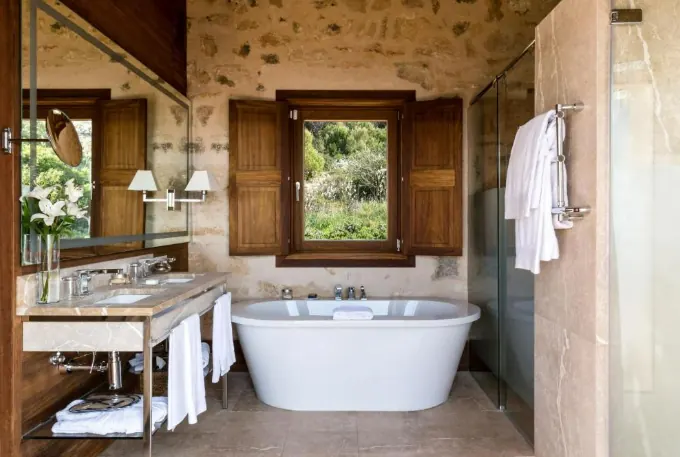
With around 30 rooms and suites, Cap Rocat is deliberately small by resort standards. This low key count is not a limitation but part of the strategy: exclusivity, privacy and the feeling of having an entire place to oneself arise precisely from the limited capacity.
Economically, this shifts the lever. A property of this kind does not maximise the number of rooms, but the achievable price per room and spend per guest through dining, spa and experience. Fewer keys, carefully positioned, can ultimately make for a more resilient business than a larger but more interchangeable complex.
Location as a non-reproducible asset
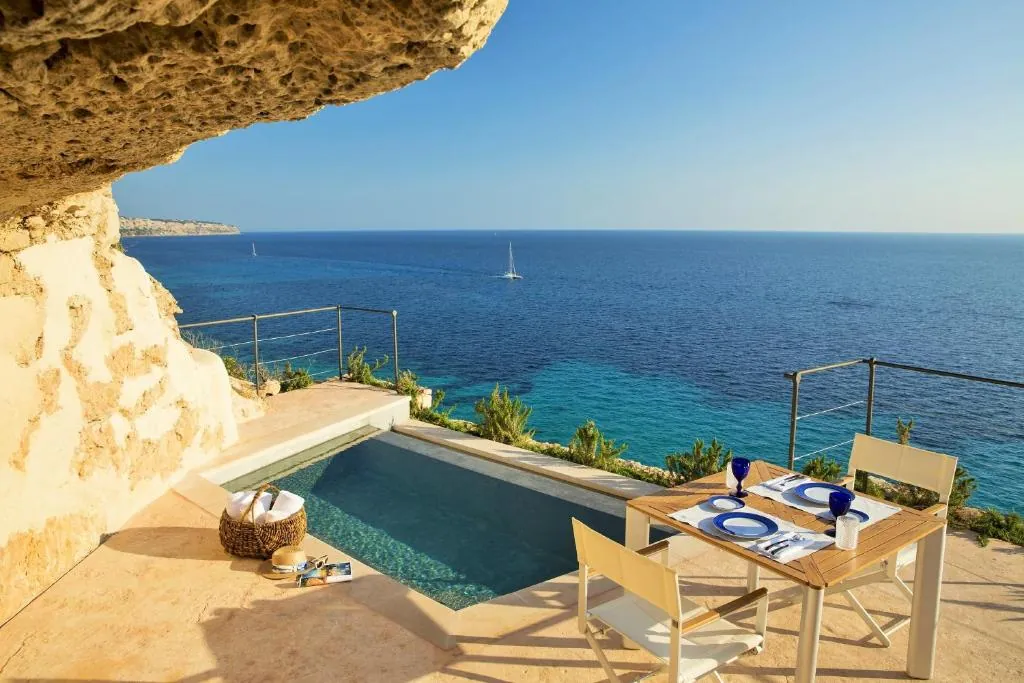
Alongside the historic fabric comes a second, equally non-reproducible asset: the location. Cap Rocat lies secluded on its own headland with direct access to the Mediterranean, yet only a few minutes' drive from Palma and its airport. This combination of complete seclusion and good accessibility is exceptionally rare in the Mediterranean.
Such sites are effectively impossible to multiply. Where building fabric and location coincide and both are unique, a value emerges that largely withstands short-term market fluctuations — exactly what investors prize in scarce, prime assets.
What owners and investors can take from it
Not every existing property is a fortress with sea access. Yet the Cap Rocat principle can be transferred to very different assets: an old manor, an industrial site, a listed urban building or an unusual property can, through adaptive reuse, become a hotel product that — precisely because of its history — cannot be copied.
The decisive question comes before the conversion: which element of this property is unmistakable — the fabric, the location, the history or a combination of them — and can a viable concept be developed from it? Where that question is answered convincingly, the apparent disadvantage of the existing building is in truth its greatest value. It is precisely at this intersection — between property, concept and the right operator or investor — that the work of NOWA HOTEL LICENSE begins.
Independent professional assessment. NOWA HOTEL LICENSE has no business relationship with Cap Rocat, its owners or operators. Information and images based on publicly available sources; individual details (including the number of rooms) according to the hotel and may vary. All brand and image rights remain with their respective owners.