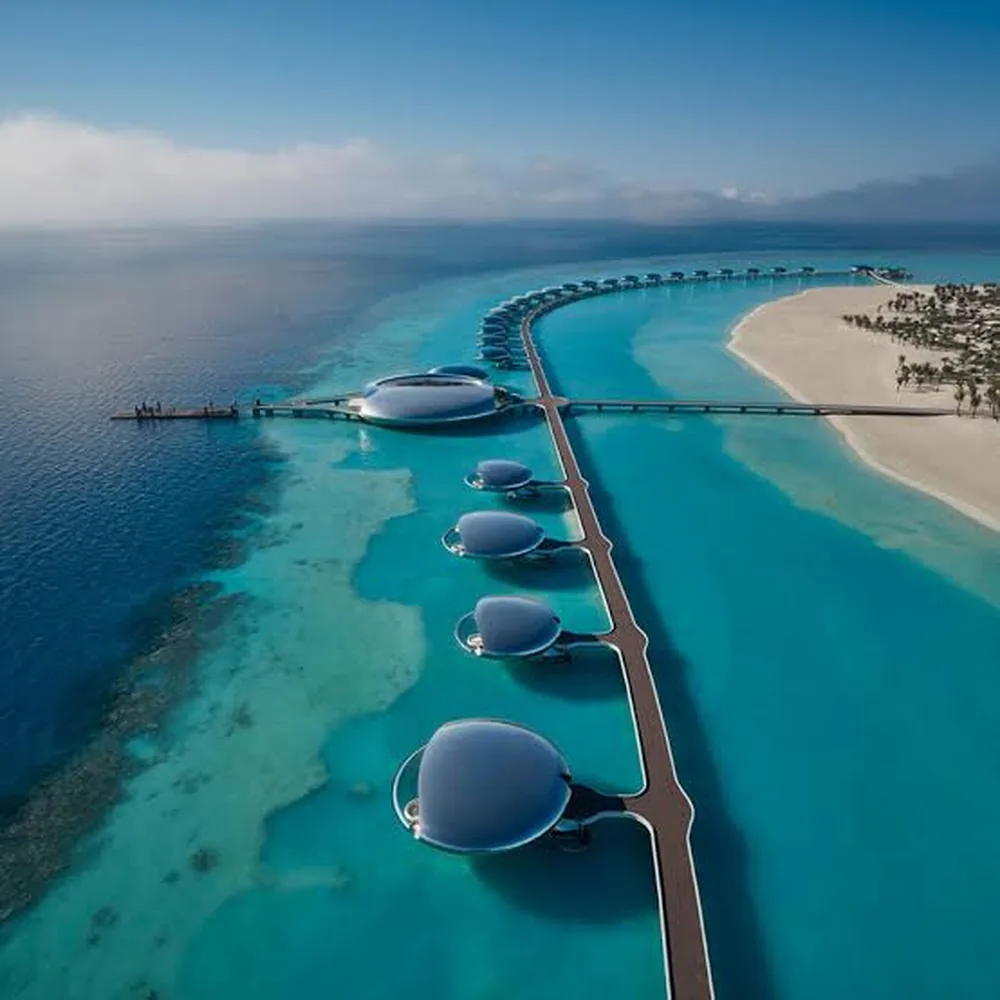
A hotel room can be sold. A working water and energy supply has to be created first. The island resort Shebara makes visible what many hotel concepts consider too late: the quality of the guest experience depends on decisions made long before the furnishing. For owners, there is an important lesson here about location, construction and operations.
Shebara is located on Sheybarah Island in Saudi Arabia’s Red Sea. Red Sea Global cites 73 villas, 38 of them over the water and 35 on the beach. The setting in the Al-Wajh Lagoon is central to the hotel product. At the same time, it places particular demands on its delivery.
Source: Red Sea GlobalAnyone developing such a resort plans more than accommodation. They must determine how buildings reach the island, how supply works, and how construction and operations can be reconciled with the sensitive surroundings. That is precisely why Shebara deserves a look from an owner’s perspective.
No conventional infrastructure means planning the supply yourself
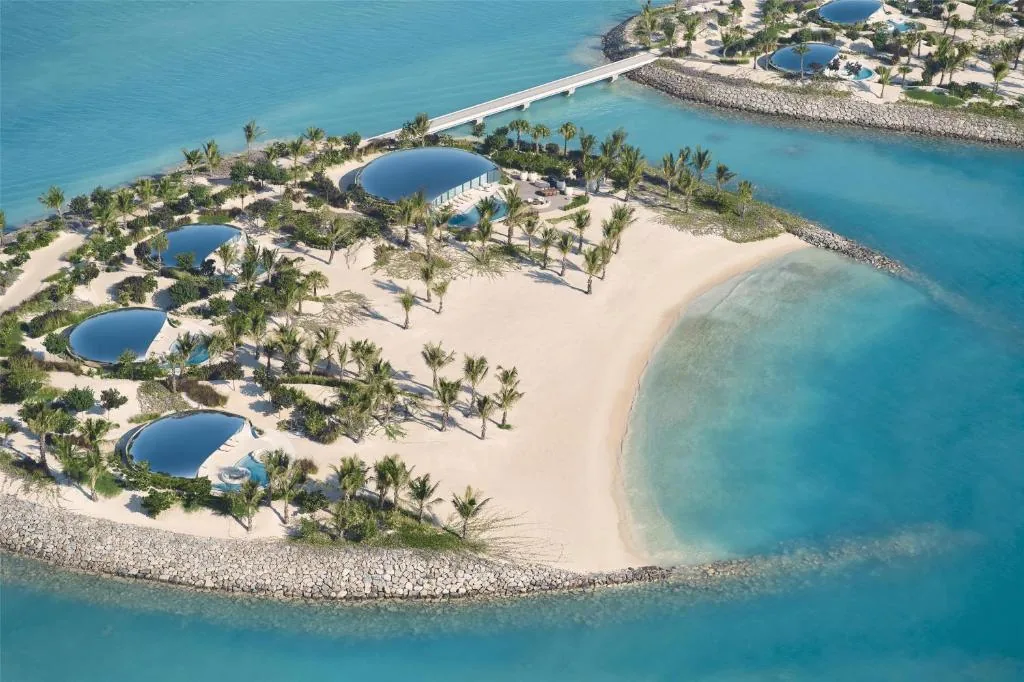
A remote location can enable privacy and exclusivity. But it also brings tasks that at a developed urban site are partly solved outside the hotel property.
According to the operator, Shebara is designed to run independently of the national power grid. Its infrastructure includes an on-site solar plant, desalination, water treatment and waste management. Solar power generated on site supplies the majority of operations, according to the resort.
Source: ShebaraFor owners, this changes how a project is assessed: technical supply requires space, capital, staff and ongoing maintenance. It must therefore feed into the site evaluation and the hotel concept from the outset. The decisive question is: what conditions must the site meet so that the intended guest promise works over the long term?
Prefabrication moves work away from the sensitive environment
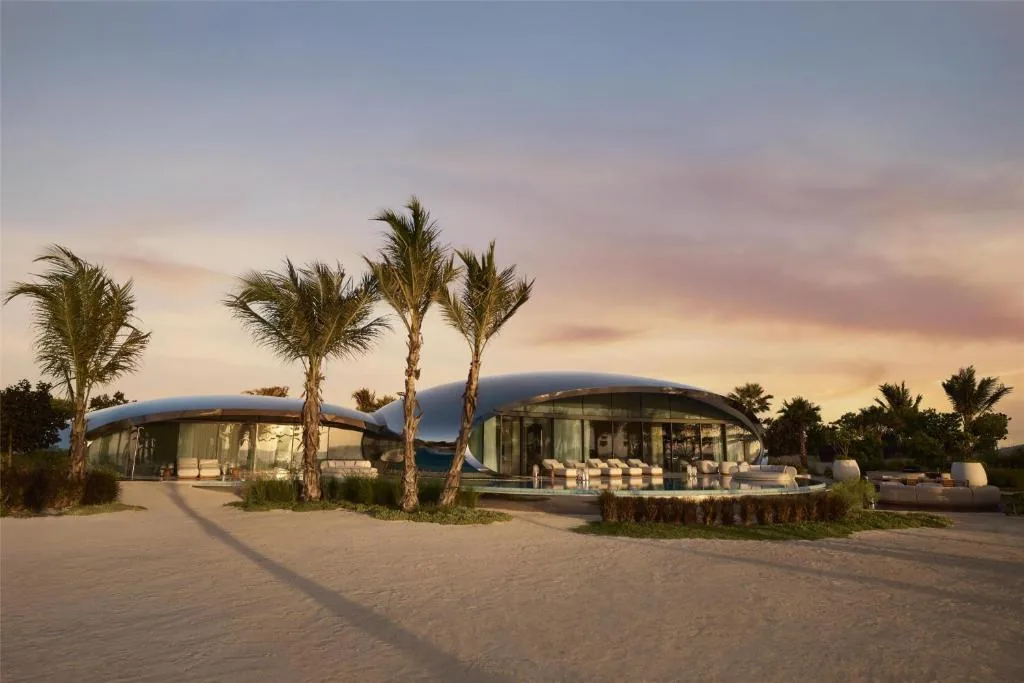
At Shebara, according to the operator, the overwater villas were fully built, fitted out and commissioned off-site before being transported to their final position. The aim was to reduce extensive construction work within the lagoon. The transport and installation partner Mammoet reports moving and installing a total of 73 prefabricated villa bodies from Sharjah.
Sources: Shebara, MammoetA transferable planning principle follows from this: where the construction site is especially sensitive or hard to access, it is worth examining which work is better carried out elsewhere. This can also be relevant for smaller hotel projects — for example through prefabricated bathrooms, technical assemblies or repeatable room elements. Even in an 80-room city hotel, this can reduce build time, noise and on-site quality risks.
Prefabrication, however, demands early decisions. Dimensions, connections, fit-out and transport must align. Late changes can become costly once components are already produced. For owners, this means: operator requirements and technical interfaces belong before the production release.
Solar power is part of an operating concept
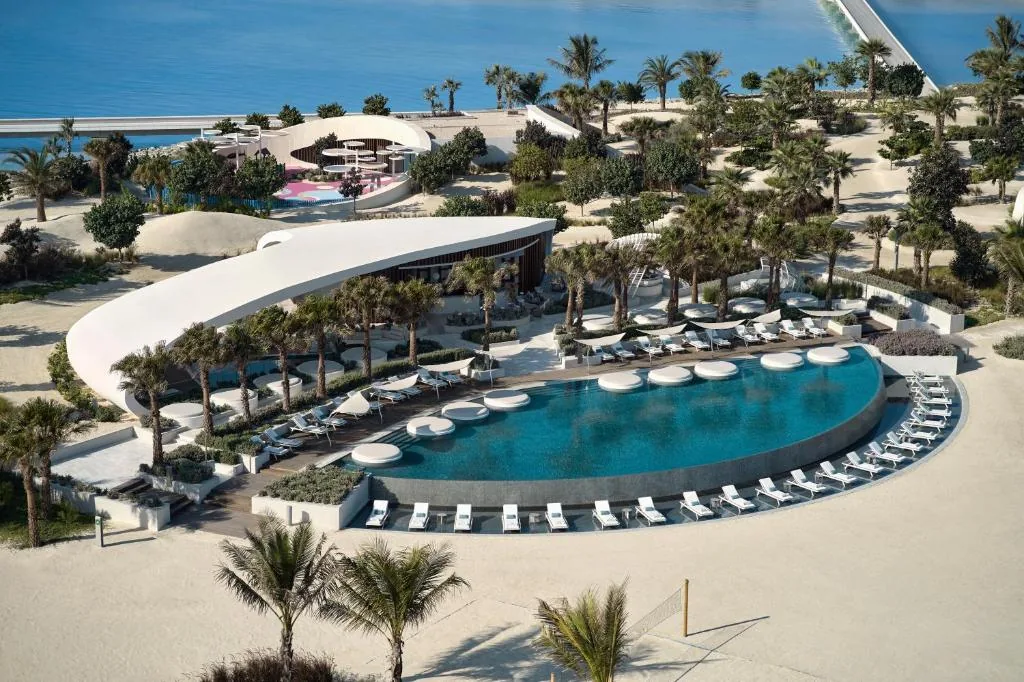
On-site energy generation first answers the question of where electricity comes from. For hotel operations, it must additionally be clarified when it is available and how peak loads are absorbed.
For comparable projects, this gives rise to concrete planning tasks: what loads are caused by cooling, kitchen, laundry and water technology? How does demand change at high occupancy? What storage and reserve supply is required? Who maintains the systems? The sources cited say only so much about Shebara’s specific technical configuration — but the planning tasks apply to every resort of this kind.
The lesson remains clear: energy supply and the hotel product must be developed together. Room count, food and beverage, pools and service scope all help determine what infrastructure a site needs.
Site protection needs verifiable targets
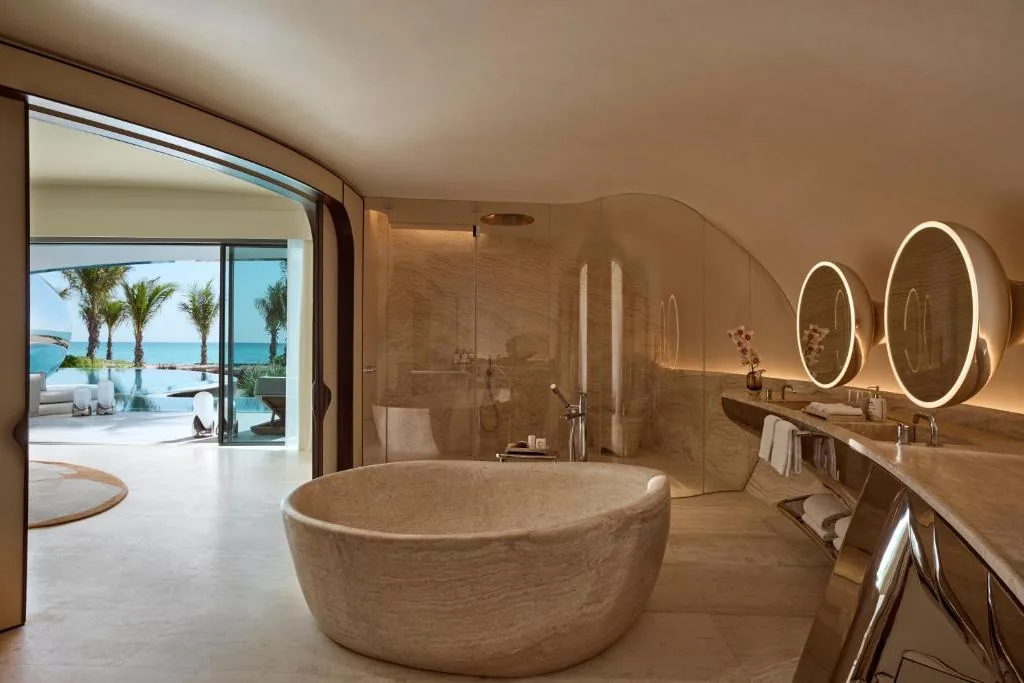
Relocating construction work can limit interventions on site. On its own, however, that does not yet produce a complete environmental balance.
A robust assessment would also have to consider manufacturing, transport, installation, ongoing resource consumption and later renewals. The operator’s statements on Shebara describe concrete measures and targets. They do not replace an independent overall assessment.
For owners, this distinction is practically relevant. A sustainability concept becomes more robust when it contains measurable requirements: for water consumption, energy demand, construction-site areas or the handling of wastewater and waste. This creates specifications that planners and operators can actually work with.
What hotel owners can learn from it
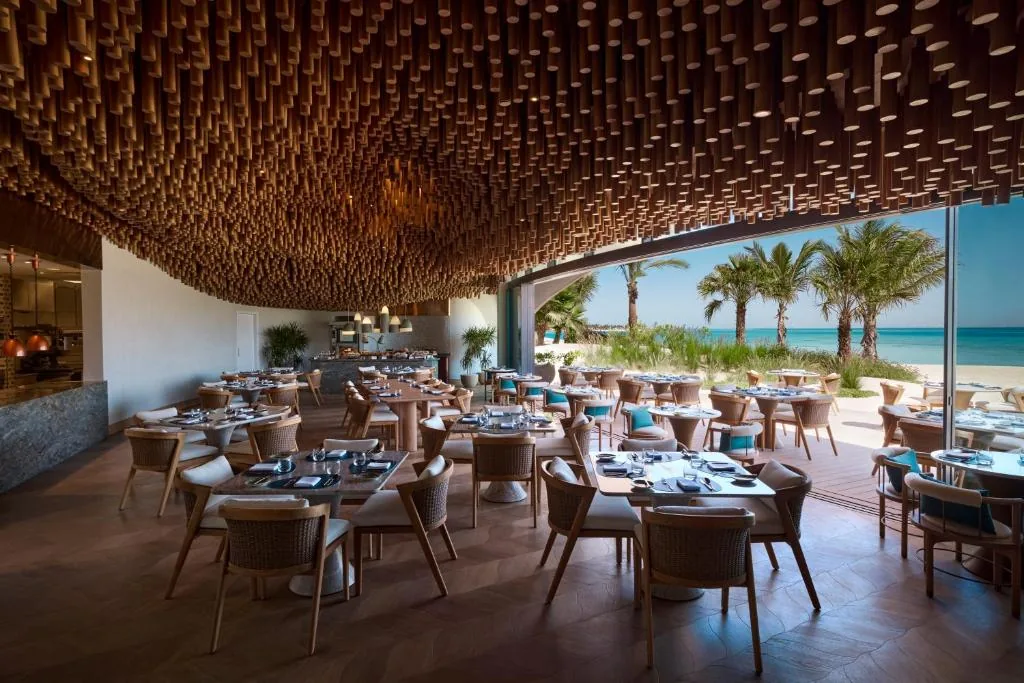
The transferable value of Shebara lies in the interplay of location, manufacturing and supply. For your own project development, five questions follow:
- What does the site cost to operate? Access, deliveries, water, energy and waste disposal belong in the early feasibility review.
- Which work can be prefabricated? What matters is build sequence, quality, transport and installability.
- When is the operator involved? Service routes, technical access and operating processes should be agreed before the structural commitment.
- How is the infrastructure maintained over the long term? Maintenance, spare parts and renewals need their own budget.
- Which claims can be substantiated? Sustainability communication should rest on clearly named measures and verifiable results.
The NOWA perspective: the hotel concept begins with feasibility
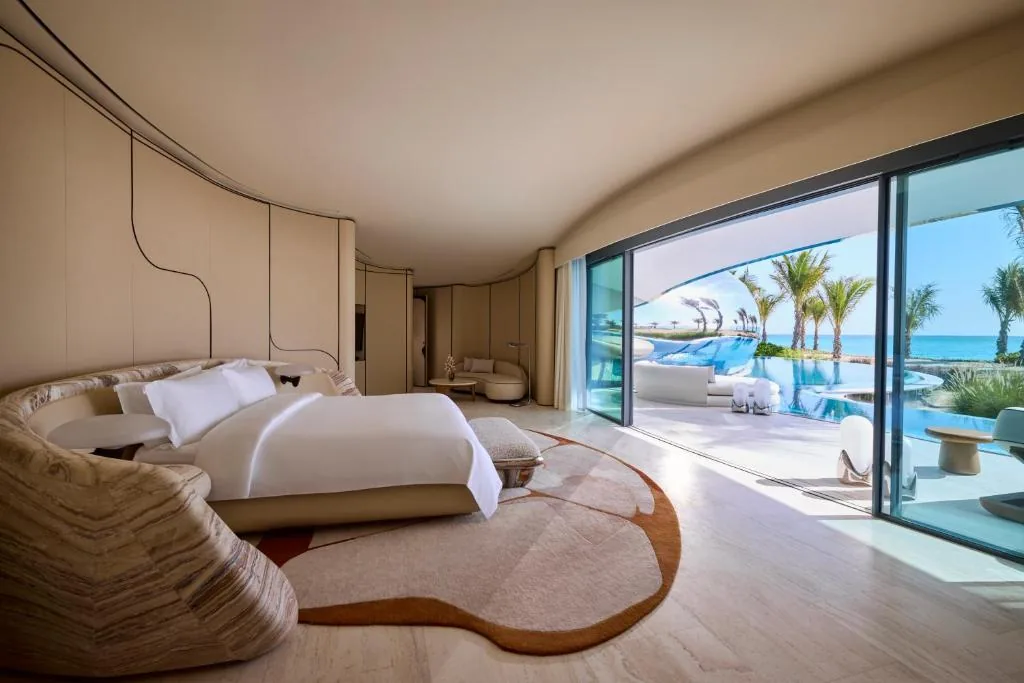
From the perspective of NOWA HOTEL LICENSE, Shebara makes a fundamental task of hotel development visible: site quality, guest experience and operational requirements must be brought together early.
A special location can enable a strong hotel product. Whether it becomes a viable long-term operation also depends on how well supply, construction and the operator concept are aligned. The most important design of a resort is therefore also the design of its operations.
Independent professional assessment. NOWA HOTEL LICENSE has no business relationship with Shebara, Red Sea Global or the owners and operators. Figures (including the number and location of the villas, construction method, energy and supply concept) and imagery are based on publicly available sources and operator statements; individual details may vary. All trademark and image rights remain with their respective owners.