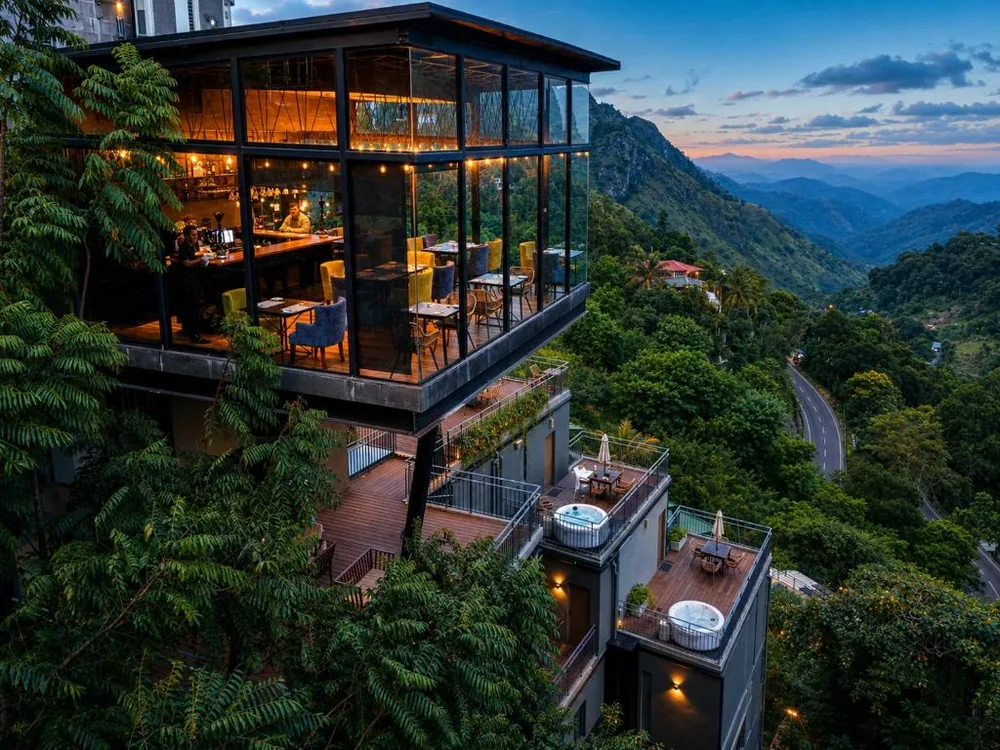
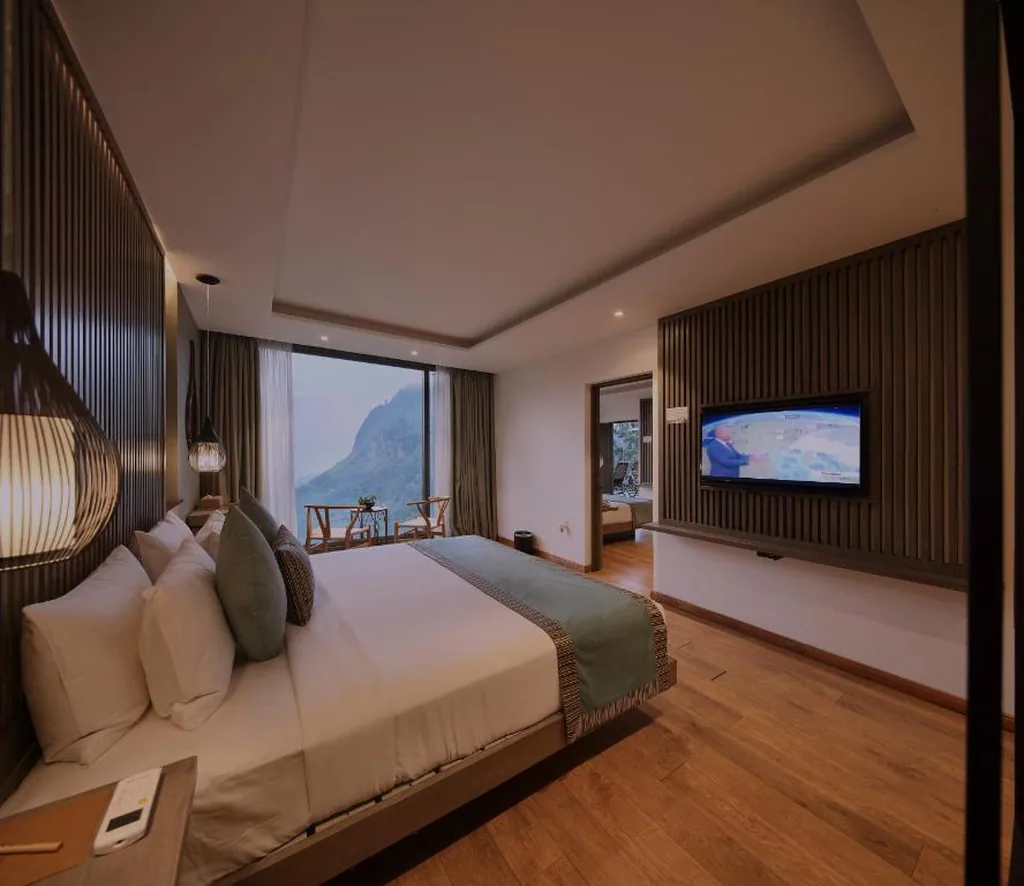
A glass pavilion seems to float above the slope; behind it the Ella Gap drops hundreds of metres and opens the view across the mountain ranges of Sri Lanka’s highlands. The room looks as if it hangs in mid-air. This is the first and strongest image of HIDE Ella — and it is also its entire business model in a single frame.
The house lies in Ella, a mountain town in the south of Sri Lanka’s tea highlands, not far from the much-photographed Nine Arches Bridge and Ravana Falls. It is described as a modern house built into a roughly 60-degree slope in the Ella Gap — with floor-to-ceiling glazing as its defining motif, yet deliberately relaxed and simple in its running, not an international full-service luxury house.
Source: public travel and hotel descriptions (incl. Timbuktu Travel, Red Dot Tours)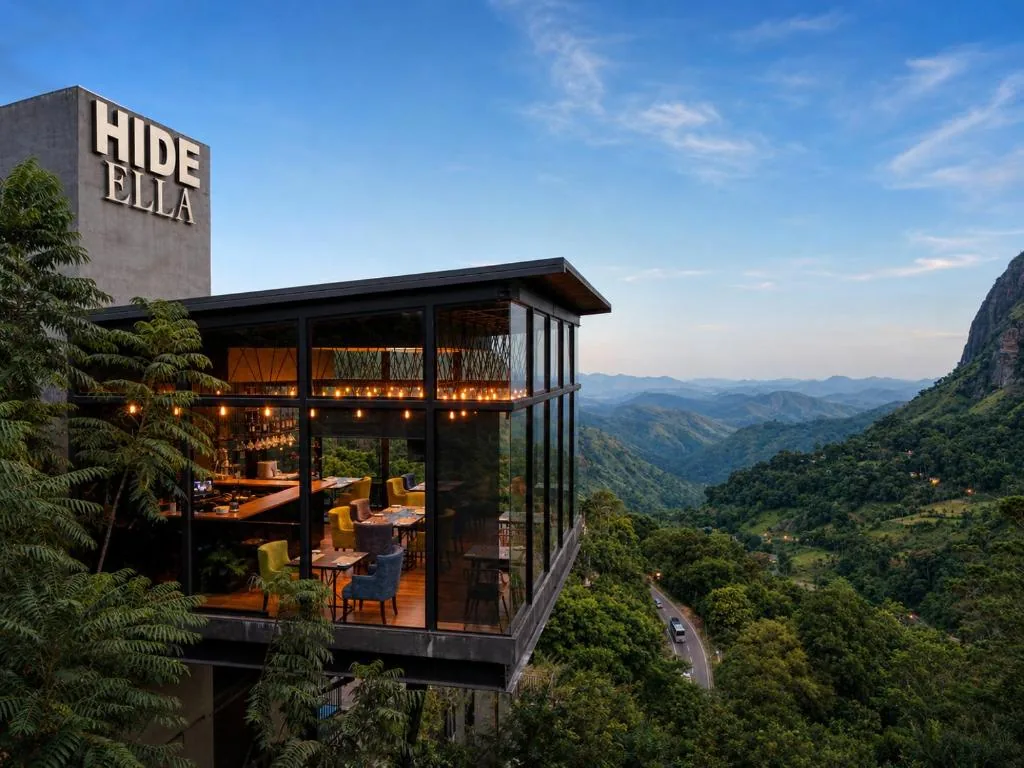
For owners and operators this is more interesting than it first sounds. HIDE Ella does not play in the league of the houses we usually examine in the Journal — and that is precisely why it is worth a look: it shows what a house can achieve that has no stars, no brand affiliation and no large service apparatus, but a consistent idea.
A house that lives on a single gesture
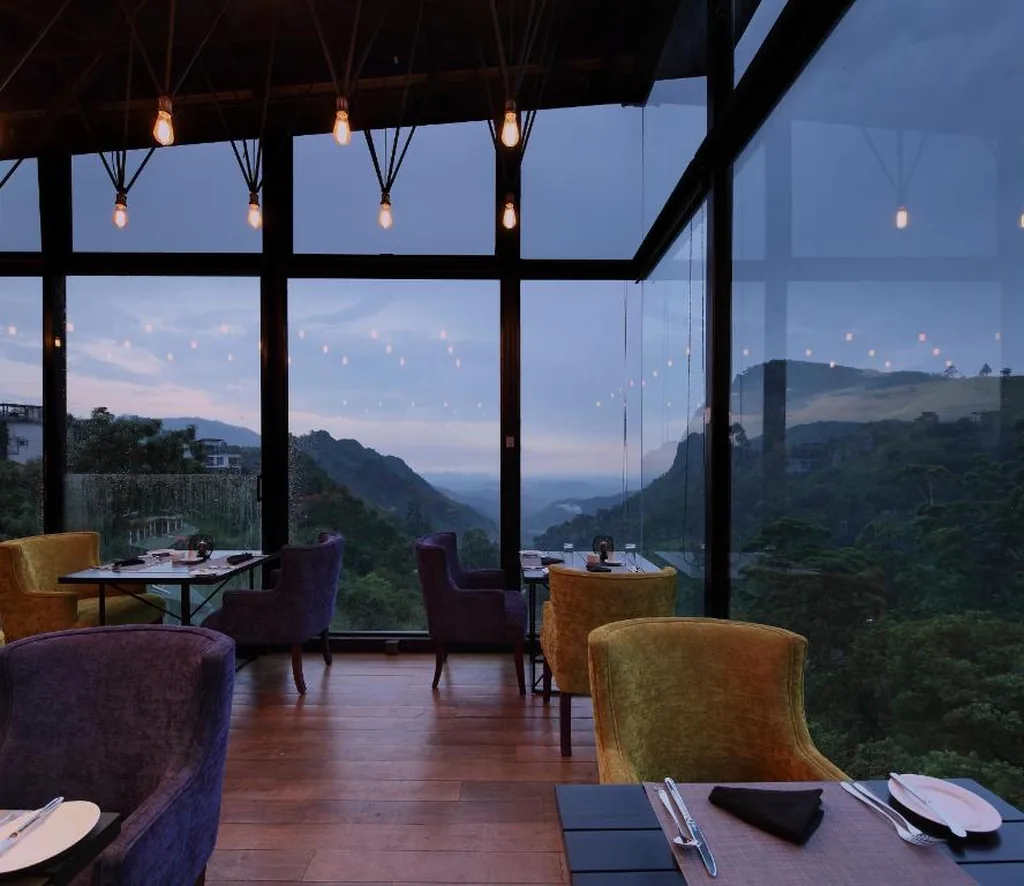
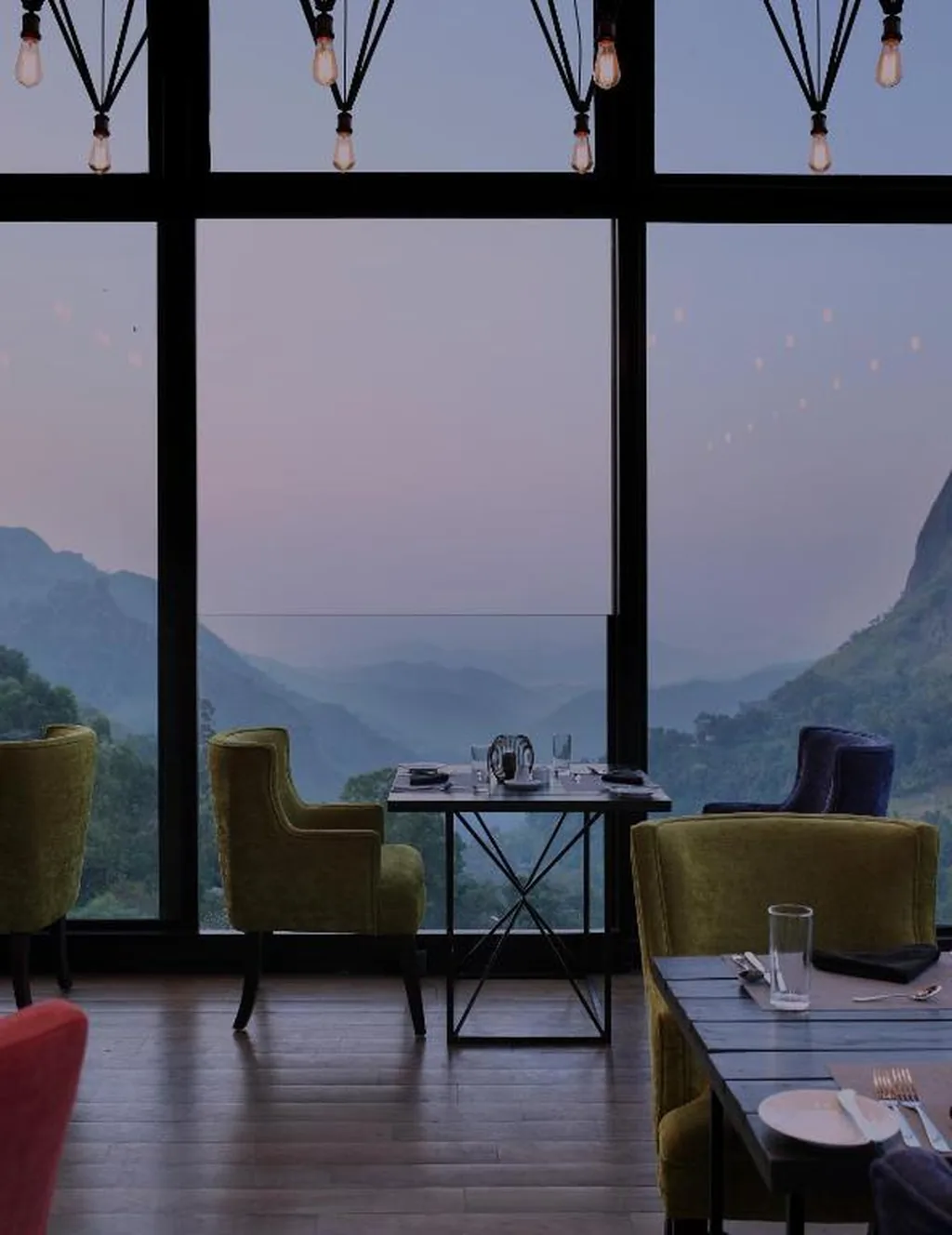
Most hotel concepts have to labour to explain why a house is special. At HIDE Ella a single component does that work: the cantilevered glass box housing the restaurant and bar. It turns the valley view from a by-product of the stay into the central experience — and at the same time delivers the motif that guests carry onward of their own accord.
That is the real lesson, and it is independent of budget: a house that translates its strongest asset into a clear, recognisable form needs fewer words, less advertising and less explanation. Here the architecture is not decoration but the positioning itself.
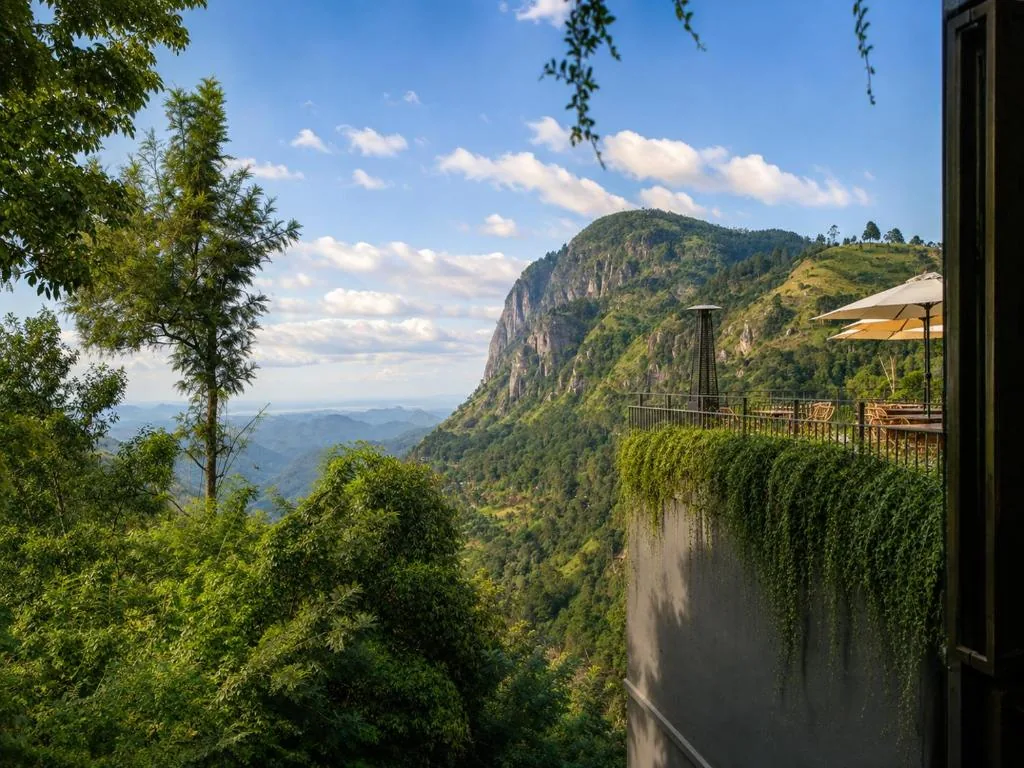
What matters is the consistency. The gesture runs through the whole house: from the glass front of the pavilion to the rooftop terraces with their hot tubs and into the rooms with their floor-to-ceiling windows. The promise — “here you live inside the view” — is not staged in one place and broken in another, but delivered everywhere.
Design over stars: desirability beyond the category
Measured by service, HIDE Ella is a simple house: modest in room count, relaxed in manner, without the apparatus of a large resort. Even so it attracts attention and demand that many higher-rated houses do not reach. The reason is not the amenities but the desirability of the experience.
For owners there is a commercially intriguing observation in this: a strong design-and-location statement can replace part of what classic houses keep expensive staff and extensive facilities on hand for. Where that succeeds, the ratio of investment to return shifts — a lean operation carries demand that would normally be ascribed to a higher category.
This calculation, however, has a condition: the experience must genuinely deliver on the expectation. A house that rests its whole promise on one image will be measured against exactly that image. If the stay falls short of the staging, the effect flips — desirability turns into disappointment, and the visibility that helped before then works against the house.
The other side: a lean operation on a steep slope
What looks like an elegant sleight of hand from above is a demanding task in operation. A house built into a roughly 60-degree slope puts every everyday certainty to the test: how do guests and staff move between levels? How do deliveries, luggage, cleaning and maintenance work across stairs and narrow paths? What about accessibility and safety at the edges?
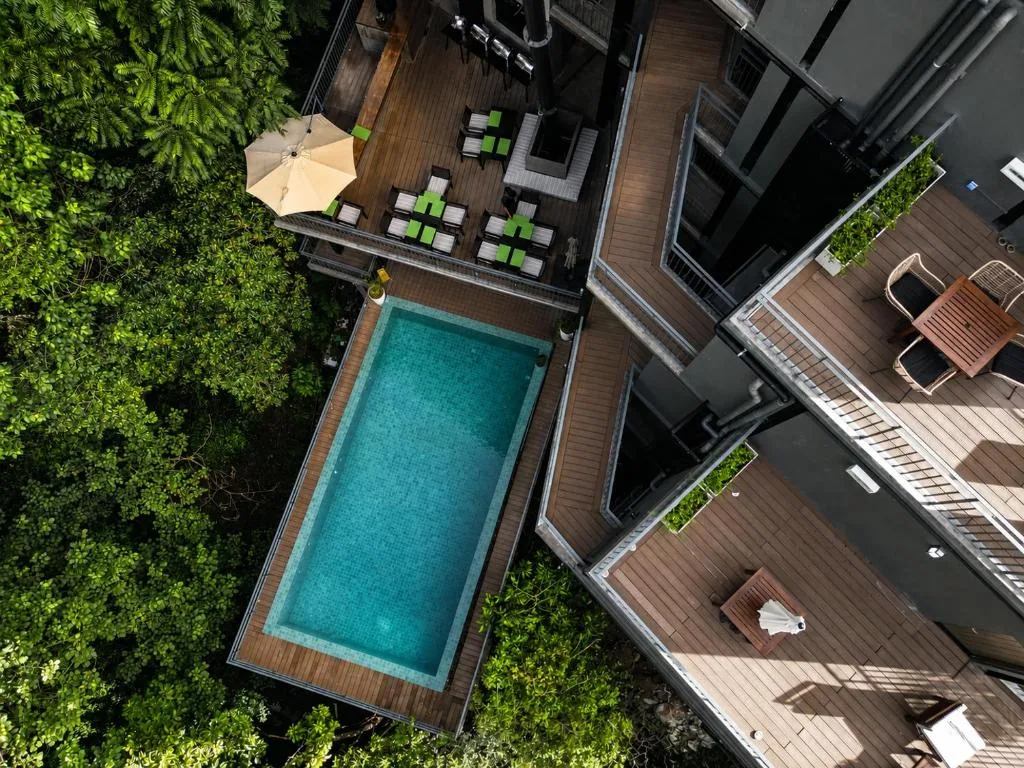
Then there is the building envelope. Large glass surfaces in a damp mountain climate mean condensation, cleaning, shading and temperature control — permanently and visibly, because every streak of film stands between the guest and the view they came for. The rooftop terraces with hot tubs and the pool above the valley demand technology, care and safety in a place where everything has to go up or down the slope.
A lean operation is therefore no foregone conclusion but a decision with consequences. It works only if the processes are concentrated on the essentials and reliably organised — and if the communication stays honest: a guest expecting a design house with a magnificent view forgives a reduced service; one who was promised full-service luxury does not.
What owners can take from it
Three points can be drawn from HIDE Ella for one’s own projects — regardless of location and price class:
- One gesture, consistently executed, replaces many arguments. A house’s strongest asset belongs in a clear, recognisable form — and that form must run through the whole house, not just the cover shot.
- Design and location can partly replace category — but not honesty. A lean operation carries high demand only as long as the promised and the experienced match. The positioning must reflect the depth of service accurately.
- The hero element is also the biggest cost driver. What makes a house unique — the cantilevered pavilion, the glass front, the location on the steep slope — is the most expensive thing to build and to run. Anyone planning or acquiring something like it must factor in the follow-on costs from the start.
The NOWA perspective
From the perspective of NOWA HOTEL, HIDE Ella is an instructive example that value in hospitality does not hang on stars, room count or brand name alone. A precise idea, consistently built and honestly run, can make a house unmistakable within its niche — and it is exactly that unmistakability which carries demand and price.
For owners and operators the real work lies here: to find a house’s one load-bearing idea, to sustain it in both construction and operation, and to communicate it so that expectation and experience coincide. For distinctive as well as deliberately lean houses, NOWA develops precisely this link between positioning, operator concept and marketing.
Independent professional assessment based on publicly available information (incl. Timbuktu Travel, Red Dot Tours), without an on-site visit. NOWA HOTEL has no business relationship with HIDE Ella Hotel & Resort or its operators; individual details may vary. Imagery and all brand and image rights remain with their respective owners and are to be cleared before publication.