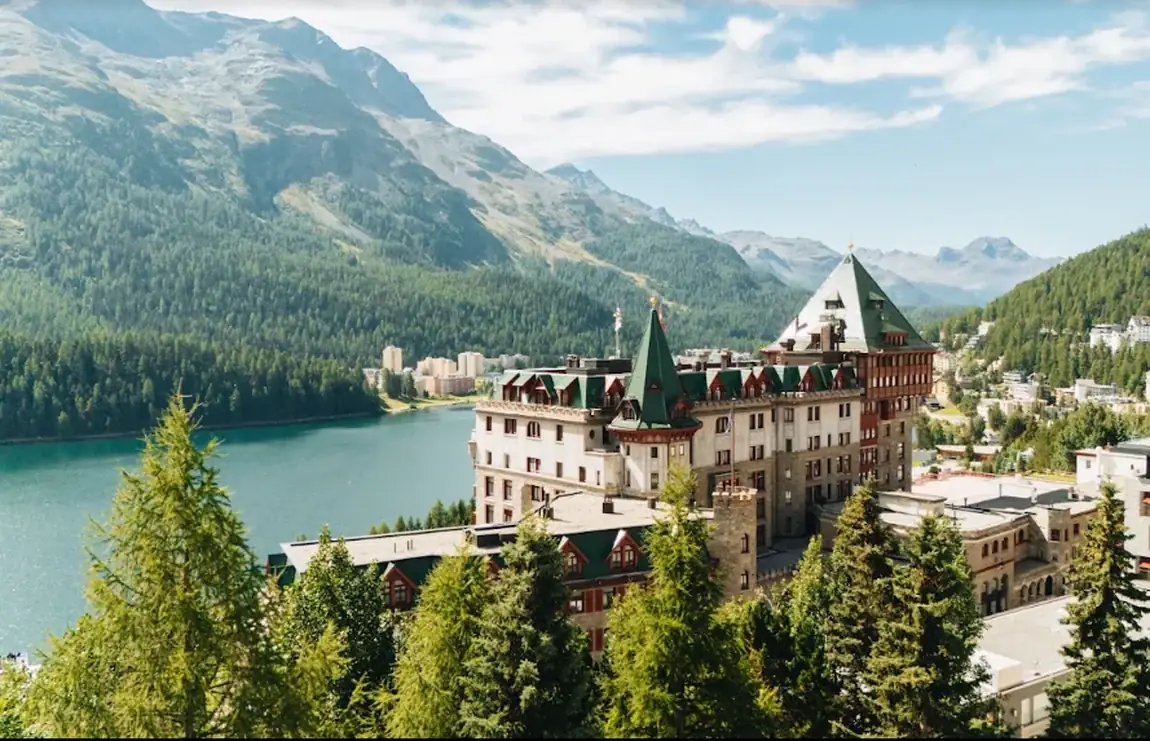
There are hotels where luxury is visibly staged. And there are places where it simply feels natural.
Badrutt’s Palace in St. Moritz belongs to the second category. High above the lake, the grand hotel rises like the emblem of a world in which time, privacy and personal access matter more than any publicly visible gesture of status.
Since it opened in 1896, the house has welcomed entrepreneurs, international families, artists and public figures who, in exceptional places, look not only for comfort but for reliability, discretion and the sense of being among people who speak the same language of luxury. Yet Badrutt’s Palace is more than a famous hotel: it is an example of how a property can become an asset that endures across generations, and a location a brand known around the world.
A Palace Above St. Moritz
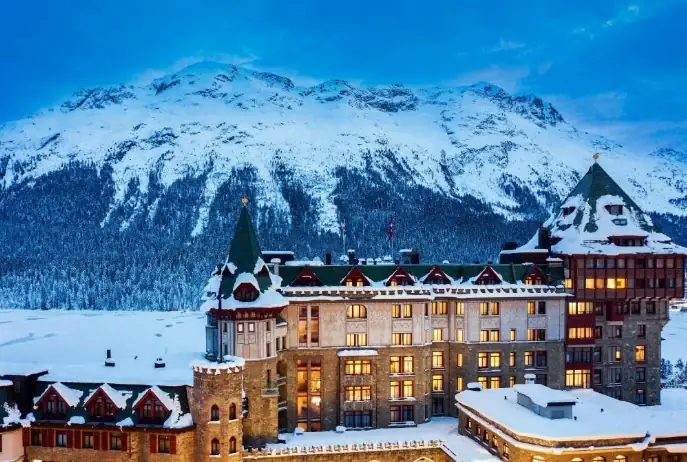
The hotel’s silhouette alone conveys permanence. The historic tower, the monumental façade and the view across Lake St. Moritz make the Palace a building that is not merely part of the town — it defines its identity. St. Moritz would be an exceptional destination even without the hotel. But Badrutt’s Palace has done much to tie the town to that international idea of Alpine luxury which still draws wealthy guests from Europe, the Middle East, the Americas and Asia.
And this is not only about skiing, snow or champagne. It is about belonging. Those who come to St. Moritz regularly are not simply visiting a destination — they are returning to a familiar social world: the same houses, the same restaurants, the same events and often the same families. Over decades this builds relationships, rituals and memories that no short-term marketing can create.
Luxury Means Never Having to Explain
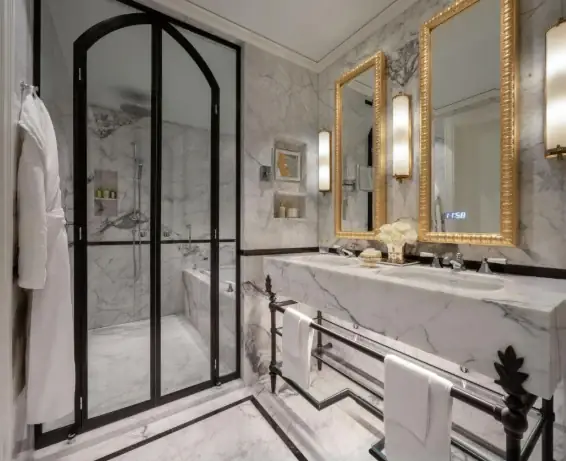
In the conventional hotel business, much is said about stars, room sizes and amenities. At the very top of the luxury market, those categories barely suffice. The discerning guest expects not just a suite with a lake view, but to be recognised without having to explain themselves. They want their habits to be known, their privacy protected, and their wishes met before they turn into complicated requests.
This invisible part of luxury is hard to measure but commercially decisive. It builds loyalty, justifies an exceptional pricing position and turns a hotel stay into a long-term relationship. Badrutt’s Palace therefore sells not only nights, but security within an exclusive world.
The Most Valuable Suite Is Freedom
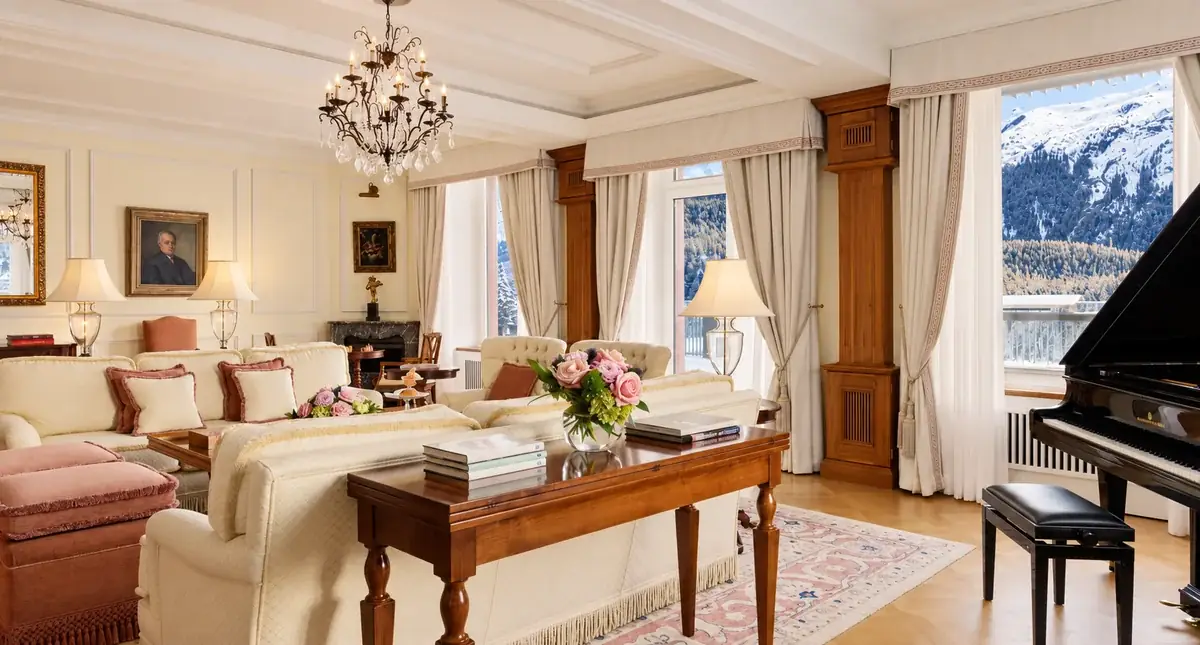
This positioning is especially clear in the private residences and suites of the famous hotel tower. Spread across the upper floors, they combine the services of a grand hotel with the freedom of a home of one’s own. Here lies a significant trend in international luxury hospitality: wealthy guests are not necessarily seeking still more visible splendour, but space, control and privacy.
A private residence within a renowned hotel offers both — seclusion and access. The guest can withdraw entirely while still drawing on dining, concierge, wellness, security and personal service. For hotel investors this segment is particularly attractive: generous suites, penthouses and hotel residences raise not only the average nightly rate but broaden the business model to include a clientele that brings longer stays, bespoke services and a notably high willingness to pay.
Scarcity as the Foundation of Value
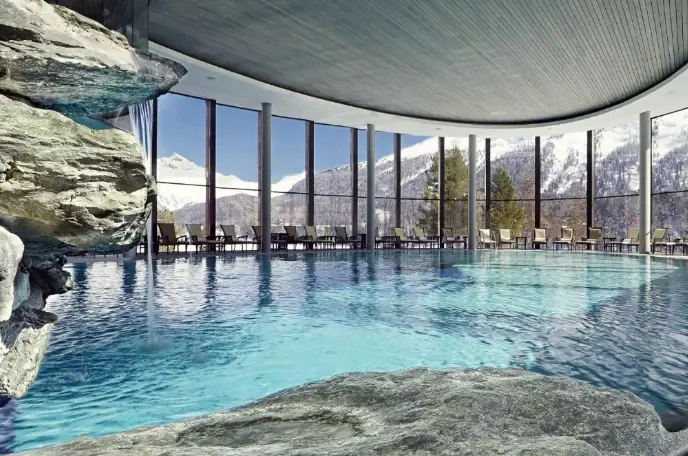
Badrutt’s Palace is not a product that can be scaled at will — and that is precisely what makes the brand so valuable. The setting above Lake St. Moritz cannot be replicated, the historic architecture cannot be reinvented, and more than a century of lived hotel history cannot be replaced by a large advertising campaign.
Then there is the deliberate seasonality. Where many hotels try to keep their capacity filled year-round, Badrutt’s Palace concentrates on clearly defined summer and winter seasons. What at first looks like a commercial constraint in fact heightens desirability: the available time is limited, sought-after dates fill quickly, and guests plan their return far in advance. In the luxury segment, limited availability can carry more weight than constant availability — what is available at any time loses part of its exclusivity.
The Hotel as a Social Stage
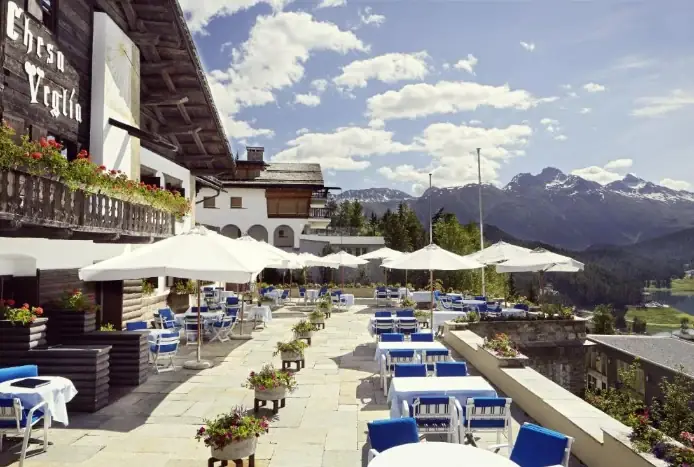
A grand hotel of this class is more than a place to stay. It is a meeting point, a stage and, on occasion, a discreet marketplace for relationships. In the restaurants, bars, ballrooms and private spaces, people meet whose paths would rarely cross in an ordinary hotel. Stays give rise to acquaintances, acquaintances to business relationships, and recurring encounters to an international network.
This social function cannot be booked officially — and yet it is an essential part of the brand’s value. Wealthy people travel not only to beautiful places, but to places where they can meet interesting people while deciding for themselves when they would rather not be seen. Badrutt’s Palace has mastered exactly this balance between visibility and discretion.
Why Historic Grand Hotels Are Distinctive Assets
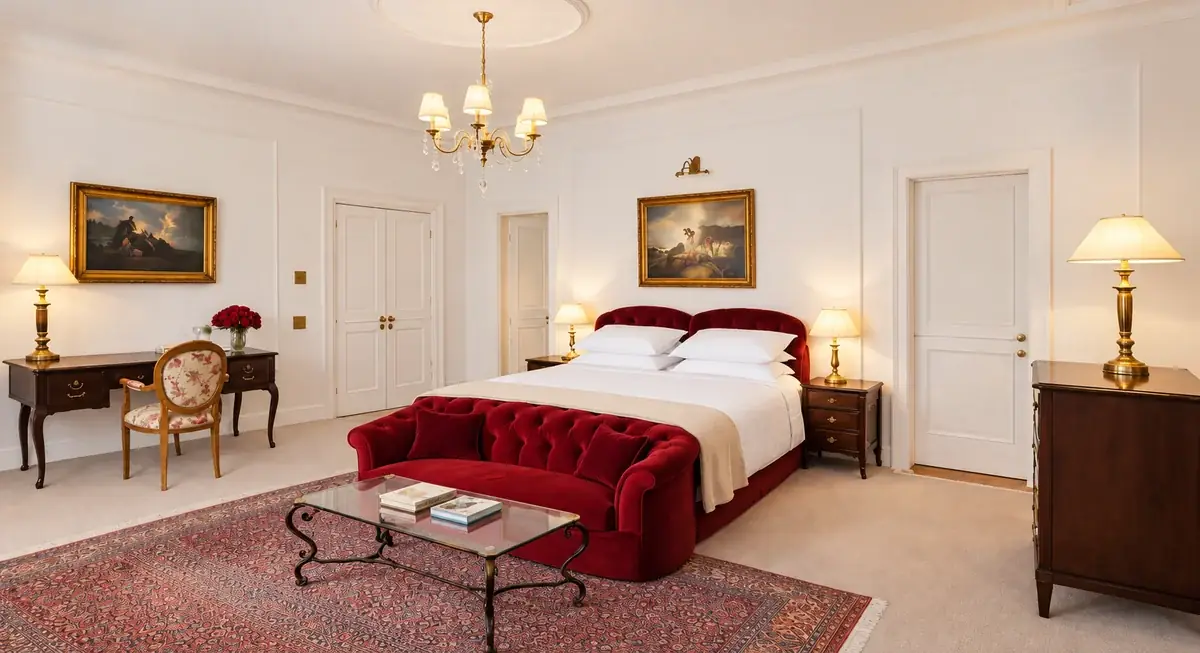
An ordinary hotel is often valued by revenue, operating profit, room count and a standard market multiple. For an international hotel icon, that view falls short. The value arises from several layers:
- the location that can scarcely be replaced,
- the historic architecture,
- the international name recognition,
- the guest base built up over time,
- the pricing power,
- the operational culture of service,
- the social relationships, and
- the ability to develop the brand over the long term.
Such houses are not merely operating businesses. They resemble collector’s pieces: rare, recognised worldwide and reproducible only within very narrow limits. For family offices and long-term investors, it is precisely this combination that can be compelling — an iconic hotel offers, alongside a financial return, reputation, emotional value and access to a world that capital alone cannot open.
Tradition Is Only Valuable If It Lives On
History alone guarantees no success. Many hotels rich in tradition lose relevance because they preserve their past rather than build on it. Badrutt’s Palace shows a different way: the house keeps its historic identity while integrating contemporary suites, private living arrangements, international dining and modern wellness facilities.
This balance is demanding. Too much change can destroy the character; too little makes a grand hotel of no interest to a new generation of guests. Successful luxury hospitality therefore does not mean trading tradition for modernity, but carrying the past forward so that it remains desirable in the future.
What Future Hotel Owners Can Learn from It
Not every investor can acquire a Badrutt’s Palace. But many can learn from its success. An exceptional hotel begins not with the fittings but with a clear identity. It needs a location, a history or a concept that binds people emotionally; an operator who understands what makes the house distinctive; and an ownership strategy that looks beyond the next financial year. Anyone hoping to create a hotel of lasting value should therefore ask different questions:
Not only: How many rooms can be built?
But rather: Why will guests return to this particular place?
Not only: What return can be achieved in the short term?
But rather: What brand can emerge here over generations?
Not only: How can luxury be made visible?
But rather: How can one create a feeling that cannot be bought anywhere else?
Wealth Opens Doors — Meaning Lies Beyond Them
Badrutt’s Palace embodies a form of luxury that does not need to be loud. The hotel draws people who own a great deal yet keep looking for rare experiences, meaningful relationships and places of genuine significance. Perhaps that is the secret of its appeal: the Palace does not promise to make someone appear rich — it offers wealthy guests something more valuable, the feeling of having arrived.
And for some visitors, a new thought may begin precisely here: not merely to stay in an exceptional hotel, but one day to own one.
Editorial analysis by NOWA HOTEL LICENSE. The hotel featured here is not offered by us for sale or lease; we have no business relationship with the house. Information is based on publicly available sources. Trademark and image rights belong to their respective holders and must be clarified before any publication.