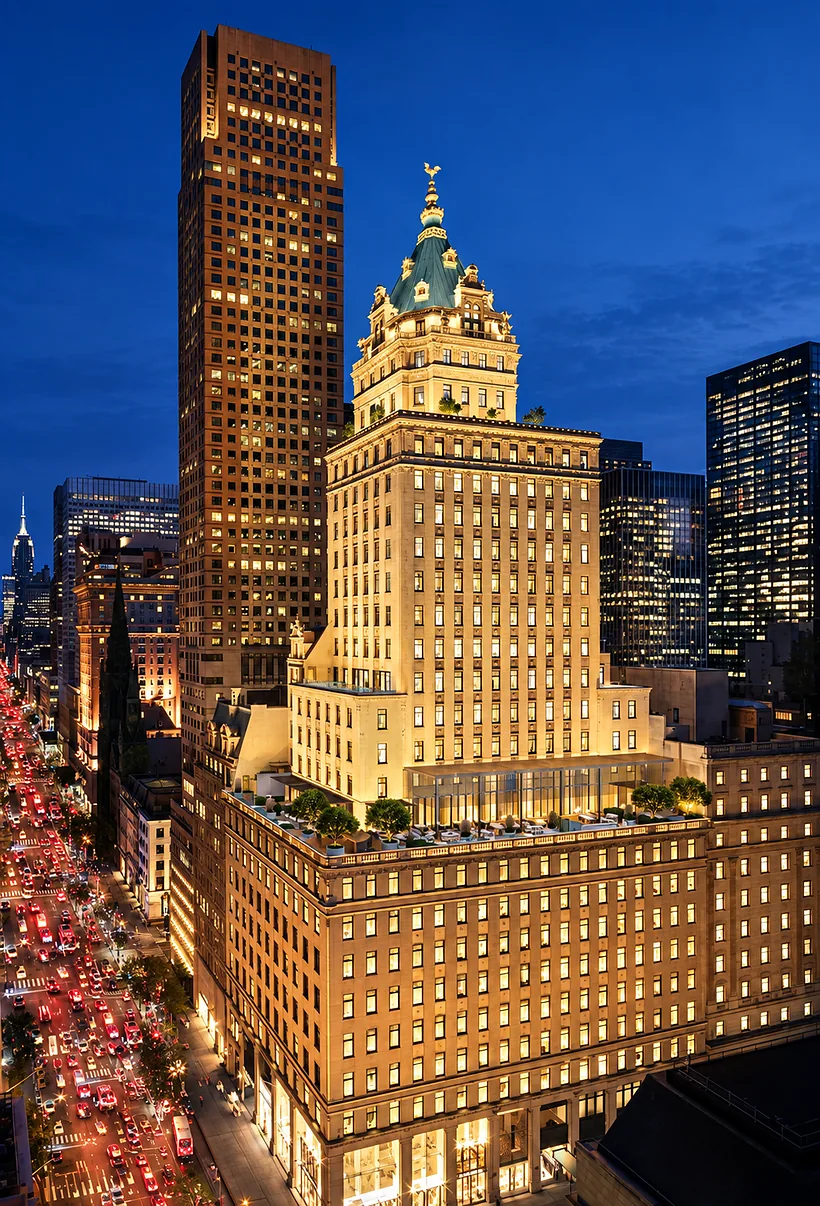
Manhattan has almost everything in abundance: architecture, energy, restaurants, culture and some of the best-known luxury hotels in the world. What is truly scarce in this city is calm, space and privacy. It is precisely from that scarcity that Aman New York develops its real product.
In the historic Crown Building on Fifth Avenue, one of the world's most exclusive hotel brands meets one of Manhattan's most valuable locations. The result is not simply another luxury hotel. Aman New York shows how a strong brand, a consistent concept and the combination of hospitality and living can change the character — and the economic value — of a building.
From landmark to urban refuge
The Crown Building has stood at the corner of Fifth Avenue and 57th Street since 1921. The more than hundred-year-old building was once the first home of the Museum of Modern Art and remains one of Manhattan's distinctive historic properties.
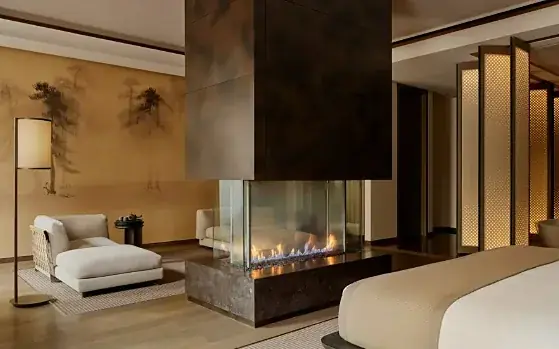
For Aman, the building was not merely renovated. It was completely reinterpreted as a hotel, wellness and residential product. The historic exterior identity was preserved, while inside a restrained, Asian-inspired world took shape. The design is the work of Jean-Michel Gathy.
The transformation illustrates an important principle of hotel development: the value of an existing property does not come from its location or building fabric alone. What matters is whether a credible and economically viable product can be developed from its history.
Only 83 suites at one of the world's most expensive addresses
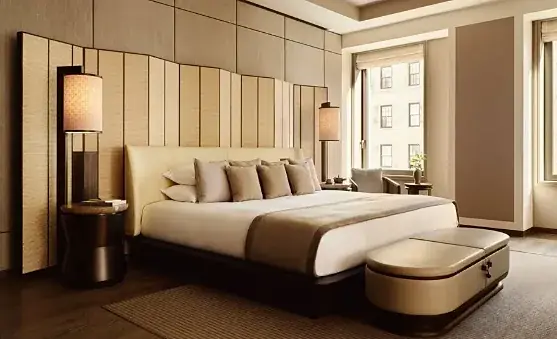
Aman New York has 83 suites. In a location where every square metre carries considerable value, a higher room count would in principle have been conceivable. Aman, however, pursues a different strategy.
The suites are among the most spacious in the city. Working fireplaces, deep bathtubs, warm materials and a deliberately pared-back design are meant not to continue Manhattan's energy but to form a counterpoint to it. In this way the hotel sells more than overnight stays. It sells distance from the city, even though the guest is right in the middle of it.
In the ultra-luxury segment in particular, less floor area for rooms can lead to a higher value per room. The condition is that generosity, service, brand and privacy support a price that economically justifies the lower density.
The resort principle in the middle of Manhattan
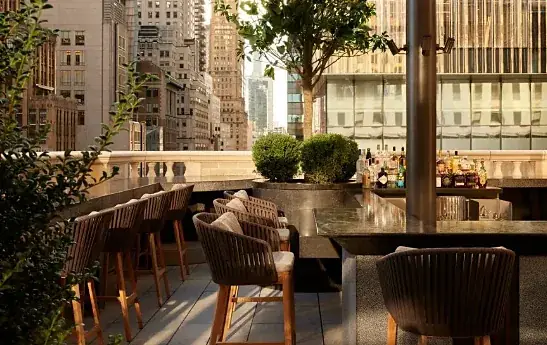
Aman is known above all for secluded resorts. In New York this brand idea was not abandoned but transferred to a major city. The hotel describes itself as an “Urban Sanctuary”. That claim is conveyed by more than the interior alone.
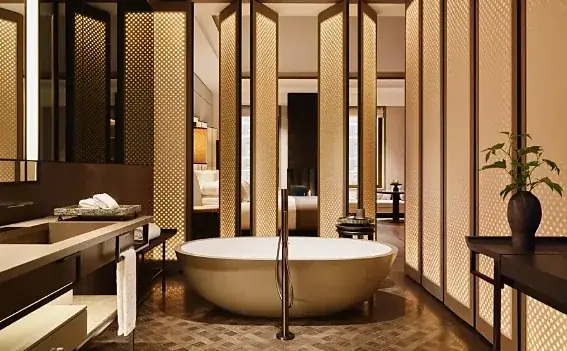
A key element is the Aman Spa, with more than 2,300 square metres across three floors. Add to that restaurants, a planted terrace and a subterranean jazz club. Within an existing building, a world of its own emerges. The guest need not leave the hotel to find calm, dining, wellness and entertainment.
For owners and developers this holds an important insight: a hotel concept does not simply have to mirror its location. It can deliberately offer what the location lacks. In a loud, dense city, quiet can become the decisive point of difference.
Hotel and residences as a shared real-estate product
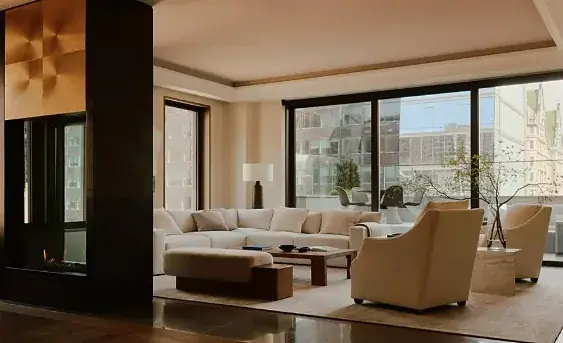
The upper floors of the Crown Building house private Aman Homes with one, two or three bedrooms. They have living and dining areas, their own kitchens and separate elevator access. Individual units feature private pools overlooking Manhattan.
This pairing of hotel and branded residences broadens the business model. Buyers acquire not only a high-quality apartment but access to a brand, to services and to a way of life. The hotel brand thereby becomes part of the property's value in its own right.
For developers, branded residences can help monetise part of the development early and position the overall project higher. At the same time the hotel benefits from a permanently present, especially affluent group of users. The model works only if brand, service promise, architecture and operation remain consistent with one another over the long term.
What owners and developers can learn from Aman New York
1. The maximum room count does not automatically create the highest value
More rooms mean more sellable units, but not necessarily a better hotel product. In the luxury segment, larger rooms, distinctive shared spaces and a strong experience can generate a higher value per room.
2. The choice of operator and brand changes the property
A well-matched brand influences more than day-to-day operations. It changes the target group, the price positioning, public perception and, with branded residences, the marketability of the apartments too. The choice of operator is therefore part of the real-estate strategy.
3. Historic buildings need a new function, not merely a renovation
The Crown Building was not treated as a museum of its own past. Its history provides the frame, while the use concept is aligned with today's expectations of luxury, wellness and privacy.
4. Luxury often arises from deliberate restraint
Aman New York does not try to appeal to as many guests as possible. Limited access, generous spaces and a calm design create a form of scarcity. That consistency is what makes the concept credible.
5. A mix of uses can raise overall value
Hotel, dining, wellness, club and residences address different revenue sources. Yet they are not placed side by side at random; they follow a shared brand idea. It is precisely this connection that distinguishes an integrated mixed-use concept from a mere collection of different uses.
When calm becomes the real quality of a location
Many hotels in New York sell proximity: to Central Park, to Fifth Avenue, to culture, shopping and business districts. Aman New York adds to these locational advantages something that is barely available outside the building — retreat.
Therein lies the particular quality of the project. The historic property provides the address and the architectural identity. Aman provides the brand, the operating concept and the promise of absolute privacy. The residences finally transfer that promise to a lasting real-estate product.
Aman New York thus shows that the value of a hotel does not arise from land, floor area and room count alone. It arises from the ability to position a place so distinctly that architecture, operation and brand together create something that cannot be copied at will.
Editorial analysis by NOWA HOTEL LICENSE. The hotel featured is not offered by us for sale or lease. Information about the hotel is based on publicly available information from the operator (Aman New York, official website).