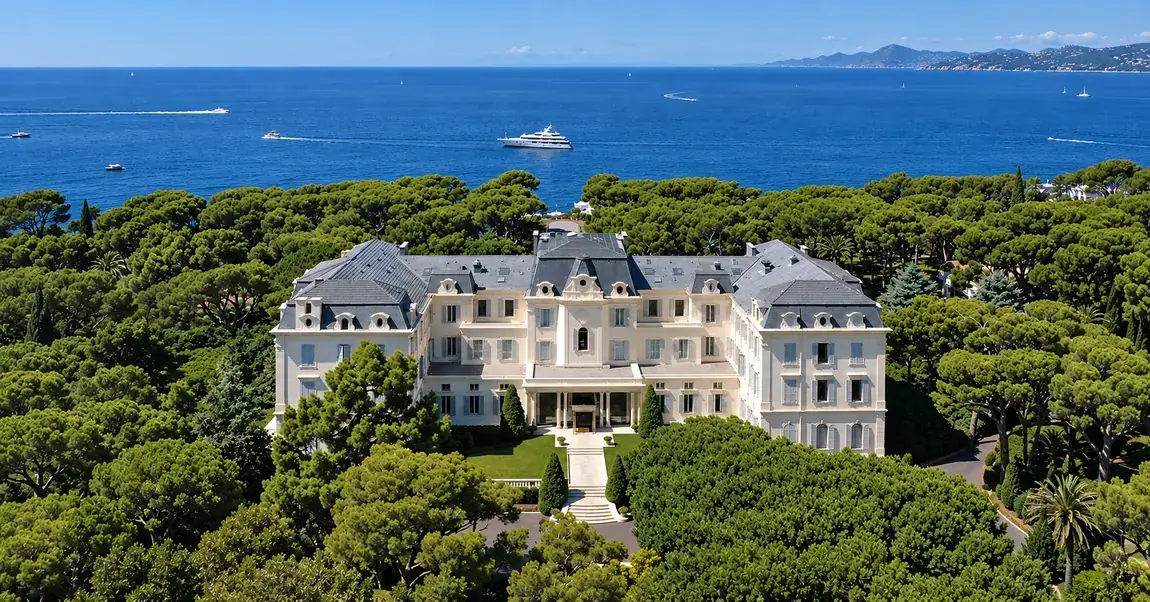
Some hotels offer luxury. Others define what luxury means. The Hôtel du Cap-Eden-Roc belongs to the second category.
Between old pines, tended gardens and the deep blue Mediterranean, one of Europe’s most famous grand hotels stands on the tip of the Cap d’Antibes. For generations its name has been bound up with the Côte d’Azur, the Cannes Film Festival and an international set that seeks one thing above all: privacy. From a hotel investor’s point of view, the house shows how a property becomes a brand sought after around the world — and why true hotel luxury cannot be created through expensive marble, large suites or spectacular pools alone.
A hotel that became a legend
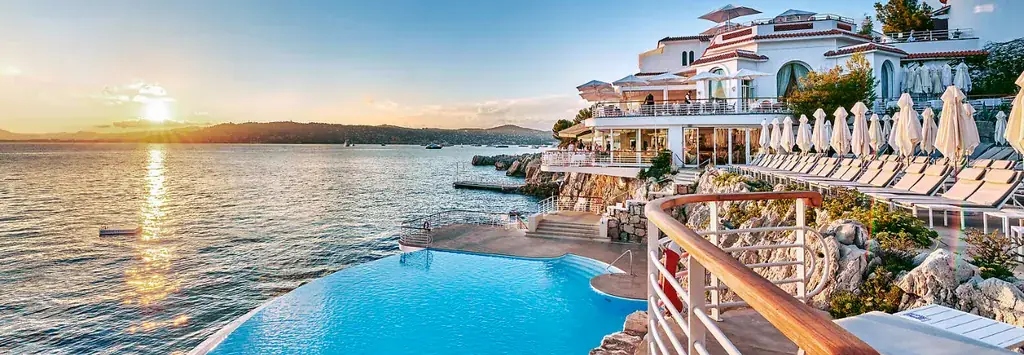
The history of the house reaches back into the 19th century. Around 1870 the founder of Le Figaro, Hippolyte de Villemessant, had the Villa Soleil built on this site in the style of Napoleon III as a retreat for writers. It was not until 1887 that the Italian hotelier Antoine Sella acquired the estate, opening the Grand Hôtel du Cap in 1889. In 1914 the Eden-Roc pavilion was added above the sea — together with the saltwater pool cut into the rock, which remains one of the most recognisable images of the Riviera.
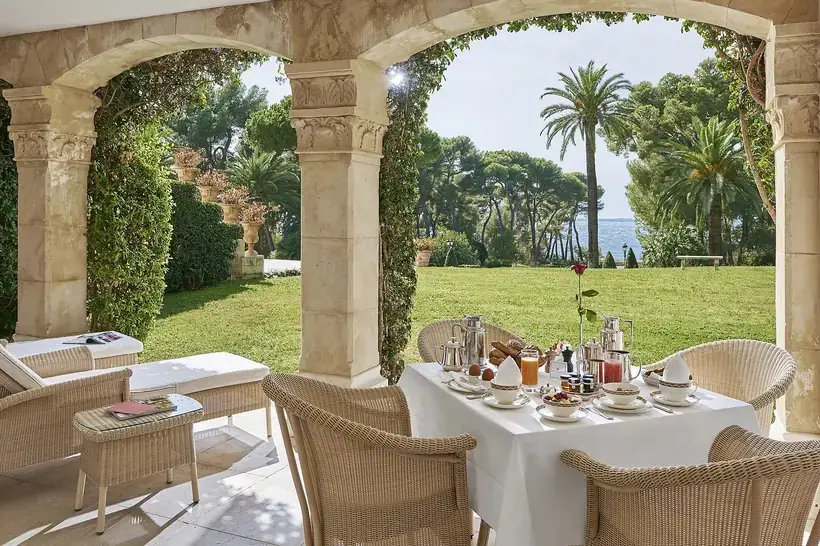
Over the decades the retreat grew into a meeting place for artists, writers, entrepreneurs and international figures. The Grande Allée, around 200 metres long, still leads today from the historic main building through the park towards the sea. Even this arrival is part of the staging: the hotel does not reveal itself at once, it builds anticipation.
That is precisely one of its great strengths. The Eden-Roc does not simply sell a night’s stay. It sells the feeling of being, for a limited time, part of a particular world.
The location is not just beautiful — it is irreplaceable
Many luxury hotels have a sea view. Few, however, possess a location that has itself become a hallmark. The Hôtel du Cap-Eden-Roc lies screened away on an extensive plot at the outermost edge of the Cap d’Antibes. Historic architecture, Mediterranean gardens, direct access to the sea and the famous rock pool together form an ensemble that can scarcely be reproduced.
For investors this difference is decisive. Buildings can be renovated, rooms redesigned, dining concepts exchanged. A location grown over generations, with international renown, historic substance and extreme scarcity of land, cannot be created anew.
This makes such houses an asset class of their own: their appeal arises not only from day-to-day operations, but from the combination of land, history, brand and social significance.
More than 110 rooms — and yet not a conventional large hotel
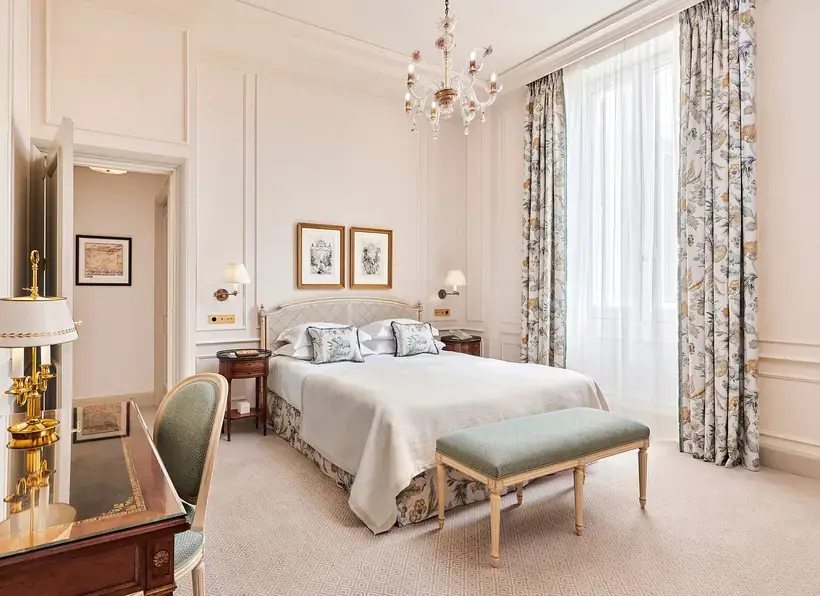
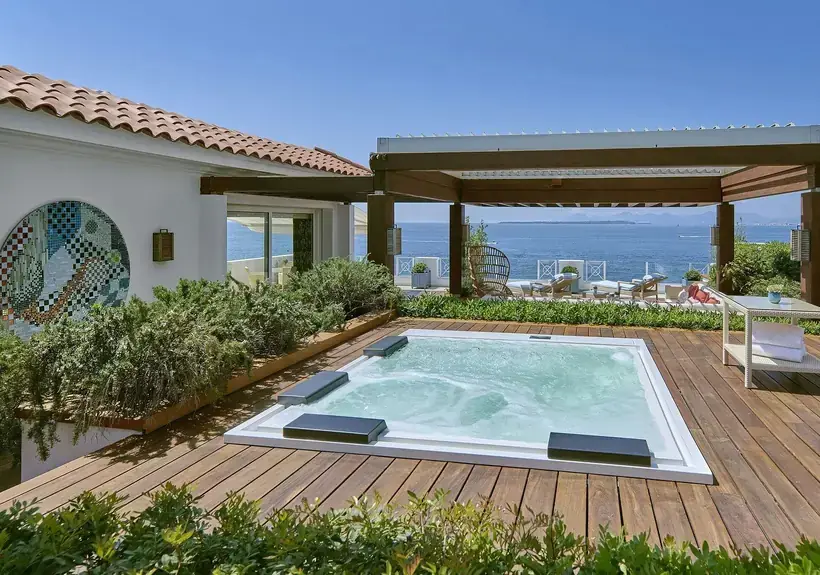
According to the operator, the house has more than 110 rooms and suites, spread across the historic main building, the Eden-Roc pavilion and further buildings in the park. Added to these are several private villas offering additional space and discretion.
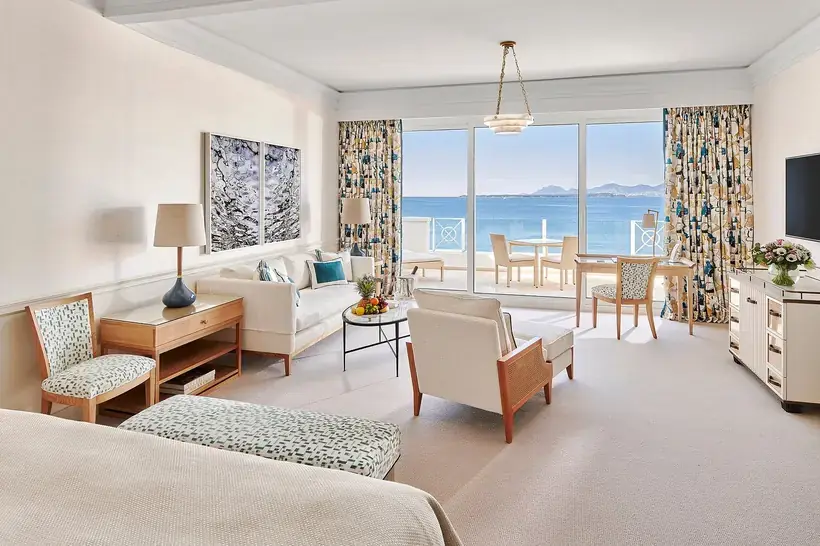
This layout allows for different forms of luxury within a single brand. The classic hotel guest gains access to the entire world of the house. Villa guests additionally receive what grows ever more valuable at the very top of the market: distance, control and privacy.
In this the Eden-Roc follows a principle that holds for many high-end resorts. The most valuable units need not simply be larger. They must allow a different measure of self-determination — with their own outdoor spaces, separate entrances and a service that remains available without visibly dominating.
Cannes as a global amplifier
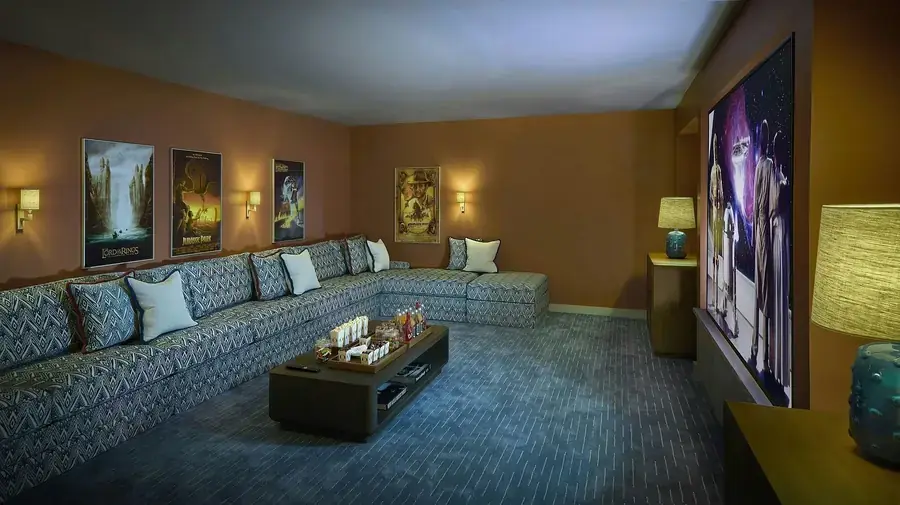
During the Cannes Film Festival the Hôtel du Cap-Eden-Roc becomes one of the best-known social gathering points on the Côte d’Azur. Its ties to film, fashion and international events have given the house a cultural visibility that conventional hotel advertising could hardly achieve.
Yet its strength lies precisely not in maximum exposure. The hotel thrives on the tension between worldwide renown and controlled access. People know the name, the images and the stories — yet few experience the house itself. This kind of scarcity is extraordinarily valuable for a luxury brand: visibility creates interest, discretion preserves the value.
Why this concept cannot be copied
An investor could acquire a comparable plot, put up an elegant building and construct a spectacular pool. That would not produce a second Eden-Roc. The hotel’s economic moat is built from several layers:
- An exceptional, barely replaceable micro-location on the Cap d’Antibes.
- Historic credibility that marketing cannot accelerate.
- International brand recognition reaching beyond conventional hotel-keeping.
- Discretion and a service culture built up over many years.
- A network of regular guests, events and social relevance.
- Professional management within the Oetker Collection, without giving up the individual character of the house.
The last point in particular matters. Successful hotel groups create synergies in distribution, standards, staff development and international marketing. With iconic houses, however, those synergies must not make the property feel interchangeable. The Eden-Roc remains first the Eden-Roc — and only then part of a collection.
The most important currency is trust
In the ultra-luxury segment, success is not determined by the hardware alone. Guests expect beautiful rooms, good dining and a perfect view. These are the starting point, not the distinguishing feature.
The real value arises through trust: that wishes will be understood, that operations will run smoothly and that privacy will be respected. For well-known figures and wealthy families this trust can matter more than any additional amenity. This is exactly where the importance of an operating culture grown over years becomes clear. It is never fully visible on any balance sheet, yet it has a considerable influence on return visits, willingness to pay and brand value.
What hotel investors can learn from the Eden-Roc
Identity must arise from the site
A strong concept draws on architecture, landscape and history rather than following some arbitrary international trend.
Scarcity can be worth more than size
In the luxury segment, a higher room count does not automatically lead to a better result. Exclusivity, privacy and the quality of the spaces can matter considerably more.
History needs a contemporary translation
Tradition alone is not enough. It has to be maintained so that it stays relevant without losing its credibility.
A brand is built through consistency
Price positioning, service, communication, guest mix and design must carry the same promise over many years.
The operator is part of the property’s value
With exceptional houses, the quality of operations influences not only the ongoing profit, but also the perception and the long-term appeal of the asset. The choice of operator is therefore part of the property strategy.
More than a hotel
The Hôtel du Cap-Eden-Roc cannot be explained through individual features. Its value lies in the interplay of many factors: an irreplaceable location, a long history, controlled exclusivity, a strong operating culture and a brand known far beyond hotel-keeping.
Perhaps that is the most important insight for owners and investors: the most valuable hotels do not arise where as much luxury as possible is added. They arise where a distinctive place is consistently protected, developed and correctly positioned over decades. The Eden-Roc therefore sells not only rooms by the Mediterranean — it sells belonging, memory and access. Three values that cannot be multiplied at will.
Editorial analysis by NOWA HOTEL LICENSE. The hotel described here is not offered by us for sale or lease; there is no business relationship with the house or with the Oetker Collection. The information is based on publicly available sources (including the Oetker Collection). Trademark and image rights rest with their respective holders and must be clarified before publication.