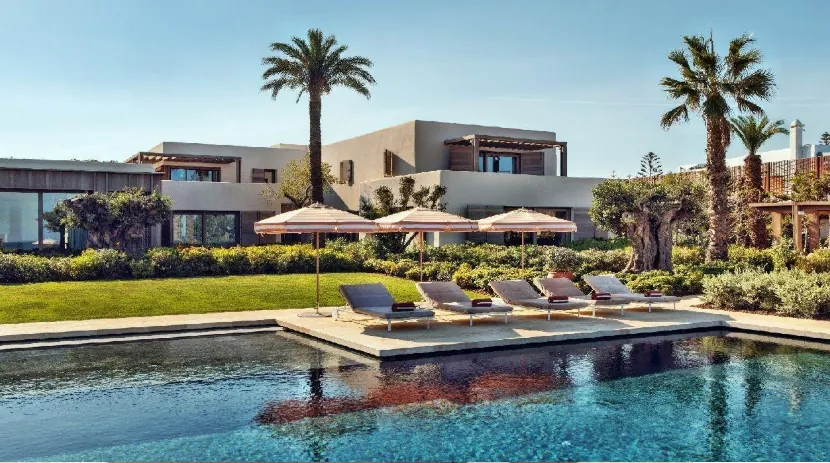
Most journeys are shared — with other guests at reception, at the pool, over breakfast. Yet there is a kind of stay in which precisely that falls away: you rent not a room or a suite, but the entire house. No other guest, no unfamiliar faces — only your own group and a full team there solely for you.
What at first sounds like an idea for the few has long been a product of its own in the luxury segment: the hotel buyout, the exclusive rental of an entire hotel. And for some it turns, over time, into a different question — not whether to rent a house, but whether to own one.
What “renting a whole hotel” means
In a buyout the entire house is reserved exclusively for a single group: every room and suite, restaurant, pool, spa and grounds — together with the whole staff, from the kitchen to service. There is no public operation, no other guests and no fixed routines to adapt to. The rhythm of the day, the kitchen and the use of the spaces follow that one group alone.
That is exactly why the principle works best with smaller properties. A large resort with several hundred rooms can hardly be occupied on its own in any meaningful way — whereas a boutique hotel or a villa-based property with few keys becomes a private estate for a time.
Who an exclusive buyout is worth it for
The typical occasion is rarely a single traveller. It is several generations of a family travelling together; close circles of friends; private celebrations in a closed setting; or figures with a high need for discretion, for whom privacy matters more than any amenity.
What these groups share is not the wish for more luxury but for more control and calm: a place where no stranger passes by, where you remain among your own and set the terms yourself. That is precisely what a single room — however fine — cannot offer.
Which properties are suited to it
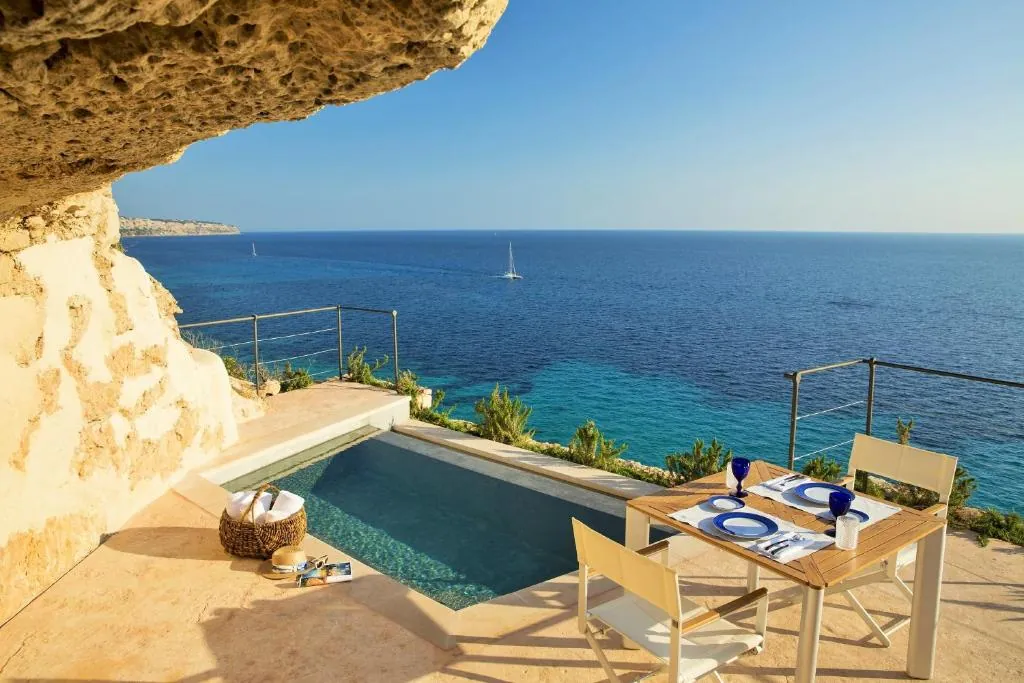
Ideal are houses already designed around privacy and low density. Cap Rocat on Mallorca, for instance — a former fortress with around 30 rooms on its own headland — feels like a private estate even in normal operation. The Royal Mansour Tamuda Bay with its free-standing villas and the island-like Oberoi Udaivilas follow the same principle: much space, few units, natural seclusion.
It is no accident that precisely these houses lend themselves to it. Where a concept is built from the outset on few keys, wide distances and discretion, the step to fully private use is a small one. Space that goes unsold in daily operation becomes, here, the actual product.
What exclusivity really comes down to
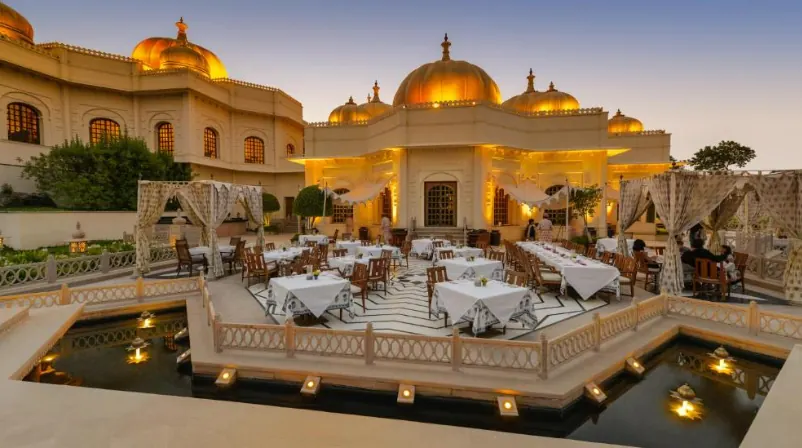
The value of a buyout lies less in the building than in what happens around it. A whole team works for a single group; the chef cooks to their wishes; no one has to make allowances for other guests. This combination of space, staff and guaranteed discretion cannot be reproduced by any room category.
The exclusive buyout thus stands for the same principle that distinguishes fine hotels anyway: it is not the amenities alone that decide, but the question of what a stay makes possible that would not be possible elsewhere.
From renting to owning
Anyone who has once experienced the exclusive use of an entire house eventually thinks further. For a buyout in the ultra-luxury segment quickly amounts — depending on the house, season and duration — to the value of high-quality real-estate use. And so, for some, an obvious question arises: would it not be logical to own such a place rather than rent it again and again?
The difference is smaller than it first appears. Owning a hotel does not mean having to run the operation yourself: an experienced operator handles the day-to-day, while the property works as an investment — and remains available for one's own use at any time. The temporary retreat thus becomes an asset with personal benefit.
General professional commentary, not travel or booking advice. The hotels mentioned serve as examples; NOWA HOTEL LICENSE has no commercial relationship with them. Availability and terms of an exclusive buyout rest solely with the respective houses. Brand and image rights remain with their respective owners.